Are Israelis finally getting in tune with Wagner?
The Israeli boycott of German composer Richard Wagner dates as far back as 1938 • Leading conductors and musicians have tried to break the boycott, only to be met with fierce opposition.
, עודכן
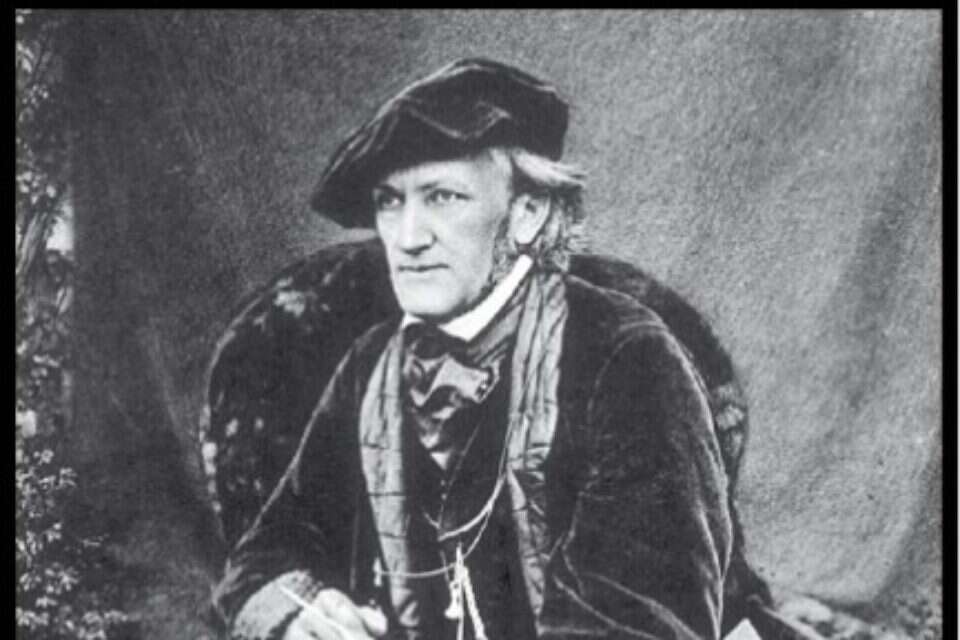
The State of Israel has existed for 64 years, but the boycott of music composed by the anti-Semitic German composer Richard Wagner dates as far back as 1938, during the pre-state period. The opening concert of the third season of the Palestine Symphony Orchestra (later the Israel Philharmonic Orchestra) was scheduled to take place toward the end of that year. The original program included the overture to Wagners opera "Die Meistersinger von Nurnberg." Then came the night of Nov. 9, 1938, and the events of Kristallnacht that took place throughout Nazi Germany. The fact that Wagner and his music were popular with the Nazi regime led the orchestras officials to drop the concert from the program, and the rest is history.
In the almost 74 years since then, no complete compositions by Richard Wagner have been performed not by the large symphony orchestras in concert halls, not at festivals and official events, nor by the television or radio stations. True, there have been isolated cases of semi-underground performances of Wagners compositions on Israeli soil, and in the past the Voice of Music broadcast excerpts of his works, but always under the radar and with a good deal of apprehension.
Over the past several decades, leading conductors and musicians from Zubin Mehta with the Israel Philharmonic Orchestra to the late Mendi Rodan and the Rishon Lezion Symphony Orchestra to Daniel Barenboim and the Berlin State Opera Orchestra have tried to break the boycott and perform works by Wagner in Israel, but these attempts always ended in resounding failure and with a bitter aftertaste. The Wagner taboo has always caused an uproar in Israel, which in turn led to harsh reactions on account of some Holocaust survivors extreme sensitivity when it comes to Wagners works.
On June 18, a partially historic event is set to take place: A day of study and music devoted to Wagner and his works will be held at the Smolarz Hall at Tel Aviv University in Ramat Aviv. The day will include a full program of Wagners works, including excerpts from his operas and sections from some of his powerful symphonic works. So why is this event only partially historic? Because it is not an official concert. The hundred musicians set to perform in the orchestra have been hired specifically for the event, with individual contracts. All the money comes from donations. No public money will be used, nor will there be any official presence that might be interpreted as formal recognition of Wagner.
A noisemaker at the concert
Richard Wagner (1813-1883) is one of the greatest and most important composers, particularly when it comes to opera. His works, which are an integral part of the classical canon, are performed all over the world. Only a week and a half ago, this writer attended a performance of Wagners opera "Rienzi" at the Teatro Real in Madrid. Two days earlier, I was fortunate enough to hear a performance of the "The Prelude und Liebestod from Tristan und Isolde" by the Spanish Radio and Television Symphony Orchestra.
But in Israel, Wagner has become a code name because of the Holocaust survivors. For a long time, Wagner has not been a composer of music, but rather the latest, greatest symbol of art identified with the Nazis and with anti-Semitism. As the British writer and philosopher Bryan Magee wrote, I sometimes think there are two Wagners in our culture, almost unrecognizably different from one another: the Wagner possessed by those who know his work, and the Wagner imagined by those who know him only by name and reputation.
The Palestine Symphony Orchestra, which was established in 1936, performed works by Wagner during the first two years of its existence. The great conductor Arturo Toscanini, who admired Wagners music, ensured that the orchestra composed of Jews living under the British Mandate would perform his works.
It was only approximately 20 years ago that the works of Richard Strauss began to be performed after he was posthumously cleared of charges of anti-Semitism. But Wagner remained the last obstacle. Attempts to perform his music in Israel over the past 30 years have been opposed by a stubborn handful of people. In 1982, when Zubin Mehta sought to include excerpts from "Tristan und Isolde" in a concert, he gave up the idea in the wake of protests and threats from Holocaust survivors.
In 1992, Daniel Barenboim arrived for a concert with the Berlin State Opera Orchestra in the Mann Auditorium in Tel Aviv. In an attempt to demonstrate friendship, an open rehearsal was held in which Wagner was performed. But there were protests. A Holocaust survivor with a noisemaker, together with other survivors who stamped their feet in protest or shouted in protest, interrupted the concert with created a media uproar. News broadcasts and the press covered the incident extensively. It even reached the Knesset.
In 2000, history was made. The late Mendi Rodan, a Holocaust survivor, conducted the Rishon Lezion Symphony Orchestras performance of Wagners symphonic poem The Siegfried Idyll. But not even this concert, with Rodan on the podium, went over peacefully. Several protestors shouted inside the hall. In 2001, when Barenboim conducted a concert in the Mann Auditorium and performed an excerpt from "Tristan und Isolde" as an encore, reactions were mixed. While a large portion of the audience responded with thunderous applause, others walked out in protest and even whistled their disapproval.
The latest incident took place in July 2011 when the Israel Chamber Orchestra performed works by Wagner in Bayreuth, Germany. According to a report by Noam Ben Zeev of Haaretz, the conductor, Roberto Paternostro, noticed that the wind instrument players were so moved that they had difficulty performing.
There was always shouting
Wagner wrote anti-Semitic essays (of which Judaism in Music is the best-known). His abhorrence of the Jews was publicly known. There is no argument that his anti-Semitic views were clear, blatant and distorted, that he became one of the symbols of the Nazi regime, and that he was Hitlers favorite composer.
But here is an anomaly: Many Israeli orchestras perform works by Richard Strauss, who was treated like royalty during the Third Reich, and the Preludes by Liszt, a known anti-Semite. The Preludes were used as the theme during Nazi propaganda broadcasts of military victories over the radio. The "Carmina Burana" by Carl Orff, who received support and funding from the Nazis, is performed here. So are avant-garde works by the Austrian composer Anton Webern, who had studied with the important Jewish composer Arnold Schoenberg but later became an adherent of Nazism and even received a scholarship from the office of Joseph Goebbels.
Here is another interesting tidbit: The father of Zionism, Theodor Herzl, admired the music of Wagner, as did many Jews in the pre-Hitler era. Herzl even drew inspiration from Wagners wonderful opera "Tannhauser" when he wrote the first draft of "Der Judenstaat."
David Witztum of Israels Channel 1, a lover of classical music and a true yekke (descendant of German Jews), is well-versed in German culture and its ties to Israeli society. He believes that Wagners music should be performed, but not in official settings. I think that Wagner should be performed everywhere that classical music is played, Witztum said. Wagner is an important composer even if he was unusual for the severity of his anti-Semitic writings. Still, at least Wagner worked all his life with Jews who performed his works.
Nevertheless, Witztum understands the sensitivity of Holocaust survivors to the issue. Im in favor of his music being performed in private, unofficial venues, just like the event that will be held two and a half weeks from now, he said. The state and official authorities need to take the survivors feelings into consideration now that they have recognized their unique status in our nations history. Those in official settings, and any orchestra with official national status such as the Israel Philharmonic Orchestra, must act humbly and refrain from performing Wagner as long as there are Holocaust survivors among us. This whole debate has nothing to do with music, but only with consideration for people whom we appreciate in a special way.
Witztum said that he has spoken with many Holocaust survivors about the issue of Wagner. He said that he has met many survivors who were in favor of performing Wagner in Israel, and after all, many Jews who fled Nazi Germany came to pre-state Israel and admired Wagners music. But of course, there are other voices too. Many survivors recalled that Wagners works were performed in the concentration camps. Although the Nazis enjoyed works by Beethoven and other German composers, Wagners music contained nationalistic German themes, folk legends of the Teutonic tribes that were a major component of the ethos of the Nazi period.
Wagner, Mercedes what's the difference-
Hayuta Dvir, a presenter and editor at the Voice of Music, said that, Although no work by Wagner has ever been played in its entirety [on the radio station], excerpts have been broadcast individual movements and excerpts of his works on particular programs. Even though it happened only rarely, every time a piece by Wagner was played on the radio, members of the public protested. Because we are a public radio station, we must listen carefully to what those voices are saying.
Israel Obel is one of the most prominent people in the Israeli opera scene. As the translator for the Israel Opera, he has translated, over the past several decades, every opera produced in Israel. He says that the boycott of Wagner may have aroused a great deal of curiosity and interest in his works among Israeli classical-music lovers.
Every time I gave a lecture on Wagners operas, the auditoriums were filled to capacity, Obel said. Every lecture was given four or five times throughout the country, and there was not a single empty seat. Only once did someone get up before the lecture to say that he had come to protest and then he walked out. I found it funny to watch how surprised many people in the audience were when I told them the very simple fact that Wagner had died before Hitler was born.
Obel, whose fathers entire family was killed in the Holocaust, said, Instead of negating Wagners relationship with the Nazis, we are strengthening it. We need to remember that anti-Semitism doesnt come from musical works by Wagner. The problem is all in our heads.
Raz Binyamini, the music director of the Chamber Music Center at the Israel Conservatory of Music, performed Wagners works as a cellist in orchestras in the U.S., and he attended performances of Wagners operas in Germany. As he said, Wagner was seen as a kind of last symbol, a boundary that could never be crossed. I find that odd. We consume German culture endlessly, theater and music, to say nothing of consumer products such as automobiles and electrical devices.
Binyamini says, From a musicians perspective, Wagners music is missing from the Israeli musical landscape. There is a lot of music here that the musicians and audience could enjoy, but Wagner, who had enormous influence in his day, is not performed here. Wagner turned the music scene of Central and Western Europe on its ear and was a major figure in the development of music well into the 20th century. He brought musical, theatrical and artistic values of the 19th century to a point of no return, and he broke the musical mold.
Binyamini said that he understands the feelings of the Holocaust survivors, and so it is really logical that Wagner not be played in the philharmonic or in the Israeli Opera. But I see no problem with holding a concert that is not dependent on public funds, such as the one that will be taking place in two weeks. On the contrary its very good. But at the same time an elderly woman called me about the forthcoming concert and said, Youll see that this concert wont take place. I hope that this time, it will finally happen.
טעינו? נתקן! אם מצאתם טעות בכתבה, נשמח שתשתפו אותנו