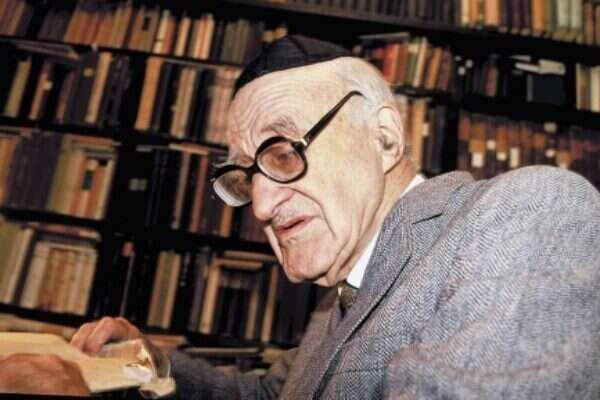
Last November, the Ofran family was drawn unwillingly into the tumultuous life of one of its daughters, Hagit Ofran, the leader of the Peace Now team that monitors settlements. Hostile graffiti such as Rabin is waiting for you and The late Hagit Ofran were spray-painted on the walls of the stairwell of her apartment building in the heart of Jerusalem. The level of concern reached such a pitch that Hagits brother, Dr. Yishai Ofran, published a letter that began as follows: My sisters murderer is walking freely among us ... In the Ohel Nehama synagogue in Jerusalem, which Hagits parents attend, the beadle expressed his sorrow over the aggravation that was caused to the Ofran family, but Hagits father, Avi, fearing for his familys welfare, used the gesture in order to clarify aloud that he did not agree with her activities. Later on, he said in an interview in the conservative newspaper Makor Rishon, Hagits opinions are not the problem. Her actions are. Now, it seems that Ofran is giving her family a bit more peace and quiet. A book by her late grandfather, The Ethics of the Fathers according to the Commentary of Rabbi Haim of Volozhin (published by Agam), which she edited, is currently being published. Unlike the rest of the tractates of the Mishna [first written edition of Jewish Oral Law], which contain various laws and legal matters, The Ethics of the Fathers deals with at its title indicates matters of ethics, morality and proper behavior. It is one of the Jewish texts that has a consensus to such an extent that, almost surprisingly, nobody attacked Education Minister Gideon Saar when he decided to include it in the eighth-grade curriculum. Nevertheless, when it comes to Leibowitz, who was born in Riga, Latvia, in 1903 and died in Jerusalem in 1994, consensus is almost a derogatory term. His talks about The Ethics of the Fathers, which he gave in the Yeshurun Synagogue in Jerusalem approximately 25 years ago and have now been collected into a book, are rich with insights some controversial relevant to our own times. The book is also a treat for fans of Leibowitz, one of the most prominent Jewish thinkers of the 20th century, and also for the many enemies of the man who never hesitated to express his criticism of Israeli society, often harshly and provocatively, but was certainly an opponent of stature. In The Ethics of the Fathers, edited by Ofran, there is no mention of Judeo-Nazis, whom Leibowitz found in the state of Israel, or references to his remarks that undercover Israeli troops are like Hamas. Nor is there a call for civil war or for disobeying orders. Nor is there any mention of the religious Zionists, whose beliefs the strongly devout Leibowitz the great sage of the secular Left saw as idolatry for its own sake, or of the members of the Reform movement, whom Leibowitz called assimilationists. Nevertheless, for Leibowitz, characteristically, there is never a dull moment, even 18 years after his passing. The combination of the commentary of Rabbi Haim of Volozhin, who was one of the Vilna Gaons most important students and the founder of the study model used in the Lithuanian yeshivas, with the associative enthusiasm that characterized Leibowitzs talks with his students brought forth sparks and sayings that one can still differ with, agree with and argue over even today. The power of the Torah is broken For example, perhaps the haredim [ultra-Orthodox] would not be the only ones to dislike what Leibowitz does, with help from Maimonides and Agnon, to the saying of Shmaya: Love work, despise rabbinical office and do not become closely acquainted with the government. As Leibowitz insists on mentioning, Maimonides says that one is forbidden to make ones living from the Torah! Even if this means that a person cannot study Torah and teach Torah to the maximal extent ... The study of the Torah as a profession is a big problem, Leibowitz says. When the Mishna talks about how Torah unaccompanied by work leads in the end to idleness and iniquity, it is talking fundamentally about financial matters, that a person becomes accustomed to living at the expense of others. Therefore, the existence of financial corruption is an extremely common occurrence in the yeshiva world. Leibowitz remembers one chance meeting with Agnon, which he recounts to his students. Once, he met me on S.Y. Agnon Street and asked me: Tell me, Rabbi Yeshaya, what is the reason that the great power, the incredible power that the Torah once had among the Jewish people has been broken- And it really was a power that was incredible. The Jewish people abided by Torah law at a time when there was no force that compel it ... It worked ... I answered something like this: Shmuel Yosef, you ask me here on the street, on one foot, a powerful and crucial question ... but because I assume that you will understand, I will answer you in a single sentence: The power of the Torah among the Jewish people was broken the instant that the study of Torah became a profession! Leibowitz recalls, Agnon told me immediately that this was the answer. I remember it very well ... The Jewish people today is not anchored on the basis of the Torah ... To this day there was never anything like it among the Jewish people, that the number of people studying Torah in yeshivas was as large as it is today, but the Torah in Israel was never at such a low point as it is today ... Here in Israel, we talk about 50,000 students learning in yeshivas, but their Torah has no power and no effect on reality. On the contrary, the effect that they have is that others find them repulsive. No more Judeo-Nazis In the world of Jewish philosophy, Leibowitz is identified more than anyone else with the concept of Torah study for its own sake. Leibowitz adhered to that in his new book as well. He compares the Torah to a profession in which one must engage day after day. Leibowitz, who was an active man, sees passivity as the source of evil, and quotes Rabbi Haim of Volozhin with relish: What honest path should a person choose for himself? He should love rebuke, since as long as rebuke exists in the world, good and blessing come into the world, and evil departs from the world. During his lifetime, Leibowitz turned this insight almost into a motto. But Hagit Ofran, the granddaughter of the man who was called the Prophet Yeshayahu [Isaiah] while he lived, now regrets her grandfathers harsh political statements, which pushed away many people who were unwilling to hear the important things he had to say concerning the Torah, the mitzvot, ethics and science. Ofran prefers to speak in a way that will not arouse ire. She would never be caught uttering a word such as Judeo-Nazis. That was an essential, tactical mistake, she said this week. Grandfather was a bit of a provocateur because he wanted to wake people up and shock them. He paid a price for doing that. It distanced people from his greatness in topics of Judaism, science and ethics. Maybe that is why Ofran talks about the settlers today in one language and about their way of life in another. There are wonderful people in the settlements who do wonderful things, but the very fact that they live there is a major problem, she says. So Ofran will keep on counting mobile homes and buildings in the settlements because she believes that she and her grandfather represent true Zionism, and the post-Zionists are the settlers, who are leading us to a binational state. Ofran held dialogues and conversations with her grandfather on every subject that interested her, like the other grandchildren. She was 19 years old when he died, and one of her childhood memories that she treasures is the bus trip with my grandfather to the bookstore at the university, where he bought me a book about prayer written by Yitzhak Moshe Ellbogen. As a girl, Ofran wanted to lay tefillin and be counted in a minyan, but at the age of 23 stopped being observant after engaging in soul-searching and reaching the conclusion that she was incapable of keeping the mitzvot for their own sake, as her grandfather did, and that she was doing so in order to be part of the community, as she said in an interview with Haaretz two years ago. It seems that Ofran inherited that uncompromising honesty from her grandfather, and this finds expression in his book, The Ethics of the Fathers, which she edited. Leibowitz speaks with pain of the millions of Jews who are aware that they are Jews, but from an objective perspective have nothing other than that awareness. They are aware of their awareness, as he described it, are married to non-Jewish women and send their children to Jewish school on Sunday afternoons, not so that their children will adopt a different lifestyle but only so that they will know that they are Jews. Leibowitz also deals with the concept of ancestral merit in that same uncompromising spirit. To his understanding, according to the Talmud, ancestral merit is over and therefore, Here it was said to those who believe in magical faith of Although I am a nobody, I have the merit of Abraham, Isaac and Jacob, that the truth is that if youre a nobody, youre a nobody. From his study of The Ethics of the Fathers, Leibowitz also derived insights about government and authority. He interprets the phrase from the Mishna, Despise rabbinical office, as follows: Despise lordship and authority ... It is in the nature of leadership and authority that they corrupt those who have them, as the famous saying goes: Power corrupts, and absolute power corrupts absolutely. Leibowitz reminds us that when the Roman emperor and general won a victory in war, he was given a triumph in the Forum. One person would hold a wreath over his head, but another person standing behind him would whisper again and again: Remember that you are mortal. Americas interests The books 337 pages draw the six chapters of The Ethics of the Fathers in the image of the professor from Ussishkin Street in Jerusalems Rehavia neighborhood. Although this space is too small to include all of them, here is a tiny sampling of several Leibowitzian insights, some of them infuriating, on current events. Concerning permanent American aid, he said, America is the authority today and we receive billions from it, but that is because they are doing it for their own reasons, and at the moment they are interested in supporting mercenary soldiers for their own interests, and these mercenary soldiers are the IDF, which today is not the army of the nation of Israel, but rather ... mercenaries of American imperialism. Concerning the prayer for the welfare of the kingdom in other words, the state Leibowitz spoke carefully, telling his students: The state is not a good thing either in scripture or in the later writings of the sages, but it is a vital thing, since if not for the fear of it, people would eat each other alive. But be careful of the government, even when the government is a Jewish one. There is no idea more foolish than the idea that a kingdom of Israel is a lofty concept. At other times, Leibowitz talks about verbal expressions on the Israeli street. Concerning the phrase with Gods help, he says, Once, a woman approached me and said that her little boy was ill with a fatal disease and the doctors had already given up on him, but suddenly a miracle occurred, and with Gods help the boy recovered ... Then I answered her that also with Gods help, her son had come down with this fatal illness, but that when he became ill it had never occurred to his mother that he had become ill with Gods help. Only when he was healed did she suddenly remember with Gods help. I dont like people who have a selective God. Follows in grandfathers footsteps Leibowitzs students will enjoy the book, his second on The Ethics of the Fathers. The first was published in 1979 (Talks about The Ethics of the Fathers and Maimonides). The talks quoted in the new book were transcribed by the late Ben Zion Nurieli, one of Leibowitzs most loyal students. They were given in 1985 and 1986 in the Yeshurun Synagogue in Jerusalem. The Yeshurun Synagogue has been the scene of quite a few controversies because of the hostel that it placed at the disposal of Leibowitz, who was a multidisciplinary scientist (he worked in natural studies, particularly biochemistry) and an Orthodox Jewish Israeli philosopher, though he was known as a sharp critic of Israeli society. A year before his death he was nearly awarded the Israel Prize, but after Yitzhak Rabin, who was prime minister at the time, said that he would not shake the hand of a person who continued to use the term Judeo-Nazis, Leibowitz announced that with all due respect, he would decline the prize. Hagit Ofran is not the only one of Leibowitzs grandchildren to continue his tradition. Several of her siblings, including the physician Dr. Yishai Ofran and the biophysicist Dr. Yannai Ofran edited together with their mother and Leibowitzs daughter, Mira, a collection of his correspondence. Yohai Ofran (a teacher) is the editor and manager of the website Nehamas Study Sheets (Nehama Leibowitz, Yeshayahus sister, was a well-known Bible commentator). Uri Ofran, another brother of Hagits, leads the Daroma academy of Jewish studies at Ben-Gurion University, which he founded. Another brother, Illai Ofran, serves as the rabbi of Kibbutz Yavne. Hagits sister, Shlomit, is a psychologist. Hagit Ofran, who is returning to settlement affairs, believes that one day, her job will end because the occupation will end, with Gods help, and then the problems of a human being standing before God and the values of religion and conscience will rise to the surface in all their power, and my grandfather and his greatness will be remembered thanks to their contribution to Jewish philosophy. Ofran has several relatives who live in the settlements that she documents almost obsessively. She almost never goes to the settlements outside of work, saying, Im treated as a spy there, so I prefer not to embarrass anyone. My grandfather would be proud of me.
Yeshayahu Leibowitz, still relevant after all these years
Hagit Ofran, high-ranking Peace Now official and granddaughter of Yeshayahu Leibowitz, edited a new book by the controversial late professor called The Ethics of the Fathers • My grandfather was a provocateur, he wanted to wake people up."
Load more...