The longtime U.N. peacekeeping mission in Lebanon was extended Wednesday with new directions to conduct more patrols with Lebanese forces and report when peacekeepers run into roadblocks in Hezbollah strongholds in the country's south. The U.N. Security Council unanimously approved the plan for the United Nations Interim Force in Lebanon, extending it another year after a flurry of negotiations over U.S. and Israeli desires to do more to keep Hezbollah from gathering illegal weapons. The two countries sought a more muscular approach for UNIFIL to tackle what they say is a blatant, unauthorized arms buildup by the militant group in southern Lebanon. Some other nations, including Lebanon, didn't want major changes in a peacekeeping force seen as playing an important role in the area's decade of relative stability. In the end, the U.S. and Israel emerged pleased with what they saw as important changes, while other nations noted that the mission's overall mandate hadn't changed. "The status quo for UNIFIL was not acceptable, and we did not accept it," said U.S. Ambassador Nikki Haley, who has made a priority of scrutinizing the effectiveness and expense of U.N. peacekeeping missions. She said the changes will help ensure UNIFIL "has the power and the will to do its job." For example, she said, Hezbollah sometimes bars peacekeepers from entering certain areas. Now, UNIFIL is being asked to provide "prompt and detailed" reports on where and why its troops were stopped. Originally created in 1978, UNIFIL now a 10,500-member force with a $489 million budget. The mission was expanded after a 2006 war between Israel and Hezbollah so that peacekeepers could deploy along the Lebanon-Israel border, to help Lebanese troops extend their authority there. Haley said Washington wanted the French-drafted resolution to renew UNIFIL's mandate to "ensure UNIFIL is doing its job to the fullest extent possible. "Conditions in South Lebanon are very dangerous today. The clouds of war are gathering. UNIFIL exists to help prevent war from happening again in South Lebanon. It is supposed to do that, in part by helping the Lebanese government to insure that there are no weapons outside of state control in UNIFIL's area of operations. We have to be honest, for too long UNIFIL's leadership has failed to make sure this goal is realized. In particular, UNIFIL commander [Maj.] Gen. [Michael] Beary's lack of understanding of the threat UNIFIL poses to the region is baffling. At the direction of its patron, Iran, the terrorist organization Hezbollah is stockpiling an offensive arsenal in southern Lebanon. They have thousands of missiles and thousands of trained fighters, all beyond the control of the Lebanese government. It is apparent to anyone who cares to see it," she said. "This resolution gives UNIFIL robust authority to help Lebanon keep the south safe. What we sought in this renewal is to make sure UNIFIL is doing its job to the fullest extent possible, and I'm very pleased with what we accomplished here today. The status quo for UNIFIL was not acceptable, and we did not accept it." U.N. Security Council automatically renews UNIFIL's mandate automatically, but this year, the annual exercise became unusually fraught. Council members largely wanted to keep UNIFIL as-is, said French Deputy Ambassador Anne Gueguen, whose country was in charge of drafting the renewal resolution. France did not want to put "the delicate balance" of southern Lebanon into question, Gueguen said. "UNIFIL, of course, can do better and can do more, but no one within this council can imagine, for one second, the environment [of stability] existing there without UNIFIL," she said. Italian Ambassador Sebastiano Cardi, whose country is among the biggest contributors of troops to UNIFIL, said it was important not to blur lines between peacekeepers' duties and those of Lebanese forces. "Promoting confusion in that regard undermines UNIFIL's operation and strips the Lebanese authorities of their own sovereign prerogatives," Cardi said. He said his nation was concerned about the changes but accepted them for the sake of Security Council unity. U.N. Secretary General Antonio Guterres, who during his visit to Israel this week pledged to do everything in his capacity to ensure UNIFIL executes its mandate, stressed that under the mission's guidelines, it is primarily the Lebanese military's responsibility to ensure the south is free of unauthorized weapons. The mission mandate has not changed, but the resolution adopted on Wednesday spells out that peacekeepers are authorized to "take all necessary action in areas of deployment of its forces and as it deems within its capabilities, to ensure that its area of operations is not utilized for hostile activities." Guterres said he will also look at ways the peacekeeping mission can increase its visible presence, including through patrols and inspections.
X
שיתוף כתבה
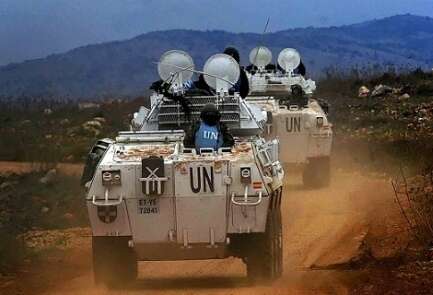
UN Security Council renews peacekeeping mission in Lebanon
The mission of the United Nations Interim Force in Lebanon has not changed, but it has been authorized to "take all necessary action ... to ensure that its area of operations is not utilized for hostile activities" • UNIFIL's budget set at $489 million.