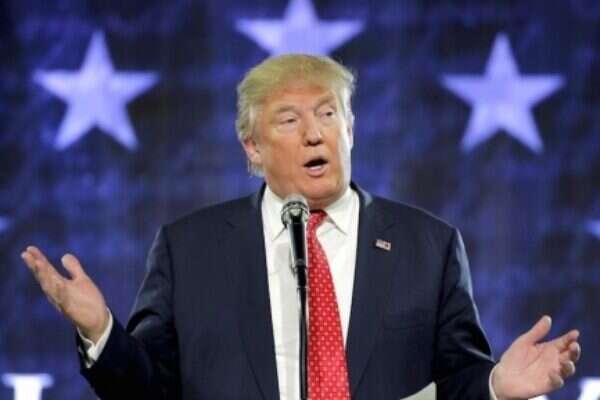
Since the dawn of the American nation, the inauguration of the new president has epitomized the commitment undertaken by the incoming president to respect the rules of the game and the administration's modus operandi, as anchored by the Constitution. The inaugural address given at the end of the swearing-in ceremony has time and again sought to legitimize the ethos, symbols and values that have created the American experience. It has also traditionally reflected a spirit of national reconciliation and willingness to cooperate with the defeated party and its representatives on Capitol Hill, all while showing "magnanimity in victory," which is particularly noticeable should the event be clouded by crises or wars. This, for example, drove Abraham Lincoln's second inaugural address, on March 4, 1865 -- between 1793 and 1937 the inaugural ceremony was held in March, not January -- and his dramatic call on the American people to heal a nation torn by the bloody Civil War. The same is true of Franklin D. Roosevelt's first inaugural address, delivered on March 4, 1933, when he urged Americans to unite in the spirit of solidarity in the shadow of the Great Depression. Roosevelt's words, asserting his "firm belief that the only thing we have to fear is fear itself" as the unknown may be paralyzing, were a source of encouragement and comfort in the dark days of economic collapse and the ongoing uncertainty. President Gerald Ford's inaugural address, on Aug. 9, 1974, following Richard Nixon's humiliating resignation and at a time when the traumas of the Vietnam War and Watergate scandal were still fresh in collective American memory, also sought to foster national unity. In light of the constitutional and political crises the U.S. found itself in following Nixon's entanglement in a series of serious criminal offenses, Ford's address assured his fellow Americans that "our long national nightmare is over. Our Constitution works; our great Republic is a government of laws and not of men. Here the people rule." Thus, in a speech no longer than 850 words, a speech reflecting humility, comfort and encouragement, the new president succeeded, in one fell swoop, in giving the public a sense that life had returned to normal. In cases when the transition of power entailed handing the helm of leadership from one party to its rival, inaugural addresses have been infused with a desire to break away from the existing social and economic order, and embark on a path of greater consideration. A particularly eloquent example of a new administration's commitment to dramatic change, particularly with respect to foreign policy, was evident in President John F. Kennedy's inaugural address, on Jan. 20, 1961. Every statement in that powerful speech was imbued with the young president's optimism and determination to reshape the international landscape in the vision and spirit of its American counterpart, especially after the eight-year-long stagnant mindset of Republican President Dwight Eisenhower's administration. A new spirit of youth and hope blew through Washington on Jan. 20, 1961, conveying a message of vitality and eagerness to deal with the challenges ahead, to ensure freedom and devise the appropriate response to any threat, crisis or conflict. This eagerness, however, often led the Kennedy administration down an adventurous path, which sometimes proved disastrous, as seen in Cuba during the failed Bay of Pigs invasion on April 17, 1961, and later in Vietnam, where a commitment to send 600 American military advisors to the country ballooned into a war that saw the Vietnamese quagmire claim the lives of scores of American soldiers. Of course, some inaugural addresses failed the test of time, proving irrelevant and fading into oblivion. An example of such an address is the one given by President Jimmy Carter on Jan. 20, 1977. Carter's eloquent vision of rebuilding the international system based on universal moral principles and moral, while minimizing the core roots of global friction and disputes failed to make its mark, and all but disappeared completely in the wake of the 1979 Soviet invasion of Afghanistan. During the fourth year of the Carter administration, this vision was replaced with a more confrontational, uncompromising approach toward the Soviet Union, derived from the principle of political realism -- something light-years away from the idealistic purity that characterized his inaugural address. In just a few hours we will be able to assess how Donald Trump's speech as the 45th president of the United State fits into the historical tractate of inaugural addresses, and whether its tone was reconciled and anchored in the pluralistic character of American society. What has already become clear is that Trump will most likely give a short and concise address, miles away from the longest inaugural address in history -- two hours and 8,445 words, delivered on March 4 1841, by President William Henry Harrison (who died the following month). Trump's address is likely to focus on the message that got him to the White House, that is, making America great again and returning it to the path of growth and maximizing its potential following the sluggish eight years of the Obama administration. Needless to say, it will be a long time before we know if Trump succeeded in his mission, while also preventing the internal rift threatening the U.S.'s social cohesion from growing worse. Perhaps what is needed most of all, particularly given the divisive nature of the presidential campaign, is for Trump to travel back in time and echo President George W. Bush's 2001 inaugural address: Hopefully, Bush's efforts to unite the public and position himself as the president of the American people as a whole, will guide the 45th president as he addresses the nation for the first time as its leader.
Words to rule by
Throughout history, inaugural addresses have sought to foster national unity and cement the ethos, symbols and values that have created the American experience • All eyes are on Trump as we wait to see whether he sticks with tradition or breaks it.
Load more...