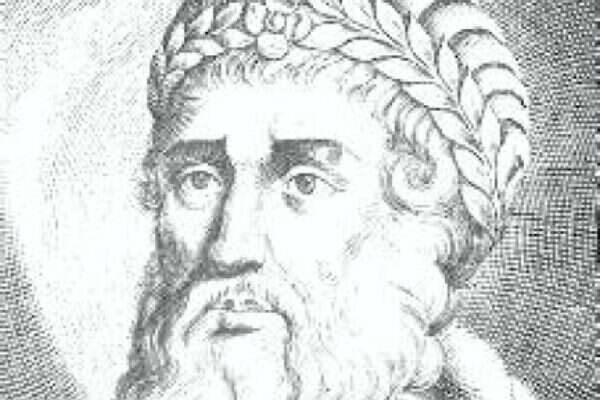
King Herod, who ruled Judea between 37 and 4 BCE, began to build the city of Phasaelis in the year 8 BCE. This was four years before his death, and he evidently chose the location because of its strategic significance, since it was located at the crossroads between the Galilee, Jericho and Jerusalem. Of course, Herod did not know that the construction of the city of Phasaelis, which he named after his brother, Phasael, would be his last and most important project. As he did in all his projects, Herod worked intensively and completed the citys construction relatively quickly. Herods penchant for memorializing himself and his relatives by constructing buildings and cities was well known, as were his motivation and initiative. Thus, for example, of the four towers that he built in Jerusalem, he named three after close relations: Mariamne after his wife, Phasaelus after his brother and Hippicus after a childhood friend. He rebuilt the city of Samaria and changed its name to Sebaste in honor of the Roman Emperor Augustus, who was known as Sebastus in Greek. He also named Caesarea, which he built, after the Roman emperor. As for Herodium in the Etzion bloc, one of the best-known and most important places in his time, it was built by and named after Herod, himself. When we speak of Herods construction projects, we must also mention the Cave of the Patriarchs as we know it today; his massive works in Jerusalem, which enlarged and expanded the city; and his reconstruction of the Temple, of which the Talmud says, One who has not seen Herods Temple has never seen a beautiful building in his life. Herods power The site of Hirbet el-Fasayil, which lies near the community of Petzael in the Jordan Valley, stretches out toward Jericho, covering around 12.36 acres. Today, the area is populated mostly by Bedouin, and there are Palestinian villages as well. For many years, researchers knew of the existence of Phasaelis, and various surveys that were made of the area, including in the previous century, indicated, to a greater or lesser extent, the location of the ancient city, which was one of Herods lesser-known projects. Phasaelis is mentioned in various sources, principally in the works of the historian Flavius Josephus (Biblical name: Yosef ben Matityahu), who described it as one of the monuments that Herod built in memory of his relatives. In his work "The Wars of the Jews," he described it as follows: He also established a city in the narrow valley in the north going toward Jericho, and called it Phasaelis. Elsewhere, in his book "Antiquities of the Jews," he wrote, Near this city Herod also made the land, which had been desolate, extremely fertile, and called it Phasaelis. From Josephuss descriptions, researchers learned that before Herod founded Phasaelis, the region north of Jericho had been desolate and empty, with no agriculture at all. Unlike his other projects, Herod intended Phasaelis for Jewish settlement from the first, and he built and planned it as an agricultural city. Even though nothing of the sort has been found yet, the researchers believe that in the future, public buildings such as a theater, amphitheater or hippodrome, where chariot races were held, will be discovered. After the work plan for the region was approved and the required budgets issued, the first excavations of the site, under the direction of Hananya Hizmi, began two months ago. The Civil Administration has put Hizmi in charge of all archaeological affairs in Judea and Samaria. Evgeny Aharonovich and Eyal Freeman oversaw the excavations. Because of the extreme heat in the Jordan Valley, work has been stopped for the time being, but will resume in the autumn. Since the site is so very large and includes other ancient sites, Hizmi believes that the excavations there will take years. The tips of some of the buildings that made up the city of Phasaelis remained visible above ground despite the ravages of time and the earthquakes that struck the area over the past two millennia. Regrettably, for many years, antiquities thieves, taking advantage of the fact that the site was unprotected, stole many artifacts and vandalized the site. Once this was discovered, the Civil Administration hired several Bedouin who live in the area to protect the site from thieves. Since then, occurrences of theft have decreased dramatically. Although the excavations have been under way for a relatively short time, the archaeologists have managed to uncover several significant findings connected with Herods time: For example, a large pool, thirty by forty meters and six meters deep. According to estimates, it contained approximately six thousand cubic meters of water. One thing that characterizes Herod is his construction of very large pools to store water from the springs. It was a water source for the community and was also used for recreation, Hananya Hizmi explains. Since there are no springs in this area and water was needed for agriculture, Herod used the nearby Phasael Springs and built aqueducts to bring the water to the pool. Indeed, surveys taken of the area and pipes found in the newly-excavated pool show that Herod built aqueducts that were between three hundred and one thousand meters long. The aqueducts led from the Phasael Spring to the large pool, and from there to the city itself and to the large fields around it. A Jewish strategic area Upon his death, Herod left Phasaelis to his sister, Salome, who was loyal to him and with whom he had a good relationship. He also left her Yavne, Ashdod and the royal palace in Ashkelon. He divided the rest of the kingdom among his three sons: Herod Antipas, Herod Philippus and Archelaus. The latter built the village of Archelais near Phasaelis, on the way to Jericho. Evidently Archelaus, realizing the locations strategic importance, sought to control the desolate region between Phasaelis and Jericho. He brought water to the city from the Uja spring, and researchers found a pool there that is a good deal smaller and less impressive than the one found at Phasaelis. The difference between the two pools shows one of the prominent characteristics of Herods construction its power. Herod always built big. When Archelaus was deposed a decade later, his aunt, Salome, received control over Archelais from the emperor, with whom she was on excellent terms. She built a plantation nearby, in the area of the village of Uja, and later turned it into an agricultural city called Salome. Later on, the location was called Livias after her good friend, Livia, the wife of the Roman emperor. With control over Livias, Archelais and Phasaelis, Salome became the powerful ruler of a thriving area of about 61.78 acres, an enormous amount of land at the time. Salome created an independent district with its own administration and territorial contiguity, with its borders stretching, in todays terms, from Moshav Patzael in the north to Kibbutz Naan in the south, and from the eastern slopes of the Beit El ridge in the west to the Jordan River in the east. Upon her death, Salome left the region, together with all her possessions, to Livia instead of to her children. Livia retained control over the area until 29 CE. When she died, the Roman commissioner in charge of the region was given control of it. Later on, Agrippa I and Agrippa II ruled the area, until the great Jewish revolt against their Roman conquerors broke out in the year 66 CE. During the revolt, the area was abandoned by its Jewish inhabitants and laid waste. Settlement in the area resumed during the Byzantine period, starting in the year 324 CE, and the new inhabitants were Christians, not Jews. That settlement was also destroyed, evidently during the Arab conquest. Until now, archaeologists excavating the area have found, in addition to the large pool, residential areas, a bathhouse, a ritual pool, burial caves and stone vessels known to have been used by Jews during the Second Temple period because according to Jewish religious law, stone items do not contract ritual impurity. One of the vessels that was discovered during the excavation is known in the literature as a The artifacts unearthed so far show evidence of a thriving Jewish settlement in the area, at least until the great revolt. Signs of destruction that were preserved in the city and a burnt layer that was also found there have the researchers believing that the areas Jewish inhabitants took part in that revolt. The archaeologists also uncovered artifacts from the Byzantine period, which are evidence of the large Christian settlement that existed there. A church containing clear and well-preserved mosaics was discovered, and a large area that researchers believed was a monastery, complete with individual living quarters, was found in the sites southern portion. As one walks around the site and looks at the remnants those above ground and those that were uncovered in the recent excavations one is amazed by their sheer size and power. Even with the blazing sun beating down on our heads and heating everything in sight, one can still imagine the settlement that once existed here and admire Herod and his successors, who succeeded in creating and preserving a thriving community in the midst of the desert. The archaeologists have a great deal of work to do. Until now, in a month and a half of work, they have managed to excavate only the fringes of the site. There are also restrictions such as the Bedouin and Palestinian communities, whose residents are unaware that an ancient city lies beneath their homes. We want to excavate the area in order to discover the citys urban planning, and weve only just begun, Hizmi says. He hopes that in several years, the site will become a tourist attraction. Discoveries here will be just as important as what weve seen at other sites, he says, referring to one of the biggest archaeological sites to be excavated over the past decade, if not the biggest of them all.
King Herods last construction project
King Herod, who ruled Judea 2,000 years ago, left behind colossal construction projects in Jerusalem, Caesarea, Masada and other locations. Today, the ancient city of Phasaelis, his last construction project, is being excavated in the Jordan Valley.
Load more...