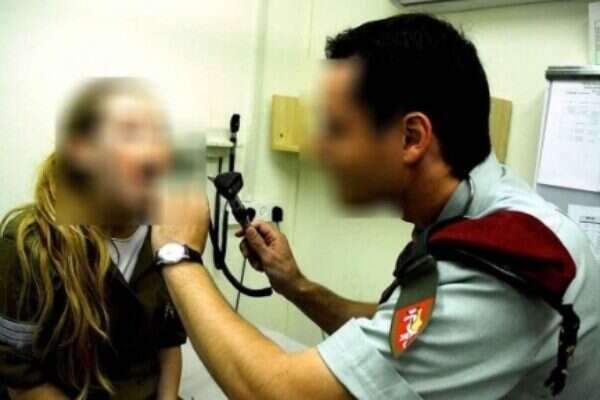
Despite increasing requests to make us of private medical care, the Israel Defense Forces Medical Corps has decided to uphold its policy to prohibit soldiers serving mandatory duty from paying for private medical care in what the army says is an effort to enforce equality. Under this policy, soldiers are required to seek treatment only from the military's public health services. The Medical Corps, in cooperation with leading experts in ethics, issued a position paper on the issue following an increase in the incidence of soldiers seeking to use personal insurance plans to circumvent the public healthcare system in Israel, which includes military health clinics. Under Israeli healthcare law, soldiers are to have access to military healthcare, rather than state-provided health clinics. Still, some 50% of Israelis -- including soldiers and soldiers' parents -- have private health insurance plans. The Medical Corps ethics committee led by IDF Chief Medical Officer Brig.-Gen. Dudu Dagan met with a team of military and civilian legal and medical experts to discuss the issue. The committee's conclusions were presented at the Israel National Institute for Health Policy Research's annual conference on Wednesday. "The current private health insurance trend has not bypassed IDF soldiers, and there has been a rise in the demand for private medical care, even among soldiers in mandatory service," said one expert at the discussion. Those in support of allowing soldiers to access private healthcare said that soldiers have the basic right to make choices pertaining to their own health and that the majority of Israelis purchase medical insurance beyond what is available through the public system. Deferring military service in order to receive private medical care -- the only option available to soldiers -- is a hassle and interferes with quality of care, supporters of the right to private medicine argued. Those opposed to allowing conscripts to access private medical services argued that it is detrimental to equality in the military and also affects the quality and availability of military medical care to other the soldiers. They also said that it would interfere with military medical procedures and liability for treatment. Ultimately the IDF stood firm on its decision against private medicine. The committee's position paper, released at the end of the debate, states that the Medical Corps "aspires to provide professional and accessible medical services to all its soldiers in an equal manner," and that the only way to receive private medical care in the army is to defer one's service. Among those who contributed to the position paper were Dr. Hagit Padova and Dr. Shani Brosh of the Medical Corps. Former Health Ministry Director-General Prof. Ronni Gamzu and Assuta Medical Centers chairman Prof. Shuki Shemer participated in the ethical debate. According to Shemer, "It's nice that the military aspires to equality, but we cannot ignore that the public wants and needs private medical care for whatever reason and wants to chose their treating doctors." "There were varying opinions presented during the debate, including representatives from the Medical Corps who supported allowing soldiers to access private medicine," he said. "We as parents raise our children and worry over every little sneeze. If at a certain point, a family does not think their child is receiving optimal care, I think you shouldn't prevent them from seeking out private medical care."
IDF nixes private medical care for soldiers, citing equality
"It's nice that the military aspires to equality, but we can't ignore that the public wants and needs private medical care for whatever reason and wants to chose their doctors," Assuta Medical Centers chairman Prof. Shuki Shemer says.
Load more...