Please take me to 101 Rue de lUniversite, I tell the Paris taxi driver. That address stinks of politics, he answers. The driver, who is only a few years older than his Peugeot taxicab, looks like he hasnt had a haircut since the day he bought it. The trip is anything but dull. If it were up to him, we would resume the 1968 riots in Paris, but this time with a right-wing slant. My driver doesnt like immigrants, foreigners or socialists. Above all, he doesnt like the present state of things. What are you going to do there- he asks. Im having lunch with a member of the National Assembly from the Socialist Party. And not only that hes a Jewish man with an Israeli passport who served in the army. In Israel. We're not responsible for what happened in 1939, the driver says without missing a beat. Besides, look what Israel is doing to the Palestinians. From that point on, the trip continued in silence a deafening silence that filled the cab. I first met National Assembly member Avi Assouly in the Parc des Princes football stadium in August 1988. Marseille, Pariss bitter rival, had come to the City of Lights and I, as an Israeli correspondent in Paris, was surprised to find Avi Assouly, then a reporter for Le Provencal, talking to me in the bleachers. Eventually, both of us sports writers moved on in life this writer is a former ambassador, while Avi Assouly became a member of the French National Assembly, the French equivalent of Israels Knesset. A week ago Wednesday, Avi and I arranged to have lunch at the Palais Bourbon, the seat of the French National Assembly. The previous month, we met in his city, Marseille, at the conference of the Representative Council of French Jewish Institutions (CRIF). It was there I discovered, to my surprise, that the former sports reporter had gotten a really big promotion. * * * We met on what turned out to be a complicated day for Paris. The following day, Palestinian Authority Chairman Mahmoud Abbas planned to present his proposal to upgrade Palestines status to that of an observer state to the U.N. He planned to do so unilaterally, in violation of the Oslo Accords. Former President Nicolas Sarkozy is the one who recommended a year ago, during his term, that the PA chairman make an identical move in the U.N. General Assembly. The move failed in the U.N. Security Council because the United States, which has the power to veto, opposed it. A year later, it became clear that the Palestinians had a majority, but the big question was what France would do. The previous day, French Foreign Minister Laurent Fabius announced that France would support the decision, since President Francois Hollande had promised to work for the two-state solution during his election campaign. As far as France is concerned, Abbass unilateral initiative strengthens the PA at Hamass expense and promotes a two-state solution. Articles in the morning newspapers told of how France not only supported the unilateral initiative, but also hoped to bring as many European countries on board as possible. Paris would do a good job. Spain, Italy and Portugal were quick to join in. Assouly, who visited Sderot, Kiryat Malachi and Ashkelon during Operation Pillar of Defense, has firm opinions about the way the world in general, and France in particular, regard Israel. French people dont see Israel as you do, he says. They also dont see the conflict as you do. Youre familiar with the threat of terrorism. You see your friends and family inside the shelters. French citizens see Israel as a rich country equipped with tanks and jets, with a strong army. And whom does it go up against? Miserable Palestinians. Theyre locked up in Gaza, which is like a big prison. Thats their image of Gaza. A great big prison where women and children are locked up and wretched. Almost all the French media are pro-Palestinian, he says. France has always liked the underdog. People here dont like winners, so they wont favor a strong Israel. But Israel cant afford to be weak, and thats where the frustration lies. Im a fervent Zionist Avi and I go into the cafeteria in the National Assembly building. Any relationship between the cafeteria at the Knesset and the one at the Palais Bourbon is purely coincidental. But most of the items on offer are things he cannot eat. He leaves the ham, as well as oysters and other seafood, for his colleagues, contenting himself with the large variety of kosher fish. Q. Are you pigeonholed here as a Jewish supporter of Israel- Im the vice president of the French-Israel Friendship Committee in the French National Assembly. Its harder to be any more of a supporter than that unless I become the committee president one day. Besides, during my first term in the National Assembly, they made me a member of the France-Monaco Friendship Committee and the France-Cambodia committee as well. Everybody knows Im not only a Jew but also a fervent Zionist. When asked what form his Zionism takes, he answers, Just about an hour ago, we concluded a meeting of National Assembly members from the Socialist Party with Foreign Minister Laurent Fabius. The National Assembly members were given the opportunity to ask the minister questions about current events. Of course, the subject of Israel and the Palestinians was at the center of things because the foreign minister had come back from Israel, where he had been the first guest from a Western country to arrive during Operation Pillar of Defense. Some National Assembly members shouted that the suffering of the Palestinian people could no longer be borne. A National Assembly member whose name I dont want to mention even demanded that France begin talks with Hamas. At that point, I took the floor and asked my colleagues how it was possible to hold a dialog or make peace with Hamas, whose covenant calls for Israels destruction. Q. What was the ministers answer- He didnt give a specific answer to my question. At events like these, everyone is given the opportunity to ask a question, and the minister gives a single general answer that accords with the governments position. Q. What do you think of the decision of Prime Minister Jean-Marc Ayraults socialist government to market Mahmoud Abbass unilateral initiative to the European Union- I think we should have waited until the elections in Israel, mainly because theyre going to be held next month, in January. France has a role in the conflict. I was in Toulouse last March and attended a meeting between President Francois Hollande and Bibi Netanyahu. I can say that the meeting between the two leaders was friendly. Netanyahu told the French president that Israel was willing to return to the negotiating table with no preconditions. Q. And then Mahmoud Abbas broke the rules by going to the General Assembly. What Abbas did actually made Hamas stronger after Operation Pillar of Defense. His act didnt necessarily make Hamas weaker, as many people think. Making Hamas stronger means making Iran stronger. We need to understand that Iran is already waging war against Israel through Hamas. That needs to be clear to the world, and unfortunately it is not. Assouly claims that while Israel and France disagree about the vote in the U.N., they are in total agreement about one thing: the Iranian threat. Iran is Frances problem too, Assouly says. Iranian terrorism also exists in Mali, Algeria and the Saharan Desert. We talk about al Qaida, but we mustnt forget the contribution of Iran, which is stirring up trouble in every possible place on earth. Iran is Frances enemy, too. In the corridors of the French National Assembly, Assouly is considered a celebrity. Everybody knows him and greets him with a smile. Since I was elected to the National Assembly, Ive been on the cover of Lib ration. Ive also been written up in Paris Match, one of the most important magazines in France, he boasts. Le Monde ran a big article about me, and so did the sports magazine Lequipe. Im also interviewed a lot on the various French television stations. A soccer career cut short Avi Assouly, 62, has an interesting life story. He was born in Algeria in June 1950. As a teenager he wanted to be a soccer player, but ended up as one of Frances best-known sports reporters. He also served in the Israel Defense Forces. In 1973, I went to Israel for the first time, he recalls. I was 23 years old. Before I went to Israel, I had worked at the court in Besancon, where my family immigrated when they left Algeria. I came to Israel on vacation. One day in July, I was playing soccer on a beach in Tel Aviv. Somebody saw me playing and asked me if Id like to play on the Maccabi Tel Aviv team. I said, Why not- Assouly chuckles at the memory, a childlike smile on his face. As a result of this unexpected proposal, Assouly gave up his return ticket to France. Once he admitted that he had done a stint as a professional player in Besancons second league team (Six players, that was all, he says), he found himself at the Maccabi Tel Aviv training camp in Shefayim two weeks later. The managers name was Leibovich (Haim Leibo Leibovich), he recalls. I worked in the cotton fields during the day, and in the evenings I trained with the Maccabi team players, mostly with the young people, he recounts slowly. Then, one day they brought me to play in a training match with the adult team. I was a far rightist and they liked me a lot, he says. On the eve of Yom Kippur, October 6, 1973, Assoulys adventure ended. The people at the hotel told me to leave because Mr. Leibovich couldnt support my staying any longer, and that was how my soccer career was cut short. I wanted to join the army, but they said no. So I found myself as a volunteer on a kibbutz in the north. I wanted to be near the border. I worked in the dairy and went back to France when the war was over. Q. In the end, you realized your dream to join the IDF. Yes. In 1984 I went back to Israel and volunteered. I still remember basic training at Training Base 4 and serving afterward on bases in the south. You cant imagine how I felt when I got my Israeli passport, he says. I got my life back When Avi returned to France in 1985, he found his niche not in sports, or in writing about sports either. He describes his entry into politics as a coincidence. In January 2010, Michel Vauzelle, the president of the regional council of Provence-Alpes-Cote-dAzur (PACA), where Marseille is located, asked Assouly to take on the sports portfolio for the district. Everybody in Marseille knows me and likes me blacks, Jews, Arabs, whites and Africans, he says. I have no problem with anybody. And that was how I found myself an elected representative of the district. I told my wife Id serve until 2015 and then retire, he says with a smile. But suddenly, in May 2012, a month before the National Assembly elections, Marie-Arlette Carlotti, a politician from the Socialist Party, asked me to replace her on the party list. She had no chance against the right-wing candidate in Marseille. Meanwhile, Francois Hollande defeated Sarkozy in the presidential elections and appointed Ayrault as prime minister. He appointed Carlotti as Junior Minister for the Disabled at the Ministry for Social Affairs and Health. Since Carlotti couldnt serve as a National Assembly member and a minister at the same time, she told me that if we won the elections, I would be going to the National Assembly in her place. And thats what happened. Whod have believed it- Assoulys lucky streak goes beyond his professional career. In 1992, at the semi-finals of the Coupe de France between SC Bastia of Corsica and Marseille, a temporary grandstand collapsed, killing 18 people and injuring nearly 3,000. Assouly was one of the people on the grandstand. He fell 17 meters, sustaining serious injuries throughout his body. Id already been covered and pronounced dead, he says. But a young Corsican man whom Id met in the past came to pay his last respects. He wanted to pray for my soul according to the local custom. When they lifted the sheet off my face he saw me spitting blood, and I got immediate medical attention. God gave me back my life. Assouly, who hopes to live to old age, has purchased a cemetery plot in Beer Sheva, where his parents are buried. Before we say our goodbyes, I ask him how anti-Semitism in France can be resolved. Its always existed and always will, he says sadly. Its in the DNA. But you should know that France is very much aware of the problem, and the Minister of the Interior has said more than once that anyone who harms a Jew harms the Republic. I agree with him. Despite the general plague of anti-Semitism, Assouly is proud to be the first Jewish member of the National Assembly to come from Marseille. He is even prouder that there are almost no anti-Semitic incidents in his city. Thats how it is in an ancient cosmopolitan city where people are accustomed to immigrants, he says.
X
שיתוף כתבה
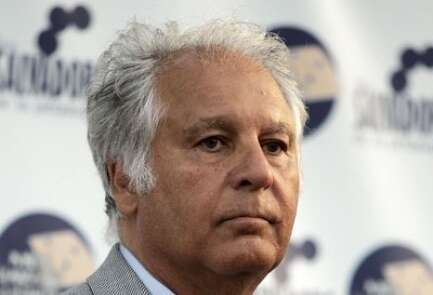
'French media is with the Palestinians'
Israel has a new friend in the French parliament, Avi Assouly: Socialist, proud Jew and former IDF volunteer • Assouly holds an Israeli passport and served a brief stint on the Maccabi Tel Aviv soccer team • 'The French media are pro-Palestinian,' says Assouly, who describes himself as very popular in France, despite his outspoken pro-Zionist views.