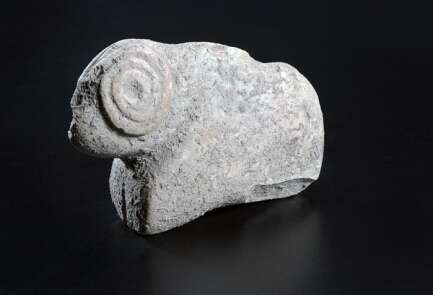
An archaeological dig in Tel Motza near Jerusalem has uncovered two figurines dating from the Stone Age. The figurines, a ram and a wild bovine, are around 9,500 years old and may have been used as good-luck charms for hunting. The find was made during excavations being carried out by the Israel Antiquities Authority ahead of the widening of Highway 1, the main road linking Jerusalem and Tel Aviv. According to Dr. Hamoudi Khalaily, one of the directors of the dig, the figurines are from a time in which the transition from nomadism to sedentary life was beginning. "The archaeological evidence from [the Pre-Pottery Neolithic B time period], particularly the artistic objects such as the figurines that were discovered at Tel Motza, teaches us about the religious life, the worship and the beliefs of Neolithic society," Dr. Khalaily said. "Presumably, the figurines served as good-luck statues for ensuring the success of the hunt and might have been the focus of a traditional ceremony the hunters performed before going out into the field to pursue their prey, he added. Anna Eirikh, the other director of the dig, theorized that the figurines could have a connection to the animal domestication process. Based on uncovered artifacts, it is believed that Tel Motza was the largest site of its kind in the mountains near Jerusalem.