Nearly 1,000 citizens, including religiously observant and non-religious people, rabbis and soldiers, recently attended a conference held at the Ramada Renaissance Hotel in Jerusalem. The conference was organized by the Conversion Division of the Prime Ministers Office to discuss the ever-improving situation of converts to Judaism in Israel. According to the encouraging statistics that were presented in 2011, 4,239 converts underwent government conversions. Of them, 1,936 hailed from the former Soviet Union, 1,647 were from Ethiopia and 710 were from other countries. The director of the Conversion Division, Shmuel Yaselson, claimed that the numbers were increasing because young people were becoming more aware of the option to convert. The optimistic atmosphere seemed to eclipse the recent uproar over conversions performed in the Israel Defense Forces that were annulled by the rabbinical court. But some rabbis have apparently not forgotten. Despite multiple rabbinical approvals in this matter, some local authorities and rabbis of cities still make it very difficult for couples to marry if they converted to Judaism in the IDF. Itamar and Tamara Peretz, both 25, were married just last week. For many months, they had to deal with the insensitivity of rabbis on the religious council when they tried to register for marriage in Hadera, where they live. My wife, who was then my fianc e, converted during her service in the IDF. She and I went to the rabbinate in Hadera and asked to register for marriage. The moment they realized that Tamara had done her conversion in the army, they began treating us differently," Peretz said. "They shouted at her and spoke in a nasty way. I contacted the chief rabbinate and asked them to issue a document confirming the validity of the conversion and obligating the rabbinate in Hadera to register us for marriage," he added. Instead of dealing with the issue, it got to a point where the rabbinate in Hadera refused to speak with us or meet with us, and even hung up on me. Peretz even has recordings of religious council members saying openly that they did not accept conversions that had been done in the army. Despite the effort that the couple had invested, ultimately they gave up and completed the marriage process with the rabbis of the Tzohar organization, an organization that offers an alternative to the state-run rabbinical service. Peretz was angry. We are both citizens, in every way. We serve in the reserves, we work and pay taxes. They tried, illegally, to take away our right to marry. Its really awful that in a country governed by law, in a government agency, where the rabbis receive their salaries from the state, they do not obey the law. The obstacles continue One man took it upon himself to fight against this phenomenon: Rabbi Shaul Farber, the chairman of ITIM (the Hebrew acronym for Resources and Advocacy for Jewish Life), which is spearheading the battle for owners of conversion certificates (individuals who completed the conversion process) to be fully recognized as Jews. In 2010, Farber petitioned the High Court of Justice to obligate marriage registrars to recognize conversions performed under state auspices and afford such converts the basic right to a normal Jewish family life in Israel. The battle came to a head on Sept. 6, during a Supreme Court hearing surrounding the obligation of city rabbis to register converts for marriage. During the course of the hearing, a representative of the State Attorneys Office asked a question about the validity of conversions performed under IDF auspices. This led to the introduction of a bill that would determine the legal status of those who converted through the IDF. The broad media coverage of the bill resulted in unprecedented support in the High Court of Justice and the validation of the IDF conversions by both Rabbi Ovadia Yosef, the spiritual leader of the ultra-Orthodox Shas party, and Sephardi Chief Rabbi Shlomo Amar, in January 2011. In its response to Itims petition, on March 9, 2011 the state proposed a solution that would allow people who held a conversion certificate to register for marriage exactly as any other Jewish couple would do. After receiving additional clarifications, the appellants agreed to the arrangement, which stipulated that if the marriage registrar in the registrants city of residence refused to examine and approve the request, the religious council itself would make sure that the file was approved by one of the other registrars who would be appointed for that purpose. The council would also make sure that the request was returned to the religious council so that it could finish processing the file. According to the agreement, a marriage file would be opened in the bureau where the couple wished to register (according to the instructions for the marriage registration procedure), in the same manner as files were opened for couples who had not undergone conversion. The fact that one of the two individuals had undergone the conversion process under the states auspices would not delay or hinder the opening of the marriage file. In addition, the religious council would be responsible for the transfer of the file for the examination and approval of one of the marriage registrars mentioned in the states declarations. The couple would not be asked to contact another marriage registrar for any reason whatsoever. What is the situation today- "The guidelines formulated following the High Court of Justice hearing which require registration of converts have been largely enforced," said Farber. Indeed, fewer and fewer couples are compelled to find humiliating solutions in order to marry in accordance with Jewish law and tradition. Yet despite this, the situation is far from satisfactory. Over the past several months, ITIM's advice and information center received a higher number of calls complaining about rabbinates that made it difficult for converts to register for marriage, including the rabbinate of Hadera. Other complaints were of city rabbis who forced converts who had undergone their conversion processes in the IDF to go to the rabbinical court for further clarification. Other rabbinates, such as that of Rishon Lezion, still require converts to undergo a humiliating procedure, not required of non-converts, before they are registered for marriage. ITIM's investigation revealed that while new city rabbis were appointed in Ashkelon and Petach Tikva, in most cases converts were treated with great suspicion when they came to register. Their requests are not always forwarded automatically to the Sephardic city rabbi, who goes by Rabbi Ovadia Yosef's ruling. According to Farber, some marriage bureaus still refuse to register converts for marriage. Such incidents took place in Hadera, Acre, Rosh HaAyin and Hof HaSharon, among other places. The calls that come to ITIM are only a drop in the bucket, because only very few converts are familiar with ITIMs work in the field. What are the essential differences between converts and other Jews- Many converts receive humiliating treatment. They are required to once again prove their Jewishness after having completed the conversion process in accordance with Jewish law and tradition. We have found ourselves asking the rabbinate time and again to enforce its own rules. What would you consider success- "On the national level, this is something that affects each and every one of us. There are about 300,000 non-Jewish people living in Israel today who came here under the Law of Return and are raising families. We want to reduce, as much as possible, the obstacles that stand before those who wish to convert, to prevent a scenario in which a couple cannot marry for religious reasons. A spokesman for the Religious Services Ministry commented, We are familiar with the problem of rabbis who are unwilling to register for marriage converts who converted under IDF auspices. During a discussion on the subject, a new procedure was instituted to make things easier in such cases. According to the new procedure, couples are to register at the religious councils, and if the local rabbi has a problem with the conversion, he will transfer the registration to rabbis who have been appointed for that purpose. "These are Jews who were properly converted, and there should be no problem registering them for marriage. We have argued that an order should be issued to fire any rabbi who fails to comply with the law, but ultimately the order was rejected and the current guidelines were instituted instead couples register at their local council and are approved, whether by the local rabbi or a different rabbi," he said.
X
שיתוף כתבה
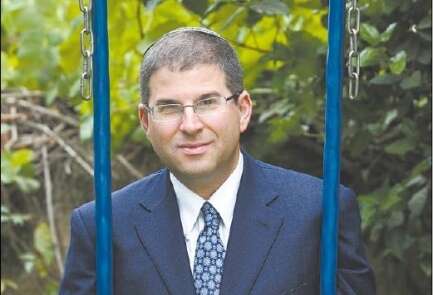
Smoothing converts rocky road to marriage
Humiliation and unnecessary interviews are the lot of Jewish convert couples who wish to register for marriage at the rabbinate in their city • Rabbi Shaul Farber, the chairman of ITIM, has gone as far as the High Court of Justice to put an end to it.