As the world was confounded by a new and menacing computer virus affecting mainly the Middle East and specifically Iran, Strategic Affairs Minister Moshe (Bogie) Ya'alon said Tuesday, "Those who view Iran as a significant threat are likely employing various means, including this one, to attack it." Speaking to Army Radio, Ya'alon said, "Israel has been blessed with elite technology, and these tools that we pride ourselves in open up all sorts of options for us." After Stuxnet, the computer worm that caused extensive damage to Iran's nuclear facilities in 2010, the new, far more powerful worm has recently been discovered, targeting computers in Iran, Israel, the Palestinian Authority and Syria. But who is behind this dangerous virus- The new worm that has infected hundreds of computers in the Middle East is capable of collecting data from disk drives, turning on the computer's microphone and recording conversations conducted in its vicinity, monitoring keystrokes and reconstructing texts, disabling printers, deleting files, registering auxiliary devices, making print screens, monitoring internet use and relaying the data to the worm operator. Currently, the available anti-virus programs are incapable of detecting this worm. Kaspersky Lab, a Russian-based multi-national computer security company that discovered the virus, said Monday that the new virus which they named "Flame" was one of the most malicious and complex viruses ever concocted. They surmised that the Flame virus had been written at the behest of the same country that had unleashed the Stuxnet virus and the similar Duqu virus. "Stuxnet and Duqu belonged to a single chain of attacks, which raised cyberwar-related concerns worldwide," said Eugene Kaspersky, CEO and co-founder of Kaspersky Lab, in a statement. "The Flame malware looks to be another phase in this war, and its important to understand that such cyber weapons can easily be used against any country." Symantec, one of the world's largest security software manufacturers, also warned against this new worm on Monday, which experts believe has been collecting data covertly for at least two years. Symantec experts felt that the unprecedented cyberattack launched by the Flame virus was most likely the work of an organized group, not an individual, with extensive manpower operating on the orders of a clear source. Symantec's initial investigation revealed that the focal points of the worm were concentrated in the West Bank, Hungary, Iran and Lebanon. Additional targets were found in Russia, Austria, Hong Kong and the United Arab Emirates. At this time it is not clear whether the threat targets specific industries or specific individuals, but initial data indicates that the targets could not have been specific, and that many of the infected systems were personal computers that ran home-based internet services. The infected computers were found to be mainly in the business sector and in academic institutions. Suspicion of the new virus arose when the Iranians discovered that the computers of their Oil Ministry had been hacked, as had the computers of Iran's national oil company, and data was stolen and deleted, disrupting the supply of oil. Professor Alan Woodward, from the computing department at the University of Surrey, said the virus could "vacuum up" information. "This wasn't written by some spotty teenager in his or her bedroom," he told the Daily Telegraph. "It is large, complicated and dedicated to stealing data while remaining hidden for a long time." In Iran, 189 computers have been found to be infected. In Israel, including the West Bank, 98 computers were infected, followed by Sudan, Syria, Lebanon, Saudi Arabia and Egypt. Ilan Proimovitch, Kaspersky Lab's representative in Israel, told Army Radio on Tuesday that the new Flame virus was a "masterpiece." "The program doesn't operate independently but rather it is remotely activated only when it receives a command. That is why it is so difficult to detect it is not active all the time. This virus is so sophisticated that it can change its characteristics and evolve in accordance with commands. This is a masterpiece of program writing, not something that a bored student or one guy, as talented as he may be, could have done," he said. "The resources required [to have developed this virus] are immense resources that would be available only to a country."
X
שיתוף כתבה
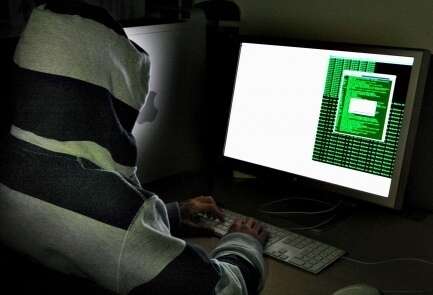
Who is behind 'masterpiece' computer virus against Iran?
Strategic affairs minister says, "Israel has been blessed with elite technology, and these tools open up all sorts of options" • Experts believe a country, not individuals, behind virus that records conversations, monitors keystrokes and deletes files.