Jordanian Prime Minister Awn al-Khasawneh resigned suddenly Thursday, just six months after he took office with a pledge to push for political reforms. He was quickly replaced by a veteran politician known to be close to King Abdullah II. Jordan state TV announced that the king, an absolute ruler, had issued a royal decree accepting the prime ministers resignation. A government official said the king had named Fayez Tarawneh as a successor. Tarawneh served as premier more than a decade ago, when King Abdullah assumed power. The king blamed his resigning prime minister for failing to push hard enough for reforms, reflecting frustration on all sides over demands for power-sharing and fair representation in parliament. In a letter to Khasawneh, the king complained, "Achievements so far are far less than what is required and way below what we expected." The king appeared to come down on the side of those pushing for swift moves toward a greater say in politics and improved economic conditions in resource-lacking Jordan, which depends on U.S. aid to keep its economy afloat. Such measures would cut into his own power as absolute ruler. "We neither have the leisure of time nor the possibility of delinquency and postponement," the king wrote. His letter was read on Jordan TV. The sudden switch appears to reflect disagreements between Khasawneh and the king over reforms, particularly a law to govern this year's parliamentary elections. Critics have charged that an early draft of the law favored the king's traditional backers by drawing districts that maximized representation for Bedouin tribes. Khasawneh was working on a revised law to even out the representation, but this drew criticism from Jordan's powerful security services and conservative tribal elders. Khasawneh resigned at his own initiative during a trip abroad, the official said, apparently displeased with the king's decision to extend a session of parliament to debate the bill. The official insisted on anonymity, citing the sensitivity of the matter. King Abdullah is an absolute ruler, but the sudden switchover in premiers indicated that public pressure may be having some effect. Jordanian protesters demanding political reforms have been taking to the streets sporadically for the past 15 months, though in smaller numbers than elsewhere in the Arab world, where popular uprisings toppled longtime rulers in Egypt, Libya, Tunisia and Yemen. Political analyst Labib Kamhawi said Khasawneh's surprise resignation would "put added pressure on the king and force him to reform." "There will be increased tension between the palace and popular movements seeking reforms," Kamhawi said. "It's clear that Khasawneh resigned because of differences with the king over the reform process." The official said Tarawneh would form his cabinet next week. Tarawneh, 62, is an ex-ambassador to the U.S. who headed the Jordanian team that negotiated the peace treaty with Israel in 1994. He was prime minister in a cabinet that oversaw the transition of power to King Abdullah from his late father, King Hussein, in 1999. His stand on the political reform demands was not immediately clear. Khasawneh, 61, took office on Oct. 17, pledging to speed up the reforms. A liberal known as a clean politician, he served for several years as a judge at The Hague-based International Court of Justice. He maintained cordial ties with the opposition, including the powerful Muslim Brotherhood, the country's largest opposition movement. The Jordanian branch of the brotherhood has been at the forefront of protests demanding wider public participation in decision-making. It was not known if Khasawneh planned to return to his previous job in The Hague. The International Court of Justice is expected to hold an election Friday to fill Khasawneh's post of judge, which he vacated to take up the prime minister's position.
X
שיתוף כתבה
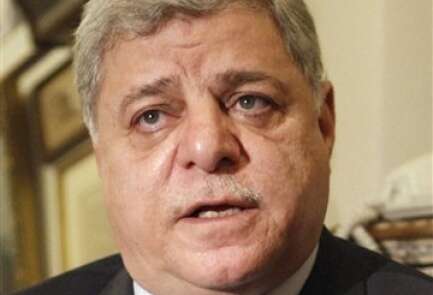
Jordanian king blames outgoing premier for slow reform progress
Just six months after taking office, Jordanian Prime Minister Awn al-Khasawneh resigns • Jordan's King Abdullah blames Khasawneh for not pushing hard enough to advance reforms, saying, "Achievements are far less than what is required."