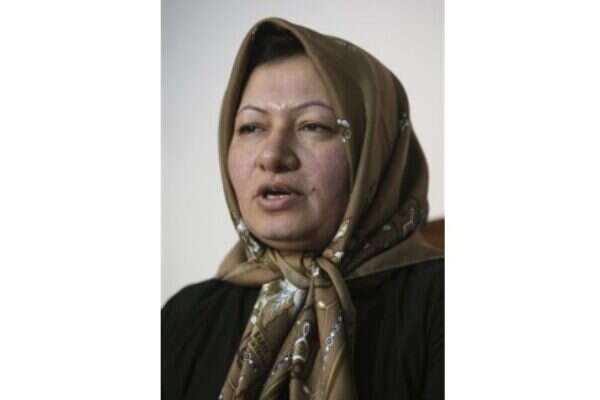
Authorities in Iran said Sunday they are again moving ahead with plans to execute a woman sentenced to death by stoning for an adultery conviction in a case that sparked an international outcry, but are considering whether to carry out the punishment by hanging instead. Sakineh Mohammadi Ashtiani is already behind bars, serving a 10-year sentence on a separate conviction in the murder of her husband. Amid the international outrage generated by her case, Iran in July 2010 suspended plans to carry out her death sentence on the adultery conviction. On Sunday, a senior judiciary official said experts were looking into whether the punishment of stoning could be changed to hanging. "As soon as the result [of the investigation] is obtained, we will carry out the sentence," he said, according to the semi-official ISNA news agency. The charge of a married woman having an illicit relationship requires punishment by stoning, he said. He said judiciary chief Ayatollah Sadeq Larijani ordered a halt to the stoning in order to allow Islamic experts to investigate whether the punishment can be altered in Ashtiani's case. Ashtiani was convicted of adultery in 2006 after the murder of her husband. Amnesty International says she received 99 lashes as her sentence but she was subsequently convicted of "adultery while being married," which the human rights group says she denied. She was later convicted of being an accessory to her husband's murder and sentenced to 10 years in jail, which she has been serving in a prison in East Azerbaijan. The EU called Ashtiani's stoning sentence "barbaric." The Vatican pleaded for clemency and Brazil offered her asylum. The case further strained Tehran's relations with the West, already at odds over Iran's disputed nuclear program. Two reporters for German newspaper Bild am Sonntag were detained in Iran in October last year when they were interviewing Ashtiani's son without official permission, highlighting the sensitivity of the case. The two were released in February. Iranian authorities dismiss allegations of human rights abuses, saying they are following Islamic law.
"There is no haste ... We are waiting to see whether we can carry out the execution of a person sentenced to stoning by hanging or not," said Malek Ajdar Sharifi, the head of the justice department of East Azerbaijan province, where Ashtiani is jailed.
Execution looms for Iranian woman jailed for adultery
Iranian authorities moving forward with plans to put Sakineh Mohammadi Ashtiani to death by either stoning or hanging • Ashtiani was sentenced to death after she was convicted of adultery in 2006, despite international outcry.
Load more...