Jerusalem's Jewish population has dramatically increased since the city's reunification in 1967, Israel Hayom learned Wednesday. The population grew by 174% from 1967 to the end of 2015 -- from 197,700 to 542,000 Jews, data shows. According to data provided by the Jerusalem Institute for Policy Research, the total population in the capital reached 865,700 at the end of 2015, twice the population of Israel's second-largest city, Tel Aviv-Jaffa. In 2015, approximately 24,000 babies were born in Jerusalem, comprising 13% of all babies born in Israel. The average number of children per family in Jerusalem is 3.9, compared to the nationwide average of 3.1 and the Tel Aviv-Jaffa average of 2.2. The fertility rate in Jerusalem over the past few years has increased among Jews, while decreasing among Arabs. In 2015, the number of children per Jewish family in Jerusalem averaged at 4.3, whereas in the city's Arab sector the number of children per family averaged 3.2. "The growth in the Jewish sector reflects the growth of the ultra-Orthodox and religious communities, while the decline in the Arab sector mainly reflects modernization," said Yair Assaf-Shapira, a researcher at the institute. In 2015, 3,138 new immigrants made their homes in Jerusalem -- the largest number since the beginning of the millennium. Numbers show that 96% of households in Jerusalem have at least one cellphone, similar to the statistic for the Israeli public at large, which stands at 97%. A less encouraging statistic is that 47% of Jerusalem residents live below the poverty line. Broken down by sector, 27% of the city's Jewish residents and 79% of the city's Arab residents live under the poverty line. "The growth of the Jewish population in the city is connected to the mass construction of new neighborhoods since the reunification, principally in areas added in 1967 with the reunification," Assaf-Shapira said.
X
שיתוף כתבה
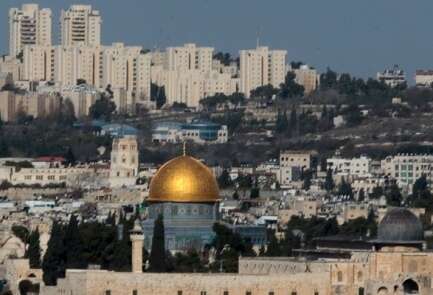
Jewish population in Jerusalem up 174% since 1967 reunification
Jewish population in capital up from 197,700 to 542,000 thanks to increased fertility and construction of new neighborhoods • Fertility rate up among Jews, down for Arabs • Jerusalem's population at end of 2015: 865,700, twice that of Tel Aviv-Jaffa.