In a fascinating discovery at the Tel Dor excavation site in northern Israel, a rare scarab seal belonging to a senior Egyptian official of the 13th Pharaonic Dynasty (18th-17th centuries BCE) has been found. The seal was discovered by Alexander Ternopolsky, an amateur birdwatcher, who handed it over to the archeologists at the site. "The scarab must have belonged to a very senior figure in the kingdom, probably the viceroy responsible for the royal treasury," said Professor Ayelet Gilboa from the Archeology Department at the University of Haifa. Gilboa is heading the Tel Dor excavations together with Professor Ilan Sharon from the Hebrew University of Jerusalem. "The owner of this scarab filled a similar position to that held by Joseph in Egypt after he interpreted Pharaoh's dreams," Gilboa said. The coastal city of Dor, situated at the foot of Mount Carmel, served as a key port city for thousands of years. For long periods of human history, until the Romans built Caesarea, Dor was the most important commercial center in the area and a hub for commercial and passenger traffic. The city is mentioned in Egyptian inscriptions dating back 3,500 years, as well as in the biblical books of Joshua, Judges, and I Kings. Excavations began at Tel Dor in the middle of the previous century. Findings include settlements from the Late Bronze Age; a Phoenician community and Israelite and Assyrian administrative centers; a city and palace from the Hellenistic period; and monumental remains from the Roman period, including a pair of temples that may have been dedicated to Poseidon, the Greek god of the sea. According to Gilboa, "The rains this past winter must have eroded the soil on the southern slope of the site, and thanks to Alexander Ternopolsky's sharp eye, the scarab was discovered." The stone scarab is engraved with the name of its owner, as well as his position and ankh (cross with a looped head) symbols, which symbolized eternal life. The description of the scarab owner's position includes such phrases as "overseer of the treasury," "bearer of the seal," and more. The owner's name has not yet been deciphered. The archaeologists believe there are two possible scenarios explaining how the scarab reached Dor. The first is that a representative of the viceroy may have come to the trading hub, which was a supply base for spices, resin and other commodities highly valued by the Egyptians, in order to complete a deal for his superior -- thus carrying the viceroy's seal. The second scenario is that the scarab arrived at Dor much later, perhaps even during the Roman period, when "antiques" of its kind were in demand. Those wishing to view the captivating scarab can see it, alongside many other finds from Dor, at the Mizgaga Museum at Kibbutz Nahsholim.
X
שיתוף כתבה
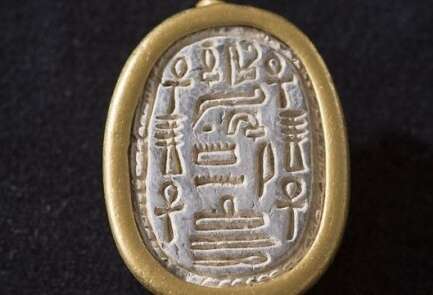
Birdwatcher discovers ancient Egyptian scarab seal at Tel Dor
"The scarab must have belonged to a very senior figure in the kingdom; owner of seal filled a similar position to that held by Joseph in Egypt," says archaeology Professor Ayelet Gilboa • Seal engraved with name, owner's position and ankh symbols.