The Pentagon recently declassified a 1987 report outlining facts about Israel's nuclear program. Israel has always maintained a policy of ambiguity regarding its nuclear program, neither confirming nor denying military nuclear capability. The request to publish the report was initiated three years ago, under the Freedom of Information Act. The 386-page top-secret document titled "Critical Technological Assessment in Israel and NATO Nations" was declassified in mid-February, but only captured public attention in recent days. The authors of the document equated Israeli facilities like the Soreq Nuclear Research Center and the Negev Nuclear Research Center near Dimona "to our Los Alamos, Lawrence Livermore and Oak Ridge National Laboratories" -- key sites in the U.S. nuclear program. The report, which was slimmed down to 129 pages prior to its release, goes into great detail regarding the development of Israel's nuclear program over the span of two decades, pointing to its strengths and weaknesses. The report states that in the 1980s, Israel was "developing the kind of codes which will enable them to make hydrogen bombs. That is, codes which detail fission and fusion processes on a microscopic and macroscopic level." Despite these advances, the report asserts that when compared to the American nuclear program, Israel still had a ways to go: "As far as nuclear technology is concerned, the Israelis are roughly where the U.S. was in the fission weapon field in about 1955 to 1960." But the report also lauds Israeli researchers' "ingeniously clever" solutions to complicated problems in more than one instance, pointing also to "ingenious Israeli inventions." Besides Israel's nuclear developments, the report also touches on other aspects of Israel's defense technology, including the development of short wavelength lasers capable of being attached to an F-15 fighter jet or an Air Force anti-satellite miniature homing device. The report indicates that the development had not yet been successful. The report was made public after a three-year legal battle waged by journalist Grant Smith, the head of a Washington think tank. Smith is known for his extreme anti-Israel stance. When the document was first declassified, it garnered nearly no media attention. It was only over the last weekend that American Jewish and right-wing outlets began reporting about it. Several outlets have alleged that the timing of the declassification was deliberate -- weeks before Prime Minister Benjamin Netanyahu was set to address Congress on the perils of Iran's nuclear program. Some have alleged further that the release of the document was part of the Obama administration's revenge against Netanyahu. But a Pentagon spokesman told the Jerusalem Post last week that the Israeli government was informed in advance that the document would be declassified and voiced no objection. The spokesman explained that under the Freedom of Information Act the U.S. administration has to release the information unless a written request is submitted by a foreign government to withhold the information. "Israel did not object to the release of this information," the spokesman said.
X
שיתוף כתבה
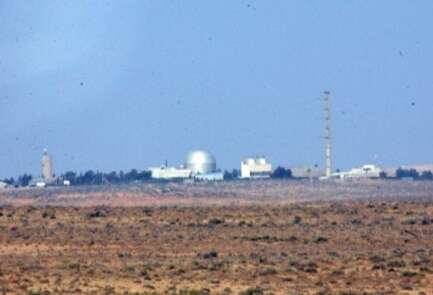
US declassifies 1987 document exposing Israel's nuclear program
In the document, titled "Critical Technological Assessment in Israel and NATO Nations," the authors laud Israeli researchers' "ingeniously clever" solutions and "ingenious inventions" • Document suggests Israel was developing a hydrogen bomb in the 1980s.