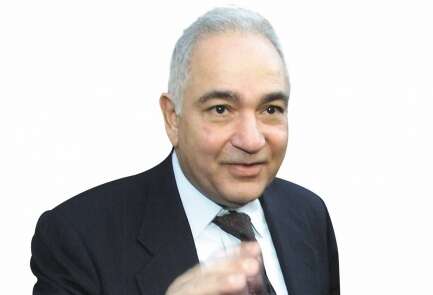
Mohammed Bassiouni, former Egyptian ambassador to Israel, died at his home on Sunday at age 74. Considered the longest-serving Egyptian envoy in Israel and an expert on Israeli affairs, Bassiouni was Egypt's ambassador in Israel for 14 years and served before that as deputy ambassador for four years. Bassiouni's funeral took place on Sunday in Cairo at the Al-Rashdan Mosque and he was laid to rest in the Egyptian military cemetery. In a statement to the Egyptian state-owned Middle East News Agency (MENA), Bassiounis son, Hatem, said his father passed away at home on Sunday morning while reading the newspaper. Bassiouni's son said his father suffered from chronic diabetes and hypertension, although his conditions were stable. He was of sound mind and continued his diplomatic work in the Egyptian Foreign Ministry until the day he died, Hatem said in the statement. Bassiouni began his career in the Egyptian Intelligence Corps and took part in all the wars between Egypt and Israel. After being discharged from the army, he joined the Egyptian diplomatic establishment and served in a number of different roles in the Egyptian Embassy in Tehran. He also represented Egypt at the Arab League. Following the 1979 Egypt-Israel peace treaty, diplomatic relations opened between the two countries and Bassiouni was appointed deputy ambassador. He served in this position until 1982, when Egypt recalled Ambassador Saad Murtada in protest at the outbreak of the First Lebanon War. Bassiouni continued to manage the embassy in Tel Aviv until 1986, when then Egyptian President Hosni Mubarak appointed him ambassador. He served in this capacity until 2000, when he was recalled to protest Israel's actions during the second Intifada. Bassouini and his wife, Najwa, were involved with the upper echelons of political and diplomatic society in Israel. Although he was a popular ambassador during his long tenure, Bassiouni's reputation was marred when an Israeli belly dancer accused him of sexual harassment. The complaint was dropped when he refused an investigation on grounds that he holds a diplomatic passport. Since his return to Egypt in 2000, Bassiouni had openly expressed various opinions about Israel-Egypt relations. In a lecture he gave three years ago in Alexandria, he explained how he was essentially used as an intelligence gathering officer during his time as ambassador in Israel. A few days before his death, Bassiouni was interviewed by Egyptian television with respect to the attack on the Israeli Embassy in Cairo. He said, "Although one may understand the angry demonstrators' motivations, it is forbidden to violently attack an embassy building." One prominent Israeli businesswoman, who had spent time with Bassiouni and his wife while they were serving in Tel Aviv, told Israel Hayom on Sunday: "They were like family to us during the period that Mohammed was the ambassador to Israel. Since they returned to Egypt, though, the connection weakened." "The Bassiouni couple loved their life in Israeli society," another acquaintance said. "And upper-class Israelis and local diplomats loved them too. Najwa Bassiouni always said that she has more Israeli friends than Egyptian ones, and she was proud of the love heaped upon her in Israel. She always said that was her contribution to the peace between the two countries."
Get the Israel Hayom newsletter sent to your mailbox!
Like our newsletter? 'Like' our facebook page!