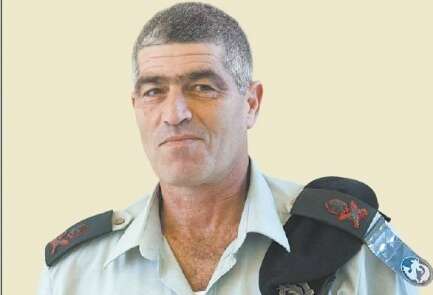
This past week was not kind to Southern Command chief Maj. Gen. Tal Russo. After the tragic events of last Thursday, in which eight Israelis were killed, Russo accepted responsibility as the most senior officer in charge, acknowledging that he made a mistake in authorizing the flow of traffic on the Eilat-bound Route 12, despite explicit Shin Bet warnings of an impending terrorist attack. In a clear break with standard practice, Russos comments were printed in the media with full attribution. Since his widely reported statements were made, public discourse has centered on the question of Russos culpability. The issue was given even more play after Defense Minister Ehud Barak told Channel 2 that the attack was the result of a mistaken situational assessment and errant judgment. Barak qualified his statements, saying that his familiarity with Russo convinced him that he will know how to probe the incident. This is a man who knows how to accept responsibility, and we, his superiors, need to know that errors in judgment and faulty execution can happen, and they will invariably happen in such a demanding system. It seems that this stance is an acceptable one to Chief of General Staff Lt. Gen. Benny Gantz. His associates say that Russos decision to open Route 12 does not warrant disciplinary action since it was a reasonable course of action in light of the information available to him at the time. Nonetheless, senior military figures are quick to point out that further investigations are still pending, which means that the armys stance toward Russo could change if additional probes in coming days uncover additional oversights in the Southern Command. The IDF should tolerate errors It appears that many in the Israel Defense Forces are appreciative of Russos willingness to take responsibility. He accepted responsibility because the decision [to open the road] was his, a senior IDF officer who is subordinate to Russo said. There are those who will say that this is naive and rash, but this entails power. He is not a political player, and he cannot be a political player. According to the officer, the IDF should be accorded a margin of error. If the army does not develop a system in which one can accept responsibility to make improvements for the future rather than getting rid of someone for making a mistake, then the next person to encounter the same situation will be doing so for the first time. If a person made an errant judgment call that was not borne of laziness, negligence or absentmindedness, the system needs to allow that person to implement the conclusions from the event. There is no doubt that Tals decision was an errant one, the officer said. The Yamam [Unit for Counter-Terror Warfare] doesnt make it to Eilat every day. If the threat level was so high as to warrant the deployment of Yamam to Eilat, this is a sign that the warning was quite serious, and that there was no need to open up the road to civilian traffic. But the military needs to allow for errors so long as they are judgment calls, and not the result of faulty character. Otherwise, how will people learn from them- Russos friends and colleagues from his days as a young soldier in the elite Shaldag Air Force commando unit were hardly astonished that he took responsibility. If there is anyone who takes responsibility for his actions, it is Tal Russo, said Ofer Fadan, who served as Russos commander during his basic training and unit selection phase. This is very typical of him. I was not surprised. He is a man of values, a humble man, genuine and honest. These are his traits as a leader. Another close friend of Russos, Ofer Zimchi, said Russo generally feels that all of the preparations were made before the incident. But he who acts also makes mistakes, Zimchi said. [Russo] is a sector commander who, first and foremost, says: Im responsible; well talk about the rest later. He does this so as not to bother the battalion and division commanders underneath him. That is his character, and that is how a commander needs to conduct himself. Taking responsibility is something that Tal was raised on, said Omer Bar-Lev, the former commander of the Sayeret Matkal commando unit. One of the most common characteristics that you will find among soldiers in units like Shaldag and Sayeret Matkal is the readiness to take responsibility, for better or for worse. Even after operations in which we succeeded, a soldier stands up and critiques his own actions. This is the foundation on which he was educated, the foundation from which he mentored others. The IDF is lucky to have someone like Tal as the head of a regional command. No need for officers school Russo, 52, grew up on Kibbutz Hulata in the Upper Galilee. In 1978, he enlisted in the Shaldag unit, just two years after it was founded by Muki Betzer. Tal stood out from day one in the unit, Betzer told Israel Hayom's weekend supplement. He was an exceptional soldier who combined physical strength with acute intelligence. He was always level-headed, a loyal friend. His comrades in the unit recall a soldier with immense physical strength, an outstanding ability to navigate the field, and an easy disposition that exuded leadership. He was the ultimate soldier, said Tnuva CEO Arik Schor, who served alongside Russo in Shaldag. He has an ability to gauge the situation in the field with 360-degree vision, and he knows how to dissect events analytically. He is perceived as Rambo, and we even have a picture of him lifting a jeep. He was a navigator with God-like abilities, he was tremendously even-keeled, he never got confused. He would always protect his people while working toward fulfilling the mission. In one of the first training sessions that we did, some car approached along the road and collided into Tal, Omer Bar-Lev recalled. Any normal person would have been wiped out from the collision, but with Tal the end result was just a few scratches and he continued training. He got up, dusted himself off, and moved on. The problem we needed to deal with was calming down the driver, whose car sustained more damage than Tal did. Despite his 33-year service in the IDF, the most significant achievement in his illustrious career was what he did not do -- complete his training at Bahad 1, the school for officers. Even though the position is usually reserved for an officer, Russo was promoted to staff commander within Shaldag when he was still a conscript with the rank of staff sergeant. He refused to sign up for the officers course and was discharged from the army only to return shortly afterward to take part in Operation Peace for Galilee, the 1982 invasion of Southern Lebanon led by then Defense Minister Ariel Sharon. In recognition of his exceptional service during the campaign, Russo was promoted to the rank of captain. This paved the way for his ascension to the top. He was company commander within Shaldag, deputy commander of Sayeret Matkal, commander of the Rotem battalion in Givati, and commanded the elite Maglan unit. I would dump every mission that required creativity and overcoming challenges on Tal, said Brig. Gen. (res.) Giora Inbar, who served as Tals commander in Shaldag and Givati. I tapped him to command soldiers who enlisted at the same time he did, even though he did not complete an officers course. During Peace for Galilee, I had him command a company, and I let him lead the entry into the museum in West Beirut, which served as an enemy commando post. He led the entry and the clearing operation, and he handled his affairs coolly and calmly even though he was subjected to quite a bit of pressure from the top. He finished the battle with no casualties. After the war, we made sure that his rank was commensurate with that of a standing army officer. Tal is a man of integrity and courage who does not waste words, Inbar said. His strong suit is not words, but action. He initiates and acts, and he says what he thinks. His heart and his mouth are in the same place. If only all the officers in the army were like that. Russo also commanded a paratrooper reserve brigade before jumping into the deep water in 1998, when he was promoted to division commander in the Nahal infantry. He even remained in his post longer than was originally intended due to the withdrawal from Southern Lebanon. With his shiny green beret glistening on his shoulder, he moved on to more key posts on the chain of command: a brigadier general of two reserve divisions (the 98th and the 162nd), and head of the operations branch, a job for which he was promoted to the rank of major general. This was just before he was appointed officer in charge of the Southern Command. Even when Russo was climbing the ranks, he didnt lose touch with the field and with the soldiers on the ground, former deputy chief of staff Maj. Gen. (res.) Moshe Kaplinsky said. An officer who served under Russo for years recalled that during his tenure as operations branch chief, he felt awkward in his air-conditioned office at the Kirya Defense Ministry headquarters in Tel Aviv. Tal is a field guy, and he lives it, the officer said. He walks among the soldiers much more frequently than other senior officers, but he also matured in his role and became more seasoned. Uncommon candor During the Second Lebanon War, Russo served as the head of special operations branch. The war room that he built served as the gathering place of all commanders who oversaw the IDFs elite units. Since Tal was almost totally devoid of ego, everyone saw him as a colleague, a senior officer who was present in the war room said. There was an openness there and a mutual acceptance. He was senior enough for other people to feel that they werent wasting time, and that what they were being told was what was really going to be executed in the field. He was very open, and he knocked down the barriers that separated the units. He gets straight to the heart of the matter, and he doesnt engage in politics. He knows everyone personally. He earned respect because of his background as a combat soldier and a combat commander, and this made it possible to conduct a joint operations post involving special forces that conducted quite a number of missions during the war. Muki Betzer was also effusive in his praise of Russo. The Winograd Committee [which investigated the handling of the war] was amazed to discover the capabilities of special forces within the IDF, the technological capabilities and the activities that were carried out by the special forces during the war, he said. If the entire IDF would act in such a way, there would be no need for a committee. The special units did things that have yet to be revealed, and there is really no need to reveal them. After the Second Lebanon War, Russo was promoted to the rank of major general. He was tapped to head the General Staffs Operations Branch, a post he held through Operation Cast Lead. Former IDF Chief of General Staff Lt. Gen. Dan Halutz was the man who bestowed upon Russo the rank of major general. Tal has been a combat soldier in the IDF for 33 years, Halutz said. He has amassed achievements that are better left unsaid. He is a charismatic, courageous and, most importantly, honest commander. There arent many people in this country whose hearts and mouths are in the same place to that extent. He tells you the truth and nothing but the truth. This is the foundation which every commander needs, and Russo has it in spades. Halutz, who resigned as IDF chief following the Second Lebanon War, grew angry at the mention of the phrase taking responsibility. This is a false phrase that highlights so much of what is wrong, he said. Responsibility rests on our shoulders constantly, and Tal embodies this. By the way, pay attention to how he says, I erred, and not, We erred. This is a plus that is in short supply around here. Usually it is others who err, and we just watch them. Will Russos admission of a mistake hurt his career- Id like to believe that the system has learned some lessons. Not a politician There are those who claim that Russo is not a classic general. They believe that if it werent for the Second Lebanon War, which led to the departure of a number of division commanders who were denied promotions, Russo would not have been promoted to the rank of major general. Russo lacks the personal layer that allows him to integrate well into a large organization, said a senior officer. Someone who arrives to head a large organization usually does so after 25 years of being in the same company, someone who knows all of the floors and all of the jobs. Tal doesnt have this. Russo is thought of as a general who evades politics in any way possible, a humble man who dislikes attention and shuns glory. He even opposed the publication of this article. His associates say that he is a man who is unafraid of voicing his opinion. He knows how to be a bit of a politician when he needs to be, said one senior officer. He knows when to keep quiet a bit, and when to be a bit flexible. But Tal is one of those people who is more pure hearted in this sense. Alongside the image of a courageous combat soldier, Russo has also earned a reputation as a party-goer. He is the only officer on the General Staff who never married, and he is thought of as a favorite among the ladies. He has gained fame as an active bachelor who has been linked to many of Israels most coveted females, including one of the most successful models. He was also a business partner in the management team that ran a large events hall in the center of the country. None of these variables have hindered his military career. He stays on the base longer than other commanders, said one officer. Its obvious that the army is his life. Maybe this is because he doesnt have a wife and kids to go home to. Russo has served as GOC Southern Command for the last year, during which there has been relative quiet along the Gaza frontier. He is known for his militant outlook, which often becomes evident when he demands a ferocious response to any harm that is done to soldiers and civilians. A senior officer who took part in briefings led by Russo in recent months said: There is no doubt Russo is wise, and he is outstanding and getting down to particulars, which is especially important given the dynamic nature of the enemy. On the other hand, Im not sure if Russo always looks at the big picture. Sometimes its difficult to discern what it is he wants and what we are going to do tomorrow morning. On the other hand, his friend Tzimchi noted this week that Russo is a strategist, a thinker, and someone who has turned things around wherever hes been. Every platoon and brigade commander knows that he can pick up the phone and consult with him. He knows how to listen to people and to talk to them about the bigger picture. Politics simply does not interest him. Some of his friends believe that because of the incident in the south, he was treated unfairly by the press. It really angers us that such a man gets into this situation and suddenly there are these kinds of headlines in the newspapers, said Fadan. Everybody makes mistakes. People need to keep things in perspective.