Since the death of Rabbi Elazar Abuhatzeira, 15,000 people have been visiting his yeshiva in Be'er Sheva each day. Rabbi Abuhatzeira was stabbed to death Thursday night by Asher Dahan from the settlement of Elad, after Dahan was reportedly unhappy with marital advice he received from Rabbi Elazar. Since the rabbi's death, the spotlight has been focused on his eldest son, Pinchas, who at the age of 34 has inherited his father's position of "Admor" (spiritual leader) of his community. His quick rise from a young rabbi to an Admor means that Rabbi Pinchas Abuhatzeira will be one of the youngest leaders to head such an important community. On Tuesday, the new Admor agreed to speak to the media for the first time since his father's death. In an exclusive interview with Israel Hayom, Rabbi Pinchas Abuhatzeira spoke of the moment he was informed of his new life-changing position. "Half an hour before the funeral, I was called to my father's study. My father's helpers and my uncles, Admors themselves, said that a decision had been made to appoint me as my father's successor. But I am not worthy to take his place. He was a giant among giants, and I am small and meek," Abuhatzeira said. Despite his humility, his community has already apparently accepted him as their leader. He is constantly surrounded by a crowd of followers, and when he stands up for a moment from the chair he sits on during the period of mourning for his father, people approach him and kiss his hands, as is customary with kabbalist leaders. The young rabbi appeared to be tired. His eyes looked puffy from lack of sleep. But the night of his father's murder was a night he will never forget. "Thursday night is a special night of studies until the morning. Suddenly, during the studies, someone from the community called and said that father was stabbed. I left the kollel [religious school for married men] immediately and managed to ride alongside the ambulance that was taking my father to the hospital. Fifteen minutes later, they said that my had father died. That was a very difficult moment. It's difficult for all of us. My father was at the peak of his strength and ability," Abuhatzeira said. Abuhatzeira spoke of his unique childhood in the home of one of the most mysterious kabbalists in Israel. In accordance with his strict rules of modesty, his father would often hide his face, and move between his home and his yeshiva via a tunnel especially constructed for that purpose. "Father set high standards for himself. He did not sleep at regular hours, and did not eat well. He spent hours in the synagogue, and studied for hours on end at home. But he was capable of fathoming fine details, and would always show interest in each child. He didn't attend parent-teacher meetings, but was always up-to-date with all that went on with us. He helped us with our homework and helped us study for our exams. He gave us everything we needed," Abuhatzeira said. Abuhatzeira's associates say he doesn't intend to hide his face like his father did, or dress like him. "Even though he is a Torah genius, one does not become a kabbalist overnight," members of the community said. "He will live a strictly religious life and will study for many years. For the meantime, he will have the merits of his fathers, which pass from generation to generation. He can receive people, hear their pleas, give good advice, and bless them." Among those who came to offer their condolences to the Abuhatzeira family, were President Shimon Peres and opposition leader MK Tzipi Livni. "I am shocked by the murder," Peres said. We are united as a family, and we are all hurt. The rabbi was a national asset and a leader. The Abuhatzeira family transcends all social and state strata," Peres added. Prime Minister Benjamin Netanyahu intended to travel to Be'er Sheva to console the Abuhatzeira family as well, but settled in the end for a phone call to Dvorah Abuhatzeira, the late rabbi's widow. The visit was canceled due to crowds that began to visit the murdered rabbi's home at all hours of the day and night, which was said to pose a security risk for the prime minister.
X
שיתוף כתבה
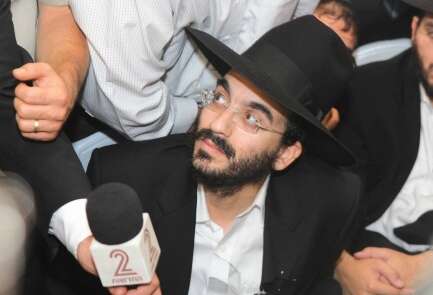
Rabbi Abuhatzeira's son: My father was a giant among giants
In an exclusive interview with Israel Hayom, Rabbi Pinchas Abuhatzeira discusses his late father and his newfound position as an "Admor" (ultra-Orthodox community leader) • "My father was in his prime, this is difficult for us all," he says.