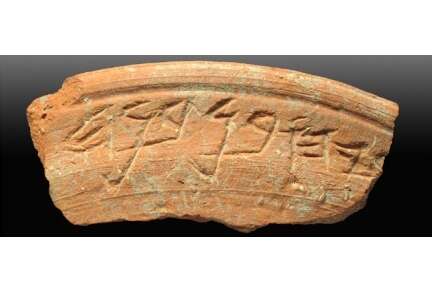
Archaeological excavations conducted by the Israel Antiquities Authority in the area of the Gihon Spring in the City of David have unearthed a ceramic bowl with a partially preserved inscription in ancient Hebrew.
While not complete, archaeologists said that the inscription "presents us with the name of a 7th century B.C.E. figure, and provides a connection to the people living in Jerusalem at the end of the First Temple period."
The inscription reads "...riahu ben Benaiah."
The most similar name to the inscription is Zechariah the son of Benaiah, the father of the Prophet Jahaziel. The name Zechariah the son of Benaiah appears in 2 Chronicles 20:14 where it states that Jahaziel, son of Zechariah, son of Benaiah, a Levite of the sons of Asaph, prophesized before the Biblical King Jehoshaphat before the nation went off to war against the ancient kingdoms of Ammon and Moab.
Israel Antiquity Authority archaeologists Dr. Joe Uziel and Nahshon Zanton, who discovered the bowl while excavating remains associated with the First Temple period destruction, explained that the letters inscribed on the shard likely date to the 8-7th centuries B.C.E., placing the production of the bowl sometime between the reign of Hezekiah and the destruction of Jerusalem under King Zedekiah.
טעינו? נתקן! אם מצאתם טעות בכתבה, נשמח שתשתפו אותנו