After 50 days of deliberations, a 15-hour plenum session that began on Monday afternoon and ended at 3 a.m. Tuesday, the Knesset passed the 2013-2014 Budget Law with a vote of 58:43 and 19 abstentions nearly eight months behind schedule. The Economics Arrangements Law, which aims to regulate various economic and financial legislation amendments needed for the government to fulfill its economic policy, passed as well with a vote of 56:41. The Knesset has set the state budget for 2013 at 395 billion shekels ($110 billion) and 2014's budget at NIS 405 billion ($113 billion). The figures spell NIS 30.5 billion ($8.53 billion) in budget cuts and NIS 14 billion ($3.9 billion) in new taxes. Both laws were approved after a tumultuous filibuster, which saw 4,400 objections presented for the record and an all-time high of 50 voting rounds. One of the main bones of contention during the filibuster was the opposition's demand to revise the governability bill and the proposal to raise the election threshold from 2 percent to 4%. The opposition removed its objection only after the government agreed to revisit the changes entailed in the election threshold reform. Several other disagreements were noted concerning "empty articles," which are traditionally included in the 99-article budget in favor of contingency funding required by Israel's intelligence and secret services. The vote on the articles in question was eventually deferred, as they have no direct bearing on the budget cuts detailed in the law. The 2013-2014 state budget will be the last biennial budget promoted by the Finance Ministry. Finance Minister Yair Lapid announced upon taking office that the government will revert to using a regular annual budget starting in 2015. Deliberations on the 2015 state budget are set to begin in July 2014. 'Budget wholly uninspired' By passing the Budget and Economic Arrangements laws, the Knesset has effectively enacted major budget cuts to the Defense, Welfare, Education and Transportation ministries' budgets: defense spending was slashed by NIS 3 billion ($830 million), a NIS 2.7 billion ($753 million) cut was imposed on the welfare budget, education spending was reduced by NIS 2 ($558 million) and transportation infrastructure appropriations have shrunk by NIS 1.7 billion. The Knesset also approved a series of tax hikes, including a 1-2% scaled income tax hike, increasing the marginal tax rate from 48% to 50% and setting corporate tax at 26.5%. Various new taxes have been imposed on the automotive industry and real estate market, and the taxes imposed on various cash windfalls, such as from prizes won on game shows or lottery wins, have been increased from 25% to 30%. The ministers, MKs and senior Civil Service official were originally meant to take a 10% pay cut as part of the new austerity budget, but they eventually agreed to take only a 1% cut, saving the state NIS 7 million ($1.94 million) instead of NIS 70 million ($19.5 million). "This budget will hurt 99% of the public with unprecedented force, the likes of which has not been seen in Israel since the Netanyahu budget of 2003," Opposition Leader MK Shelly Yachimovich (Labor) said Tuesday. "Raising income tax and value added tax rates, raising the corporate taxes paid by small businesses and cutting child benefits, health care and education services is simply unforgivable. This is a wholly uninspired budget, which is devoid of both hope and growth engines. This budget will only widen the socio-economic gaps in Israeli society and will perpetuate the destructive erosion of the middle class." Lapid defended the budget, saying, "The mission that no one else dared take on was taking a runway deficit of NIS 35 billion [$9.7 billion] and curbing it before it doubled. This was a real issue that the opposition decided to overlook and had hoped we would overlook as well."
X
שיתוף כתבה
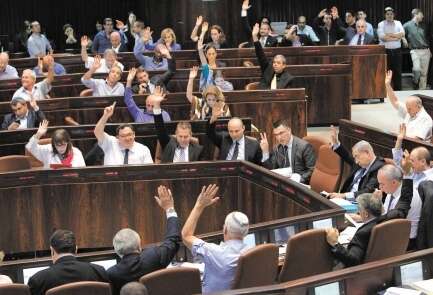
Stormy filibuster gives way to approval of 2013-14 state budget
Fifteen-hour plenum session ends with 58:43 vote in favor of Budget Law • Economics Arrangements Law passes 56:41 • Budget includes 30.5 billion shekels in cuts, NIS 14 billion in new taxes • Opposition Leader Yachimovich: Budget hurts 99% of the public.