Wednesday morning, City Tower in Tel Aviv. Shortly after the Lau family's newborn prince was inducted into the covenant of Abraham, and 12 hours before another of its princes entered the chief rabbi's office, two women met in the food hall. One was Hadassah Ralbag, Rabbi David Lau's mother-in-law, who functioned as his chief of staff during the Chief Rabbinate election campaign. The other was Yaffa Deri, the wife of Shas Chairman MK Aryeh Deri. They kissed each other warmly, congratulated each other and smiled a good deal. That evening, it was their husbands who smiled in victory. It was a good week for crown princes and heirs to the throne, and not just in Great Britain. Two sons of former chief rabbis were elected to serve as chief rabbis themselves. One is David Lau, of the well-liked and well-connected Lau family. The other is a descendant of an aristocratic Sephardi haredi family. The day of the elections for the chief rabbi started pleasantly and respectably. Former Chief Rabbi Yisrael Meir Lau, now a great-grandfather, wore phylacteries and an impressive prayer shawl, and important guests came to shake the hand of the baby's grandfather, who was also the candidate. At the same time, Rabbi David Stav was on his way to the Western Wall for morning prayers and Rabbi Yitzhak Yosef was giving a class. But the rest of the day looked like any elections campaign for the Chief Rabbinate: bizarre, disgraceful and embarrassing. The candidates took rooms in a Jerusalem hotel. At first, it worked. Their assistants succeeded in bringing the members of the electoral committee to their rooms, but very quickly the pace of the visits picked up and there was no longer enough room for everyone in the rooms, so they had to go out to the lobby. That's when things started to look ridiculous. In several corners of the hotel lobby stood the honorable rabbis, three well-known municipal rabbis and a judge of the High Rabbinical Court, their assistants, lobbyists and public-relations people beside them, on the lookout for every head of a regional council or religious council who came through the door wearing a forced and tired smile. As the air-conditioning system nearly collapsed from all the hundreds of people in the lobby and bikini-clad tourists made their way from the nearby pool, even David Lau muttered that the situation was ridiculous and he hoped it would never happen again. Bennett's failure Almost surprisingly, the elections for the Chief Rabbinate generated a great deal of interest in Israeli discourse. The elections were not about the latest update from the kashrut fraud department. These elections determined a path -- conservative or liberal -- and decided who would be in control of the State of Israel's official religious institution. But mainly, the elections were a direct continuation of the political battle filled with curses, invective and political bad blood between Shas and Habayit Hayehudi, between the haredim and the national-religious, between the promise to start something new versus the desire to stick with the good old-bad ways. But Habayit Hayehudi's campaign for the Knesset concentrated on the Chief Rabbinate, among other things, even though the national-religious movement won quite a few seats and positions of power as compared with the haredim, who stayed in the opposition. Still, the haredim won this round, by a knockout. Not a single national-religious or haredi rabbi won the election; both rabbis who won were candidates who did not represent Habayit Hayehudi. The frustration of the national-religious contingent could be seen when the announcement was made. A few minutes beforehand, almost the entire faction of Habayit Hayehudi marched toward the microphone -- Uri Orbach, Avi Wortzman, Shuli Mualem and Yoni Chetboun. Two minutes after the winners' names were announced and the extent of their defeat became known, the MKs vanished from the hall as if into thin air. The frustration could be heard in the voice of Deputy Religious Services Minister Eli Ben-Dahan. "We made the maximum effort and worked day and night, but success isn't always assured. It's a painful failure. We failed, and that's a shame. Now we have to think well about how to fix it. I hope that the secular public won't reject the institution of the Rabbinate. Even though they're certainly disappointed in the results, they should know that the institution of the Rabbinate is bigger than the identity of the chief rabbis themselves." The national religious rabbis blamed a single man: Habayit Hayehudi Chairman and Religious Services Minister Naftali Bennett. For example, Dudu Saada, one of the well-known people in the sector who worked on the staff of Rabbi Shmuel Eliyahu, wrote the following post on his Facebook wall: "Bennett needs to do a great deal of soul-searching, and he should do it from far-off China." While Saada deleted the post several minutes later, he was not the only one to feel that way. "The national-religious movement was stupid and will remain stupid," one of the national-religious staff workers said. "It wasn't Habayit Hayehudi against everyone. This was the rabbis only. In many cases, Habayit Hayehudi not only didn't help, but even ruined things." Rabbi Haim Drukman was also critical, even if he spoke more gently when he said in an interview on the national-religious Srugim web portal, "Clearly, it's a terrible shame that Rabbi Yaakov Ariel and Rabbi Shlomo Amar weren't allowed to be the chief rabbis. Then we would have had an official Chief Rabbinate that united all the people of Israel. But we don't, and that's regrettable." The more painful loss was that of Stav, who invested more than a year of strenuous personal and financial effort in an aggressive elections campaign and became a realistic candidate. His people blame Prime Minister Benjamin Netanyahu and Bennett for his defeat. "The prime minister told his people and the Likud authority heads to vote for Rabbi Lau, and it worked. In addition, the failure is Bennett's. Not only did his party fail to mobilize the way it should have done, but also one of the party's ministers turned around in the hotel and asked the people to vote for Rabbi Shapira. Today we know that Rabbi Shapira got most of the votes from Rabbi Stav and not from Rabbi Lau as we had thought," Drukman said. Shas, Deri and euphoria Stav sounded much calmer. Family members, friends and city residents gathered at his home in Shoham. Even though everyone sat in the living room around cakes and bottles of soft drinks in what looked like a shiva [the seven-day mourning period during which mourners stay at home and receive condolence calls], Stav insisted that he felt encouraged. "Personally, I feel fine. I feel a lot of relief. At the public level, it's a great loss for the Jewish people. I didn't run for myself. I wasn't looking for a position or a job. I came to offer the Jewish people something new. But unfortunately, the haredi system of askanim (wheeler-dealers) defeated the Jewish people, and I think that the Jewish people will respond accordingly. Thousands more couples will go to Cyprus to marry and tens of thousands more Jews will not be recognized as such by religious law because no one will help them. Israeli farming could collapse because of matters having to do with the agricultural sabbatical year [during which Jewish farmers must let their fields lie fallow]. But we at Tzohar are not giving up. We will continue bringing people close to the Torah of Israel." Shas's accomplishment was even greater than Habayit Hayehudi's defeat. A week and a half before the elections, everybody was saying that chances were that Shas would lose the powerful position of the Sephardi chief rabbi, which it had controlled for many years. Shas encountered quite a few bumps on the road to the Chief Rabbinate, to the point where some people even started to say that the party was dying. Shas withstood the attempts to change the makeup of the electoral committee, the Amar-Ariel deal, severe public criticism over the invective against national-religious rabbis, a relative who was a candidate for the position and was questioned by police, internal battles, Rabbi Amar's decision to field his own candidate against Shas and other candidates who announced that they feared no reprisal from the rabbi's household. But the lion fought in every possible way, and even Rabbi Ovadia Yosef, with all his power and means, was mobilized for the crucial mission. For the first time since the incident when he told journalist Nitzan Hen to "get out" (he later apologized to Hen), Ovadia Yosef was interviewed in the media and even attended the victory party in front of the cameras. He did not do so at any other significant party event in recent years, such as the election campaign or when the triumvirate leading Shas was announced. For a week, Aryeh Deri called upon all his political acumen. Within a few days, more than 70 members of the electoral committee came to the home of Ovadia Yosef, taking advantage of the fact that Shas's aristocracy needed them. Some of them even brought relatives to receive Ovadia Yosef's blessing -- and these were people who normally would never set foot on a rabbi's threshold. "We could feel this was an important matter for the rabbi," one member of the electoral committee who was at his home said. "It wasn't just a few handshakes. It was hugs and back-slapping and very friendly relations. There was a lot of pressure." Deri was euphoric. His body language broadcast confidence, and this time, too, he chose his words carefully. Sharp-eared people could not ignore the fact that in his victory speech, which contained a great many thanks, Ariel Attias's name was mentioned while Eli Yishai's was not. Deri's people explained that he was among "the rest of the MKs" whom Deri thanked, and Deri also revealed, perhaps by accident, the deal that had been made between the Yosef and Lau families. "We saw that they could work together, and they will work together starting today," he said. Another interesting figure from the elections campaign was former Chief Rabbi Shlomo Amar, who divorced himself, and was divorced, from his home party and will now have to make his own way. His people promise that his affection for Ovadia Yosef and his commitment to his way and his religious rulings will not waver in the slightest. They say that the rabbi will strike out on a new path. "The rabbi realized that there was something not good about the people who surrounded Ovadia Yosef. He is also insulted. For many years, he did all he could for Ovadia Yosef and Shas in every way, but at the moment of truth he got a cold shoulder," one of his people said. "The rabbi has gone out onto a new path. He will build himself with his own people, and he will definitely stand out as a leader, as he is already." A Rabbinate for everyone- The major question that will be examined from now on is the working relationship between the Religious Services Ministry and the chief rabbis. How will the people of Habayit Hayehudi, Bennett and Deputy Religious Services Minister Eli Ben-Dahan, work with a dedicated Shas man and with a rabbi who received a great deal of support from Rabbi Aharon Leib Shteinman, the leader of the Ashkenazi haredim- The ministry's officials are planning large-scale reforms that will affect the rabbis of the Chief Rabbinate who work in the field. These include opening registration regions that will enable engaged couples to register for marriage anywhere in the country, changes in the kashrut system and the abolition of some religious councils, whose heads sit on the electoral committee that votes for the chief rabbis. Chief Rabbinate officials are already angry over this, and know that while the election fight is over, it is only a matter of time before conflicts begin anew with the ministry's leadership. Politics aside, the Chief Rabbinate's relationship with the secular majority is on the verge of the abyss. Supposedly, the election of two rabbis identified as haredim does not help the situation. On the other hand, an optimistic scenario is also possible: the elections campaign for the Chief Rabbinate did for the Rabbinate what the cost-of-living protests did to the public discourse about social justice. From the moment the rabbis were elected, they have been talking about "a Rabbinate for everyone." Lau is the most liberal that the haredim can stand and the most haredi that the secular people can accept. Yosef promises to follow in his father's footsteps by taking a lenient approach in religious rulings. But that is not enough. The Chief Rabbinate needs a thorough cleansing. Israelis are fed up with rabbis who frown on them, rabbinic judges who come late to hearings, problematic kashrut supervisors, religious councils that are open only at inconvenient times and plain bureaucratic insensitivity. If the new chief rabbis are to change all that, they have a big job ahead of them.
X
שיתוף כתבה
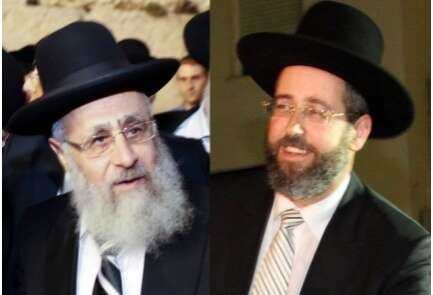
Haredim win the battle, but the war of the Jews is far from over
The elections for chief rabbi were a battle won by knockout by the haredim, but the national religious at the Religious Services Ministry are planning a few surprises for the institution of the Chief Rabbinate • Meanwhile, secular people are fed up.