If Israel's level of education was tested, the report card would probably read "needs improvement." On Tuesday, the Organization for Economic Co-operation and Development released its annual report on the state of education in the club of industrialized nations, shedding light on Israel's educational landscape.
The indicators pertaining to Israel's higher education are much more encouraging than the other statistics, with more work to be done when it comes to improving teacher salaries and reducing classroom sizes.
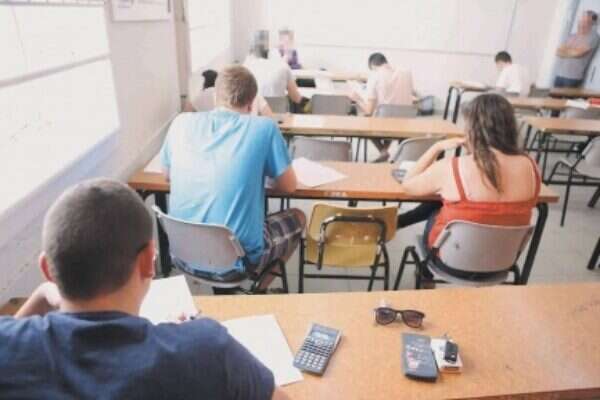
Israel's classroom are more crowded than in most industrialized states, the report says. The organization said that compared to other member states, Israeli teachers spend less time in school and receive lower compensation.
According to the report, the average number of pupils in an elementary school classroom is 27.3 (compared with the 21.2 OECD average). This makes primary-level classrooms in Israel the third-most crowded among OECD states, according to data from 2011.
From 2009 to 2011, the average size in middle school classrooms dropped from 32.2 to 28.7. (The OECD average for 2011 was 23.3.)
The net teaching time of an elementary-school teacher in Israel in 2011 was 842 hours, higher than the OECD average (790 hours). In middle schools, Israeli teachers teach less than in other member states (614 hours compared with 709 hours). In secondary schools, Israeli teachers taught 521 hours in 2011 compared with the average 664 hours in other member states. Elementary school teachers in Israel earn 24% less (including bonuses and allowances) than their counterparts in other industrialized nations.
An Israeli elementary school teacher was required to teach 1,165 hours in 2011 on average, compared with the 1,215 OECD average.
In middle school, Israeli teachers were required to teach 874 hours on average compared with the 1,219 OECD average. Seven hundred teaching hours were required per teacher in secondary schools, compared with 1,154 hours on average in other OECD countries. Almost 40% of Israeli teachers are under forty years old. The report also notes that Israeli teachers have had their salary upgraded as a result of recent reforms and labor disputes.
Israel's strong suit is higher education. "Israel ranks second among OECD countries (tied with Japan and just after Canada) for the percentage of 25-64 year-olds that have achieved tertiary education: 46% compared with an OECD average of 32%," the OECD report says.
At the Israel Hayom TV studio on Tuesday, Education Minister Shay Piron said the shortcomings in education "date many years back and cannot be fixed in one or two years. ... [This is because] we have been investing less in education [over the years]," he explained. "In many cases, Israel's security concerns have been used to cut from other domains."
Israeli Education Movement head Oren Yehi Shalom said the report shows Israel's teachers "are still denied the proper time to prepare interesting and meaningful lesson plans."
Gideon Fischer, who heads the National Parents' Association, said the report attest to the fact that the state invests in higher education at the expense of the younger cohorts. "We believe spending should be inverted and we are working on that," he said Tuesday.
טעינו? נתקן! אם מצאתם טעות בכתבה, נשמח שתשתפו אותנו