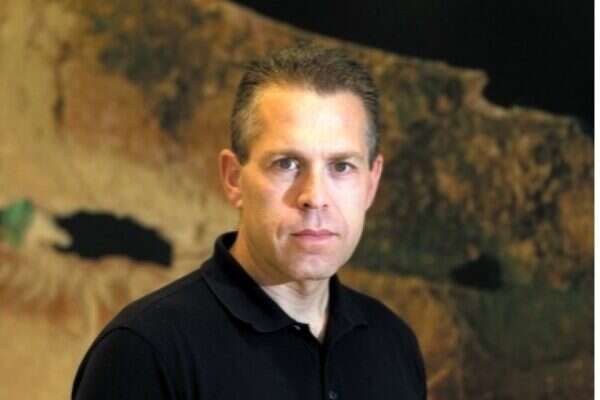
As far as Homefront Defense Minister Gilad Erdan is concerned, the question is not whether or not missiles will strike residential areas in Israel, but rather when they will strike, and how ready the homefront will be when it happens. "The situation right now is extremely unstable, in the northern front as well," he explains in his first interview since stepping into the homefront defense post. "That is why we have to fortify the homefront, even if it means enacting measures that are not so popular." Though Erdan does not have any defense background, today it is clear to everyone that in the next confrontation Israel's homefront will act as the front line. "Hezbollah possesses 60,000 rockets and the Syrians have 100,000 rockets. In the end, rockets will strike here, and the rockets that will strike will be bigger than any rockets that have struck Israeli territory in the past. They will also be far more precise." Q: Do you agree with former Defense Minister Ehud Barak's assessment that in such a scenario there would be fewer than 500 Israeli casualties- "I don't want to get into numbers and figures. In the event that two or three missiles strike residential buildings with multiple stories where there are no secure areas, the number of casualties could be triple and even quadruple that number. My job is to be proactive to minimize the number of potential casualties." "It is no secret that the defense establishment is no longer actively preparing for a Golan Heights invasion. I don't think any of our enemies are planning to conquer the State of Israel, either. All the possible scenarios today are referring to rocket fire toward Israel, with the objective of terrorizing the citizens of Israel and causing despair. Assuming that this is the threat we are facing, there appears to be a discrepancy between the input and the resources the state invests in preparing the homefront in comparison to the resources it invests in the other ministries." "My approach is that fortification is the most important thing. Preparation for atomic, biological and chemical weapons may look good on television, but the main threat is conventional rocket fire." Erdan notes that if the Homefront Defense Ministry is allotted more funds, it would be best to invest in fortifying homes and public institutions, and not necessarily in distributing gas masks. "In the past, the prime minister set a goal of 100 percent preparedness in terms of gas masks," he says. "Today, the percentage of preparedness is only about 60%. To reach 100% we would need a billion shekels [$270 million] plus another 300,000 shekels [$81,000], not to mention the yearly expense of 300,000 shekels for maintenance of the gas masks. If the Homefront Defense Ministry had an additional billion shekels, I would rather invest them in protecting civilians from conventional rocket fire. It is inconceivable that 100% of Israel's citizens would have gas masks, but only a third of the state's citizens would have secure spaces in their homes." "We are talking about human lives" The homefront defense minister's remarks paint a rather grim picture of the current level of residential protection in Israel. "Only a third of the citizens have secure spaces in their homes. The other two-thirds have to rely on bomb shelters, which are situated far away," he provides some figures. "Currently, there is not enough awareness or comprehension among the government ministries regarding the importance of human lives." "On the topic of residential secure spaces, we are still playing a game of pretend. The one called Tama 38 [the national plan for strengthening existing buildings against earthquakes], which in essence means negotiating rights and incentives with contractors," he says, referring to a city plan that gives contractors the opportunity to build additional floors on top of existing buildings in exchange for fortifying the existing structure. "The Tama 38 project increases the rights of contractors while reducing the number of tenants who resist making changes to their homes." According to the project guidelines, more than two-thirds of a building must agree to the Tama project before the construction can begin. Erdan argues that it doesn't make sense that "in a building with 16 tenants, the guidelines allow five people to decide that no one in the building will have a secure space. It is unfathomable. The situation must be remedied, even if it means going against democracy." Q: What do you propose- "Right now we are working on changing the legislative structure and the incentive system regarding this issue." Another key issue that is on Erdan's mind these days is the fear that the citizens who live in cities with stronger municipalities will be more protected than citizens who live in the weaker cities, where the likelihood of civilian casualties will be higher. "There is a very big gap between the different municipalities -- the strong ones profit and the weak ones are screwed," the minister says. "I will allocate budgets to the weaker authorities to fund salaries for higher quality security officers." Aside from the time he invests in fighting to fortify structures, upon assuming the role of homefront defense minister, Erdan decided to wage a persistent battle to remove the civilian jurisdiction over the Israel Defense Forces Homefront Command from the Defense Ministry and transfer the authority over to the Homefront Defense Ministry. "The law states that the Homefront Command is subordinate to the defense minister in its civilian duties and to the IDF chief of staff in its defense duties," says Erdan. "When the Homefront Defense Ministry was established, it was decided that the ministry would guide the other ministries and the municipalities. But the situation that resulted is somewhat skewed -- the Homefront Command guides the local authorities on residential protection, but is also subordinate to the defense ministry." He rushes to explain that "we have a very good, close relationship, but that is only because he is 'doing me a favor.' He could just as easily not listen to me. It is an unhealthy situation that in a modern, Western country, people in military uniforms are dealing with civilians as a matter of routine or handing out zoning permits to civil engineers." "I think that the responsibility for the protection of civilians should be in the hands of the Homefront Command. It is necessary, because that would give me the authority to take action for the benefit of the municipalities." At this point, the transfer of authorities is pending the approval of the prime minister, with the National Security Council supporting Erdan's position. Defense Minister Moshe (Bogie) Ya'alon has asked to study the topic before taking a stand. * * * Despite the far-reaching changes he seeks, the homefront defense minister clarifies that "there is never such a thing as perfect protection. But the homefront is better off than it was in the past, even if the protection is not perfect. In comparison to other countries in the world, and in comparison to where we were before the 2006 Second Lebanon War, there has been a quantum leap forward in terms of the homefront's level of preparedness." Erdan is still worried, however. "During Operation Pillar of Defense (the Gaza campaign launched by the IDF in November, 2012) we witnessed the power of the Iron Dome missile defense system, but we have to realize that a confrontation on the northern front will not be the same. We don't have enough batteries or interception missiles to counter the number of missiles our enemies possess," he warns. "The public has to understand that the Iron Dome system will not be able to provide the same level of response as it did in the face of Hamas in the Gaza Strip," Erdan remarks. "The number of missiles will be high, and the missiles will strike highly populated areas. During Operation Pillar of Defense, a total of 50 missiles hit urban areas. In the coming war, hundreds of missiles will strike residential areas, and they will have bigger warheads. And that is before we even mention the damage to our electricity and communications systems."
Gilad Erdan: It is imperative to build up homefront defense
Homefront Defense Minister Erdan is worried about Israel's level of preparedness for a missile attack, which he thinks is just a matter of time • Residential protection is the most important thing, but gas masks look better on television, says Erdan.
Load more...