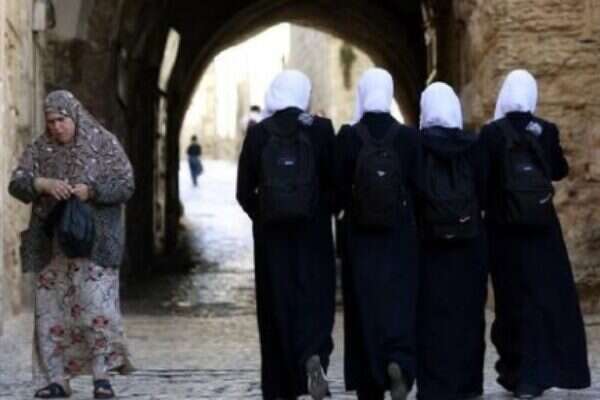
Israeli Arab women are represented in far greater numbers than Israeli Arab men in the nation's higher education institutions, but are generally less satisfied with their work environments, according to data released by the Central Bureau of Statistics on Wednesday. The study, which was released in conjunction with International Women's Day, showed that among Israeli Arabs who receive higher education, some 67 percent were women. Jewish women also exceeded their male counterparts in institutions of higher learning, making up 55% of the student body. Despite their robust representation in the nation's universities, there is still a significant salary discrepancy between Israeli women and men. Women earned an average 6,600 shekels per month, 66% of men's average salary of 9,976 shekels. Nevertheless, over the last two decades, the gap between men and women's salaries has narrowed. In the early 1990s, the CBS reported that woman earned 57% of what men earn, while in 2002 the figure had risen to 60%. Women also reported a lower level of satisfaction with their jobs than men did. Of the women included in the survey, 56% said they were satisfied in their workplace, compared to 64% of men who reported being satisfied. Still, women were more optimistic than men about finding work, with 61% of women compared to 54% of men. The CBS data also showed women giving birth to their first child at a later age. In 2012, the average age of a woman's first birth was 27. In 2003 the age was 26. Muslim women tend to marry four years earlier on average than Jewish women, at 21 as opposed to 25. Israeli Arab women were also more likely than Jewish Israeli women to have younger children. Forty-seven percent of Israeli Arab women had children aged 17 and younger, while 35 percent of Jewish women were mothers to children aged 17 and younger.
Israeli women learn more, earn less
Statistics bureau releases data in conjunction with International Women's Day: Israeli women, both Jewish and Arab, earn more degrees, but still earn less money than men. Women are having their first child at an older age.
Load more...