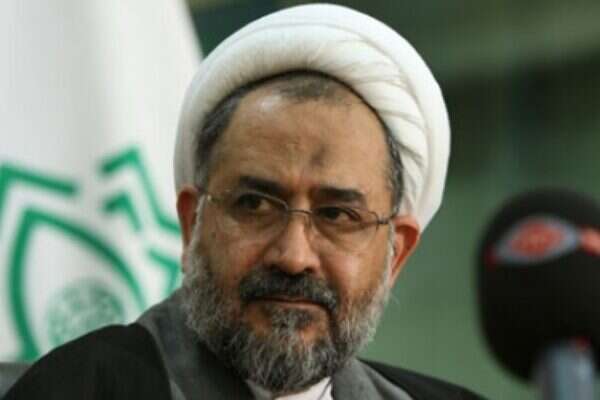
Iran has detected a planned "massive cyberattack" against its nuclear facilities, state television said on Thursday, after talks with major powers this week failed to resolve a row over Tehran's disputed nuclear activities. Iranian Intelligence Minister Heidar Moslehi said the country's arch enemies, the U.S. and Israel, along with Britain, planned the attack. "Based on obtained information, America and the Zionist regime [Israel] along with the MI6 [Britain's foreign intelligence agency] planned an operation to launch a massive cyber attack against Iran's facilities following the meeting between Iran and the P5+1 in Moscow," Iran's English-language Press TV quoted him as saying. "They still seek to carry out the plan, but we have taken necessary measures," Moslehi added, without elaborating. Security experts said last month that a highly sophisticated computer virus, dubbed "Flame," had infected computers in Iran and other Middle Eastern countries. Iranian officials were quick to say the country had defeated the virus, capable of snatching data and eavesdropping on computer users. It was not clear if the cyberattack referred to by Moslehi was "Flame" or a new virus. The Flame virus, however, is apparently not only capable of espionage but can also sabotage computer systems and likely was used to attack Iran in April, according to a leading security company, Symantec Corp. Iran had previously blamed Flame for causing data loss on computers in the country's main oil export terminal and Oil Ministry. But prior to Symantec's discovery, cyber experts had only unearthed evidence that proved the mysterious virus was capable of espionage. Symantec researcher Vikram Thakur said on Thursday that the company has now identified a component of Flame that allows operators to delete files from computers. "These guys have the capability to delete everything on the computer," Thakur said. "This is not something that is theoretical. It is absolutely there." Iran's nuclear program was attacked in 2010 by the Stuxnet computer worm, which caused centrifuges to fail at the main Iranian enrichment facility. Tehran accused the U.S. and Israel of deploying Stuxnet. Iran has been locked in a row with Western countries for nearly a decade over its disputed nuclear program, which the West believes is aimed at making nuclear weapons. Tehran denies the charge, saying it only wants peaceful nuclear technology to generate. Earlier this month current and former U.S. officials said the that under former President George W. Bush, the U.S. began building Stuxnet to try to prevent Tehran from completing suspected nuclear weapons work without resorting to risky military strikes against Iranian facilities. They said President Barack Obama accelerated the efforts after succeeding Bush in 2009. World powers and Iran failed to secure a breakthrough at talks on Tehran's nuclear programme in Moscow on Tuesday, despite the threat of a new Middle East conflict if diplomacy collapses. After two days of talks, European Union foreign policy chief Catherine Ashton said significant differences remained and the two sides had agreed only on a technical follow-up meeting in Istanbul on July 3. Tehran has repeatedly said that as a member of the Nuclear Non-Proliferation Treaty, it can develop a full nuclear fuel cycle, and, if this is recognized, talks with the permanent members of the U.N. Security Council Britain, France, Russia, China, and the United States plus Germany (the P5+1) can succeed. "If the other side agrees to recognise Iran's (nuclear) rights based on international regulations, Iran is ready to negotiate anything," Ali Akbar Velayati, an adviser to Iran's Supreme Leader Ayatollah Ali Khamenei was quoted as saying by the official IRNA news agency on Thursday.
Iran claims to have detected a 'massive cyberattack'
Iranian intelligence minister blames U.S., Israel and Britain for planning the attack • Iranian officials say the country had defeated the virus, preventing it from snatching data and eavesdropping on computer users.
Load more...