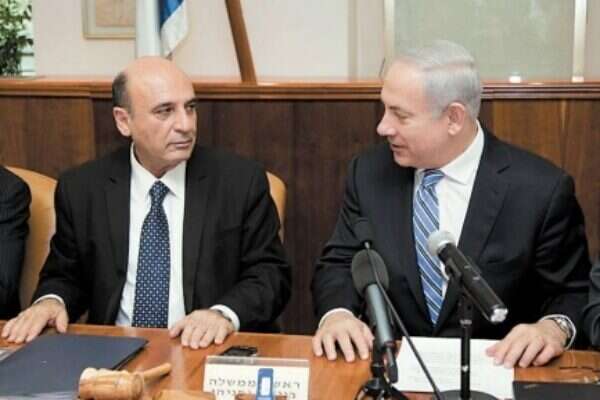
The move to revoke the so-called "Mofaz Law" a law that allows seven members of a Knesset faction to split and form a new party is underway. The newest MK on the Kadima list, Yuval Zellner, who replaced former party chairwoman Tzipi Livni, submitted the proposal on Sunday to revoke the law. The Mofaz Law was legislated at the start of the 18th Knesset, in 2009, with the aim of splitting Kadima, which was then headed by Livni. Until then, the law stipulated that at least a third of the party had to agree to defect in order to split a party. Prime Minister Benjamin Netanyahu, who had just been elected, had pushed the Mofaz Law in hopes that Kadima, the largest party in the Knesset, would split and Mofaz would form a new party and join the coalition something that Livni had refused to do. At the time, Mofaz distanced himself from Netanyahu's efforts and stayed put, but now it could come back to haunt him, as Livni is rumored to be working on enticing party members now under his leadership to defect and join her in a new constellation. Zellner, who got his seat in the Knesset when Livni resigned from the party in March, following a humiliating defeat at the party primary to Mofaz, said Sunday that "this law undermines government stability. I am generally opposed to personal laws [laws legislated to facilitate a specific move by a specific person] and that is why I am proposing that this law be revoked." The proposal, which was initiated by Mofaz himself, suggests reinstating the one-third minimum. The new law aims to make it difficult for the potential Kadima defectors MKs Shlomo Molla, Nino Abesadze, Robert Tiviaev and Orit Zuaretz to join Livni. MK Ofir Akunis (Likud) opposed the initiative, saying, "I do not intend to raise my hand in support of this law. The Knesset only just legislated the Mofaz Law making yet another change could tarnish the political system's image." The chairman of the new Yesh Atid ("There is a Future") party, former journalist Yair Lapid, lashed out against the new partnership between Netanyahu and Mofaz, saying, "I don't think they will last for a long time together. I don't envision the prime minister going to war with his natural partners [the religious parties and the Right]." Earlier Sunday, Mofaz returned to the coalition table after having been in the opposition for three years. For the first time since March of 2009, Mofaz now the chairman of Kadima, vice prime minister and minister without a portfolio took part in the weekly cabinet meetings in Jerusalem. Mofaz took his seat to the right of the prime minister, a spot usually reserved for Likud's Silvan Shalom. During the weekly meeting on Sunday, the cabinet approved Mofaz's entry into the political-security cabinet. Netanyahu promised that any future deals with Kadima would be brought before the cabinet, and the Knesset, in advance, unlike the deal Netanyahu made with Mofaz last week, which was kept completely secret. The prime minister congratulated Mofaz and remarked that although Sunday's meeting was the 150th cabinet meeting of the current government, it was "the first meeting of a broad unity government, with many tasks ahead." The prime minister also outlined the main principles that will guide the unity government, and announced the establishment of the committee that will formulate an alternative to the Tal Law and eventually formulate a proposal for electoral reform.
Mofaz moves to revoke law named after him to block party split
So-called Mofaz law originally legislated in 2009 to facilitate a failed move to prompt Mofaz to defect from Kadima and join coalition • Now that Mofaz is at the helm of Kadima, same law threatens to split his party.
Load more...