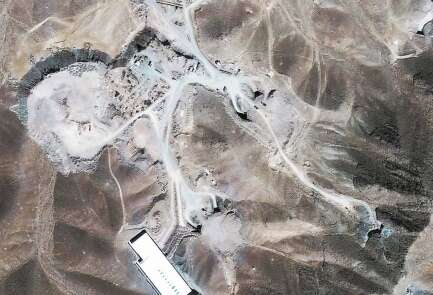
An overwhelming majority of Israelis favor a joint U.S.-Israeli strike on Irans nuclear facilities, a new poll suggests. The poll, conducted by the Hebrew Universitys Harry S. Truman Institute for the Advancement of Peace, in collaboration with the Palestinian Center for Policy and Survey Research, shows only a minority of Israelis, 42 percent, would favor an Israeli attack if it is not coordinated with the U.S. Asked if an Israeli attack would trigger a regional war, 73% of Israelis and 85% of Palestinians surveyed responded that they thought it would. On March 13, a Reuters poll found that a majority of Americans would support U.S. military action against Iran if there was tangible evidence that Tehran was building nuclear weapons, even if such action led to higher gasoline prices. On Wednesday, The New York Times published a story profiling Prime Minister Benjamin Netanyahu and Defense Minister Ehud Barak, entitled 2 Israeli Leaders Make the Iran Issue Their Own. Trying to assess the likelihood of an attack, outgoing Jerusalem bureau chief Ethan Bronner lists the rationales guiding the Israeli leaders, noting that while both share a strong conviction that Israel must act forcefully if necessary against Iran, they have arrived at this conclusion independently. For Mr. Netanyahu, an Iranian nuclear weapon would be the 21st-century equivalent of the Nazi war machine and the Spanish Inquisition the latest attempt to destroy the Jews, writes Bronner. For Mr. Barak, who spurns talk of a second Holocaust and fear for Israels existence, it is a challenge about strategy. A top Israeli official is quoted in the piece as saying, One views himself as a savior, the other lives for a good operation. Theyre a strange pair who have come to appreciate each other. Together they control this issue. News agencies reported Wednesday that Iran is considering holding the next round of talks in Istanbul, the site of the failed last round of negotiations. Irans foreign minister, Ali Akbar Salehi said Wednesday that the talks with the five permanent members of the U.N. Security Council and Germany (the P5+1) are scheduled for April 13. Iran agreed to a new round of talks about two weeks ago.