Deposed Egyptian president Hosni Mubarak sent urgent letters to nine Arab and Western world leaders recently, urging his former allies to save him and his family, according to the Egyptian daily Ruz al-Yusuf. In the letters, Mubarak reportedly asked the leaders to grant him and his family political asylum. The letters - which Mubarak is said to have dictated to his wife, Suzanne - were addressed to the leaders of the U.S., France, Saudi Arabia, Kuwait, Italy and Lebanon. "The current ruler in Egypt is the Muslim Brotherhood, and they will never allow a fair trial to take place, one which would find me and my sons innocent of the charges against us," the letters pleaded. "Don't let them murder us." The 83-year-old ailing former president has been on trial, together with his two sons Gamal and Alaa, his former security chief and six top police commanders, since Aug. 3, 2011 on charges of ordering the deaths of protesters during the Jan. 25 uprising in Egypt. The former president is also facing corruption charges. According to official estimates, at least 846 protesters died in the uprising. Most of the deaths occurred on Jan. 28, while Mubarak was still clinging to power. Saturday marked exactly one year since the mass protests broke out in the country's major cities demanding the end of Mubarak's 30-year rule. Mubarak and the other defendants in the case deny responsibility for the protesters' deaths. The trial has been bogged down in procedural matters, however, including a demand by the victims' lawyers that the presiding judge, Ahmed Rifaat, be removed. That request alone took a separate court some three months to rule on. Prosecutors have asked the special court trying Mubarak to issue a death sentence by hanging. "The prosecution demands the maximum penalty against Mubarak and the rest of the accused, which is death by hanging. The killing of one person calls for a death penalty, so what would the court say in a case where hundreds have been killed-" Mustafa Khater, a member of the prosecution team, asked the court. Mubarak, who ruled for three decades before he was forced to step down in Feb. 2011, after 18 days of massive public protests, was the first leader toppled by the wave of protests in the Arab world to stand trial in person. In other news related to the trial, a lawyer for Egypt's former interior minister asked the court on Saturday to have Nobel Peace Prize laureate and pro-reform leader Mohamed ElBaradei testify as a witness in his client's defense. Mohammed el-Gendi, an attorney defending Habib el-Adly, said ElBaradei could testify that security forces from the Interior Ministry protected him and ensured he arrived home safely during the most violent day of the uprising that ousted Mubarak. ElBaradei, an outspoken critic of the Mubarak regime as well as Egypt's current military rulers, could not be immediately reached for comment. El-Adly is charged along with Mubarak and four police commanders of complicity in the killing of protesters during the 18-day revolt last January and February. They could face the death penalty if convicted. At the trial Saturday, el-Gendi compared Mubarak to former U.S. President George W. Bush, saying that the U.S. leader was responsible for wars that led to the deaths of thousands of people in Iraq and Afghanistan and was never tried in court. "Mubarak is being tried even though he never said he ordered the shootings," el-Gendi said. Earlier this week, el-Gendi claimed the U.S. and Israel plotted the killings of protesters and accused security guards at the American University in Cairo of opening fire on the demonstrators. The university, which has a building that borders Tahrir Square, immediately issued a denial. So far, only one policeman has been convicted in more than a dozen court cases over the deaths of protesters. Meanwhile, a year after the anti-Mubarak uprising, the activists who led it are now leading protests against the military, which they say is balking at real reform and is as dictatorial as Mubarak. They demand that the generals hand power over immediately to civilians, but they have struggled to propose a solid alternative to the military's timetable. The generals say they will cede power by the end of June, but many fear they will try to maintain some form of political influence. In an attempt to present a unified position, nearly 40 youth groups on Saturday put forward a new initiative pressing for presidential elections by April 11 so the military can hand power to the winner. The proposal calls on the newly elected parliament to manage and organize the presidential elections, and not leave it in the hands of a military-appointed commission. "The real danger for the revolution today is to have the first constitution for the country after the revolution in the shadow of military rule," a group representative said.
X
שיתוף כתבה
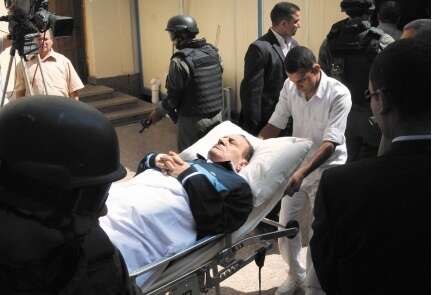
Mubarak, in letter, begs former allies to intervene
Ousted former Egyptian ruler sends letters to nine world leaders, urging them to save him and his sons from a likely death sentence • Mubarak is currently on trial for allegedly ordering the deaths of protesters during last year's uprising.