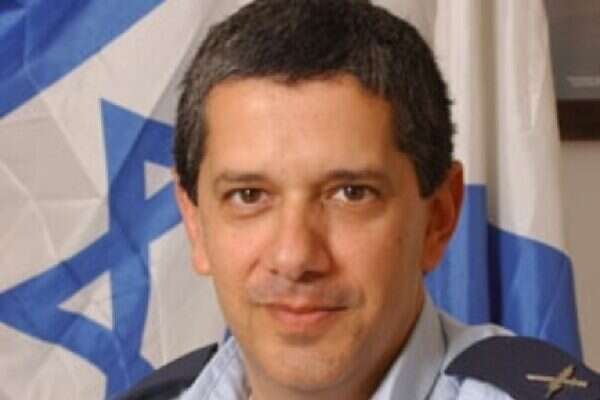
The Head of the IDF's Plans and Policy Directorate, Maj. Gen. Amir Eshel, has stood out as the likely candidate to be appointed as the next commander of the Israel Air Force (IAF). Chief of General Staff Lt. Gen. Benny Gantz and Defense Minister Ehud Barak are expected to meet soon to finalize Eshel's appointment, possible as early as next week. Since he became chief of staff a year ago, Gantz has promoted nine new generals more than a third of the entire general staff. However, naming the next air force commander one of the three central posts in the general staff alongside the deputy chief of staff and the head of Military Intelligence has been postponed due to lack of agreement between Barak and Gantz. The two have discussed the issue on a number of occasions, and while the defense minister never vetoed Eshel - Gantz's nominee - he has asked that Gantz explore additional candidates. For the time being it appears Barak will okay the chief of staff's recommendation, the aforementioned Eshel, who Gantz sees as the "natural candidate" for the job. Aside from Eshel, another candidate to lead the IAF is Prime Minister Benjamin Netanyahu's military secretary, Maj. Gen. Yohanan Locker. Netanyahu backed appointing Locker, who over the past two years has become one of the prime minister's closest advisers. In an attempt to set the record straight this week, Gantz publicly said that he and Netanyahu have not discussed the appointment. Gantz's colleagues, however, have iterated that the public debate swirling around the appointment has made it a matter of principle for the chief of staff, because it will clarify who is "in command of the army," and under who's authority its generals are appointed. The next commander of the IAF is to replace current air force commander, Maj. Gen. Ido Nechushtan, in April. Nechushtan will have completed four years in the post and is planning to retire from active service. Eshel's probable appointment comes amidst the backdrop of increasing speculation of whether or not Israel, alone or in conjunction with other powers, will strike Iran's nuclear facilities in the coming year. Tensions between Iran and the west have increased dramatically over the past few months as Tehran has threatened to close the strategic Strait of Hormuz which serves as a channel for a third of the world's oil transport supplies. The U.S. and U.K. have positioned additional naval strike groups in the area to thwart Iran's threat. Mixed into the discussion of who should lead the air force are the respective candidate's alleged views regarding Iran's nuclear weapons program and how to deal with it. It is argued that Eshel opposes an attack on Iran's nuclear facilities, while Locker supports such a move. Last week, Eshel said that a nuclear-armed Iran could deter Israel from going to war against Tehran's terrorist proxies in Lebanon and the Gaza Strip. Eshel echoed Israeli government leaders who argue that Iran, which denies wrongdoing but rejects international censure over its secretive projects, could create a "global nuclear jungle" and fuel arms races in an already volatile Middle East. He declined to be drawn on whether Israel might try to attack Iran's distant, dispersed and well-defended nuclear facilities alone - or, conversely, whether it could decide to accept a nuclear-armed Iran as an inevitability to be contained through superior firepower and fortifications. Those decisions, Eshel said, were up to the government and the armed forces would provide it with a "tool box" of options. "We have the ability to hit any adversary very, very hard," said Eshel, a former fighter pilot. But he cautioned against expecting any decisive "knock-out" blows against Israel's enemies. Speaking on the Balance of Israel's National Security during the 11th Herzliya Conference (Feb 6, 2011), Eshel said, "It is becoming increasingly clear that Israel's enemies are trying to offset Israel's relative advantage to accomplish a decisive victory by focusing on ground-to-ground missile attacks on our Homefront, as well as boosting their air defenses. This is a challenge against our ability to use our air force. Our first priority is Iran, because this will influence the outcome of many issues in our area. It is the priority of the country, not just the military. Military action, if such can be taken, will be the last resort." Maj. Gen. Eshel is married and has three children. He graduated from Auburn University in Alabama with a degree in economics and graduated from the University of Haifas National Security Studies Center with a degree in political science. During his service, Maj. Gen. Eshel has filled a wide variety of command positions, including: commander of flight instruction of the Hawk Squadron, deputy commander of Hawk Squadron, commander of Barak Squadron in the Ramat David base, head of operations in Air Force Headquarters, commander at the Rimon and Tel-Nof Air Force Bases. In January 2006, Eshel was appointed head of the IAF Headquarters. Eshel also led in an IAF group fly-over of Auschwitz in September 2003. As the formation of six F-15 planes approached the death camp, Eshel's voice broke through on the radios: "We, the pilots of the IAF, flying in the skies above this camp of horrors, arose from the ashes of the millions of victims, and shoulder their muted cries, salute their courage and promise to be the shield of the Jewish people and its land - Israel." "We are talking about a personal dream of 15 years," Eshel told the IAF website. "This is the most significant expression of the rebirth of this nation. As the IAF, we are the most concrete expression of the might of the Jewish people and there is no one better than us to express it." The fly-over "summarizes what this nation went through in 60 years. From something terrible and absolute zero to such power, ability, and resilience. It really shows what our people are capable of going through," Eshel said. "From the cockpit, it was an image of hell," wrote Eshel in his memoir of the journey, "but from the cockpit was the power of the Jewish state ready to stand up to any test." Meanwhile, Eshel's expected appointment also means that a replacement needs to be found for the Plans and Policy Directorate which is in charge of strategic planning, and general planning of the IDF for the coming years and even decades. Gantz is expected to ask Locker to fill the position. Other candidates include former IAF Headquarters Brig. Gen. Nimrod Sheffer, who has also served as commander of the Planning Department in the Plans and Policy Directorate; and Brig. Gen. Yoav Har-Even, formerly GOC Army headquarters chief of staff.
Amir Eshel likely to be appointed new IAF commander
Head of the IDFs Planning Directorate favorite for prestigious nomination • Gantz: He's the "natural candidate" • Eshel led IAF flyover of Auschwitz, saying: "We, the pilots of the IAF, promise to be the shield of the Jewish people and its land, Israel."
Load more...