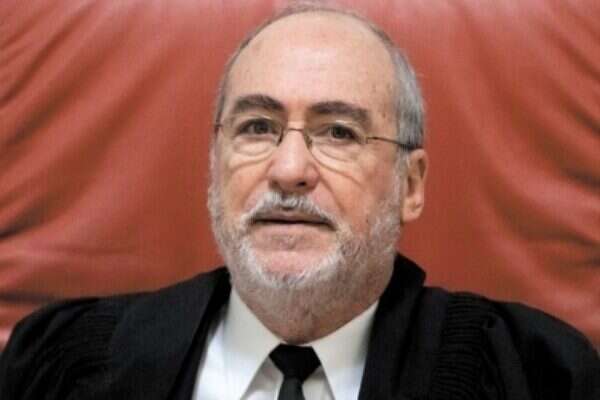
A day after the Knesset plenum changed the criteria for appointing the Supreme Court president, Israel's Movement for Quality Government petitioned the High Court of Justice Tuesday, asking it to strike down the new measure. Calling the new amendment "personally tailored legislation," the movement warned that letting the new measures take effect by allowing government favorite Justice Asher Dan Grunis to be appointed president would sanction a "genetically modified High Court of Justice." The petition asked that the judges issue a temporary injunction on the appointment of a new chief justice or alternately have its provisions take effect only after the next chief justice retires. The so-called Grunis Amendment passed its final hurdle in the Knesset on Monday, paving the way for Grunis' promotion as soon as current chief justice Dorit Beinisch retires in February. After a grueling three-hour session, Knesset members approved the remaining motions necessary to enact the coalition-sponsored bill, and passed it in second and third readings, by a 57 to 37 majority, with votes cast along party lines. The amended law, introduced by Yaakov (Katzeleh) Katz (National Union), does away with the provision that restricts the appointment of Supreme Court presidents to justices who have at least three years left on the bench before the mandatory retirement age of 70. Grunis will be 67 upon assuming his new title, just short of making the cut under the old rules. The fate of the amendment was in limbo for the past month because some in the coalition wanted to have it bundled with the amendment to the law on the Judicial Selection Committee makeup, which was ultimately sent to the Knesset plenum separately on Monday. "The opposition is behaving in a hypocritical way on this bill because these same MKs fought hard to introduce the amendment to this law pushed by former Justice Minister Daniel Freidmann and are now opposed to another such amendment," Coalition Chairman MK Zeev Elkin (Likud) said following the final passage of the bill. Constitution Law and Justice Committee Chairman MK David (Dudu) Rotem (Yisrael Beitenu) echoed his colleague, saying that "Freidmann's mistakes [the previous rules] must be corrected; we must not endanger democracy because of the mistakes of the Olmert government [under which Freidmann served]." Members of the opposition criticized the newly enacted bill, with Kadima leader MK Tzipi Livni saying "This law shows no respect for this institution, for the Knesset or for Israeli democracy." Her fellow party member MK Nachman Shai went even further, saying that "This is another day of infamy in which we move from one hall to the next, from one meeting to the next, and fight against the strong forces that have swept through Israeli society and this Knesset." "The opposition and coalition have lost the ability to work together in a professional manner," said Labor party Knesset faction head MK Eitan Cabel, "Elkin is the one who sets the tone; the shrine of Israel democracy has now become its graveyard." MK Dov Khenin (Hadash) also attacked the amendment's supporters, saying that "all the constitutional and moral constraints on the government have been lifted." Meanwhile, shortly after the Knesset voted on Monday to tentatively approve legislation that would retroactively change the composition of the Judicial Selection Committee, Attorney General Yehuda Weinstein warned that the new measure does not pass constitutional muster. Following a raucous debate at the Knesset Constitution Law and Justice Committee, members voted by a razor-thin majority of 7 to 6 to approve the amendment to the Israel Bar Association (IBA) Law and send it to the Knesset plenum for a second and third reading. The motion was passed despite internal opposition by some Likud members who want further government deliberations on the to the coalition-sponsored legislation before it is sent for an up-or-down vote by all MKs. Prime Minister Netanyahu told members he will rethink his support for the measure. The proposed amendment would in effect disqualify the newly elected IBA representatives to the Judicial Selection Committee, and force the organization to pick new individuals in their place, a mere month after their appointment. The Judicial Selection Committee comprises representatives from the judicial, executive and legislative branches, as well as two attorneys from the private sector chosen by the Israel Bar Association. The committee is the sole body that confirms Supreme Court judges and other judicial appointees and has been the source of much debate, in light of new legislation aimed at changing its composition and altering the judicial selection process. The current language of the bill, first introduced in November but since revised, stipulates that IBA members would have check only one name on the ballot instead of two. The two candidates garnering the most votes would be appointed to the committee. Critics say the bill is heavily tilted toward the current government as it affords the IBA President, Attorney Doron Barzilai, significant sway over the identity eventual appointee. Barzilai is a close associate of Justice Minister Yaakov Neeman (who also serves on the committee). A statement released by the Attorney-General's Office said he is "opposed to the current language of the amendment to the Israel Bar Association Law. He holds the view that it undermines the role of the Knesset as the legislative body in charge of introducing proper norms and constitutes an abuse of its prerogatives. He believes that the proposed mechanism is constitutionally flawed." Deputy Attorney General Orit Koren appeared before Knesset members Monday, accusing them of "using their powers to exert undue influence over the IBA elections." At the Likud caucus meeting on Monday, Deputy Prime Minister Dan Meridor lashed out against the bill. "They tried changing the rules governing the elections, but having failed to amend the bill on time they now they seek to disqualify those who have been duly elected," said Meridor. Education Minister Gideon Saar echoed Meridor's comments, saying," As a jurist I propose that the government reconsider its stance. This piece of legislation would create a very bad precedent by overturning an election." Defense Minister Ehud Barak said similar comments during his faction's caucus meeting, saying Independence would oppose the new measure. On the other end of the divide, Coalition Chairman MK Zeev Elkin (Likud), who is among the sponsors of the bill, on Monday defended the new provisions, saying they simply write into law the already-existing tradition of having the IBA president decide who will represent his organization on the Judicial Selection Committee. After meeting with the prime minister Monday, Elkin said he is determined to have the Knesset plenum vote on the amendment next week. President Shimon Peres also entered the fray on Monday, reiterating his call to preserve the judiciary's independence. Speaking at a swearing-in ceremony for newly appointed judges at his residence, Peres lambasted the amendment. "Compromising the courts' independence or casting a doubt on its value might impinge on Israel's political standing on the world stage as well as inflict damage of historic proportions. Flanked by Justice Minister Yaakov Neeman and Supreme Court President Dorit Beinisch, Peres cautioned against usurping the powers of the judicial branch. "Judges should not be intimidated by another branch of government," Peres told 21 newly inducted judges, who will now occupy chambers at magistrates courts as well as district and traffic courts. "Legislation aimed at bolstering one's grip on power rather than serving justice, even if carried out by a democratically elected body, may undo the checks and balances of democracy and create a vacuum where greed my take hold," Peres said. Beinisch echoed Peres' comments, saying she hopes the Knesset's pending approval of the amendment will not affect the current makeup of the judge selection panel. "The Judicial Selection Committee's balance has remained intact through the years, leading to the appointment of professional, independent-minded and unbiased judges who have given the justice system a distinguished track record." The court should be "molded on an exact replica of the various segments of society," added Beinisch, referring to the accusations by some on the Right that the court is composed of a monolithic group of like-minded judges.
Government watchdog, president decry judicial appointment reform
After Knesset approves legislation that paves way for appointment of darling of the right as chief justice, group mounts legal challenge • Says "tailored amendments" serve narrow interests and are a foul breach of trust by Knesset.
Load more...