Israel refuses to be a sacrificial lamb for Turkish Prime Minister Recep Tayyip Erdogan's internal and regional ambitions for power, a senior official in Jerusalem told Israel Hayom on Thursday. The comments come a day after Prime Minister Benjamin Netanyahu told US Secretary of State Hillary Clinton by phone that Israel would not apologize to Turkey for the events of last May's Gaza-bound flotilla, in which nine Turkish activists were killed by Israeli naval commandos. Israel-Turkey relations, already strained at the time of the Flotilla, sunk to their lowest levels following the IDF's commandeering of the Mavi Marmara. The commandos were met with violent resistance by pro-Palestinian activists, and the clash resulted in the deaths of eight Turkish citizens and one American citizen of Turkish descent. Erdogan has since then demanded Israel apologize for the incident, pay compensation to the families, and lift the blockade on Gaza. Israel has been willing to offer an apology for tactical mistakes that may have occurred during the battle on the Marmara and pay compensation, but not to lift the blockade on Hamas-ruled Gaza. "Asking for an apology for the Marmara incident is one thing. Asking for compensation for the families of the victims is one thing. But demanding a lifting of the naval blockade on Gaza is another thing entirely, and shows that Erdogan is obviously playing for internal Turkish consumption and wider regional calculations, especially now with the Arab world in upheaval," the official said. "We refuse to be Erdogan's sacrificial lamb. Israel is prepared to go a long way to resolve differences with Turkey, but they need to offer some incentives in return. It can't be all sticks and no carrots from them," the official added. Israel will raise the issue of an apology to Turkey for the 2010 raid only after the U.N. publishes its report on the incident, the Prime Minister's Office said in a statement released Wednesday night. This decision comes despite repeated calls from Erdogan and from some Israeli ministers to accede to Ankara's demand for an apology. Turkey has recently threatened to further downgrade diplomatic ties with Israel, with Erdogan saying Ankara will resort to 'Plan B' if Israel does not meet its demands. According to reports in the Turkish media, 'Plan B' is an escalating Turkish diplomatic offensive against Israel, including pursuing legal action against Israeli Defense Forces officers at the Hague Court, not returning an ambassador to Israel, not approving a new Israeli ambassador to Turkey, supporting the Palestinian bid for UN recognition of statehood, and other diplomatic sanctions. Israel's ambassador to Ankara, Gabi Levy, is scheduled to complete his appointment to Ankara within a few weeks, and Jerusalem has yet to announce a replacement, fearing Turkey will not approve the new envoy. There has not been a Turkish ambassador in Israel for over a year. The official who spoke to Israel Hayom on Thursday said Turkey should be careful before pursuing legal action against IDF soldiers involved in the Flotilla raid, as it would "open a can of worms" for the Turks themselves regarding their military actions in various areas. The official added that every time Israel and Turkey seemed to be getting close to an agreement, Erdogan or his foreign minister Ahmet Devotuglu would raise "unnecessary obstacles." Israel and Turkey have been trying to end their diplomatic stalemate before the publication of a report on the incident by a U.N. panel led by former New Zealand Prime Minister Geoffrey Palmer. U.N. Secretary-General Ban Ki-moon has postponed the publication of the report, originally slated for mid-July, at least three times to give the sides time to negotiate. However, parts of the report have been leaked ahead of its Aug. 20 release date. The report is expected to say that the Israeli blockade of Gaza was legal, that Turkey should have prevented the flotilla from sailing, and that Israel does not need to issue an apology, although it is also expected to say that Israel used disproportionate force to stop the flotilla. Reports surfaced on Wednesday that U.S. Secretary of State Hillary Clinton has urged Prime Minister Benjamin Netanyahu to apologize to Turkey. The U.S. has been working to mend the frayed ties between Israel and Turkey, former allies who shared close diplomatic and military ties. The Prime Ministers Office released a statement Wednesday night calling the reports incorrect and saying that Israel and the U.S. have been in constant contact over the issue and are discussing it in good faith." U.S. State Department spokeswoman Victoria Nuland confirmed the Israeli statement and said the media reports were inaccurate. We believe that an improved relationship [between Israel and Turkey] is not only in their interest but in the interest of the region, and in the interest of the U.S., Nuland said on Wednesday. Our understanding is that discussions between Turkey and Israel continue, and we very much support those. Israeli politicians have been split on whether to issue a formal apology to Turkey. Foreign Minister Avigdor Lieberman and Vice Prime Minister Moshe Ya'alon lead the opposition to issuing an apology, saying it would constitute a humiliating capitulation. A message of weakness is dangerous to Israel at this time, Lieberman told Channel 2 news on Wednesday. Lieberman continued to address the issue on Thursday, accuing Erdogan of trying to "undermine Israel's legitimacy" by demanding an apology for the raid. "The Turkish prime minister wants to undermine the legitimacy of the state of Israel by demanding an apology that would constitute an admission of guilt and undermine our right to self-defense against attacks from Gaza," he was quoted as saying on Israeli radio. Defense Minister Ehud Barak, Finance Minister Yuval Steinitz and Intelligence and Aomic Energy Minister Dan Meridor all advocate the move. In remarks made after a visit to Washington in late July, Barak said an Israeli apology was necessary so there would be no lawsuits across the world on the part of Turkey and Turks against Israel and against officers and commanders. He added it was strategically important for Israel to maintain strong ties with Turkey during such a tumultuous time in the Middle East. Erdogan, meanwhile, reiterated Turkey's demands on Wednesday. As long as Israel does not apologize, as long as Israel does not compensate, and as long as it does not lift the blockade [on Gaza], it is not possible for Turkish-Israeli relations to improve, he said. In the absence of a formal apology, Turkey has threatened to downgrade diplomatic relations and shutter its embassy, and to allow relatives of those killed on the flotilla to initiate civilian lawsuits against Israeli soldiers.
X
שיתוף כתבה
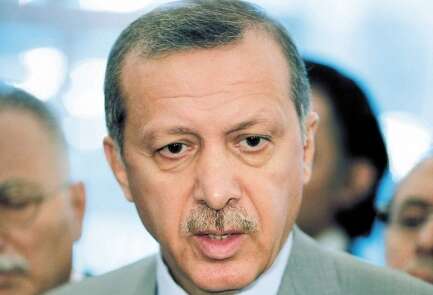
Israel says it won't be 'sacrificial lamb for Erdogan's ambitions'
Turkish Prime Minister Erdogan says ties will not improve if Israel does not apologize, does not compensate families, and does not lift the Gaza blockade • Foreign Minister Avigdor Lieberman: A message of weakness is dangerous to Israel at this time.