The question as to whether young cadets did in fact shoot the terrorist that drove a truck into a group of soldiers in Jerusalem's Armon Hanatziv promenade continued to be the focus of public discourse Monday. According to Lt. Maya Peled, a commander at the Bahad 1 officers training base, who witnessed the attack, the soldiers did what they were required to do. "I heard one shot and someone, I don't know exactly who, stopped the truck," Peled said, recalling the event. "So I climbed down to the bottom step on the bus, and I shot at the terrorist, at his window, right next to him. There were other cadets who engaged and opened fire. I was not alone there. Absolutely not." Peled, who spoke with journalists following the funeral of cadet Shira Tzur, in Haifa, said, "I saw the terrorist drive the truck onto the grass at full speed. At that moment, we were already alert, and I understood that something strange was going on, but we weren't sure it was a ramming attack. When the terrorist went into reverse and went back toward the direction of the soldiers with the truck, we knew for certain that this was a ramming attack." It was at that point Peled said she loaded her weapon. "I heard two shots from the direction of cadets or the commanders, and when it became clear the terrorist was still alive and posed a danger, several cadets shot at the truck from the front and rear." According to Peled, if all the cadets had opened fire, the troops would have placed themselves at risk of a friendly fire incident. "There were a lot of people that participated and showed initiative and level-headedness," she said. "Not everyone fired, of course, but some of the soldiers took a few steps forward and aimed their weapons at the terrorist, and there were also those who had to get out of the terrorist's path. The people who need to shoot in these types of event are the ones who really have the ability." As to whether the recent conviction of Sgt. Elor Azaria in the shooting of an immobilized terrorist had any influence on her conduct or that of her soldiers, Peled said, "The case didn't even enter my mind. I don't think it entered any of the other cadets' or the other commanders' minds either, because of the fact that the majority, everyone who was in the right location, really, truly did as they were required in the field." On Monday, tour guide Eitan Rond, who was the first to shoot the terrorist, seemed to walk back his earlier criticism of the soldiers' conduct. "On one hand, the things I said in the hospital, when I was hospitalized and hurting, that made it seem as if there weren't soldiers who functioned and as if I handled the event by myself, are not exactly true," Rond said. "There were soldiers who attempted to engage and shot together with me. I might have been the first, but I was not the only one. Soldiers like these should be recognized and commended for their actions. Nevertheless, the question I ask is why was it that only a few of the cadets and officers at the scene functioned like that, instead of many others? I send my apologies and my great appreciation to those soldiers who did act." In an interview with Army Radio Monday Culture Minister Miri Regev called the image of some of the soldiers fleeing the scene of the attack "embarrassing." Responding to claims by some politicians that the attack was the direct result of the verdict in the Azaria case, Defense Minister Avigdor Lieberman said, "Clearly, there were soldiers who immediately understood, got organized and shot the terrorist. Any attempt to connect this event to the Elor Azaria verdict is simply not true. Since the Elor Azaria incident, we have taken out 39 terrorists, and 15 were injured. What we do is not the only thing that is important, but what we say, and statements carry weight."
X
שיתוף כתבה
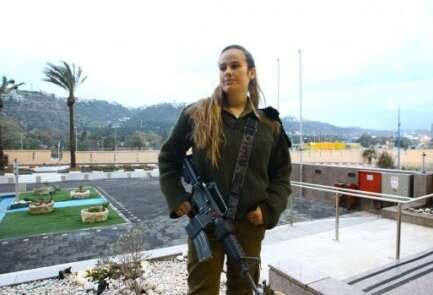
IDF officer refutes 'coward cadets' allegations in Jerusalem attack
Lt. Maya Peled speaks against criticism leveled at cadets seen ducking for cover as truck plowed through a group of soldiers in the capital • "When it became clear the terrorist was still alive and posed a danger, the cadets shot at the truck," she says.