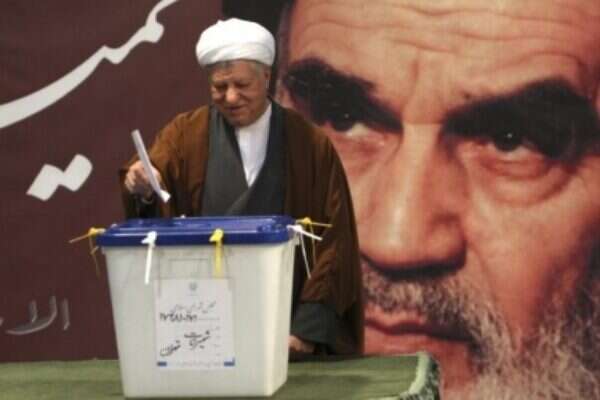
Former Iranian President Akbar Hashemi Rafsanjani died on Sunday at the age of 82, a big blow to moderates and reformists deprived now of their most influential supporter in the Islamic establishment. Rafsanjani, who was president from 1989 to 1997, has been described as "a pillar of the Islamic Revolution" of 1979. His pragmatic policies -- economic liberalization, better relations with the West, and empowering elected bodies -- appealed to many Iranians, but were despised by hardliners. As one of the titans of post-revolutionary Iran, his belief that reforms would help prolong Iran's Islamic governance contrasted with those of Supreme Leader Ayatollah Ali Khamenei, who fears such changes could hasten its demise. Few have wielded such influence in modern Iran, but since 2009 Rafsanjani and his family have faced political isolation over their support for the opposition movement that lost the disputed election that year to President Mahmoud Ahmadinejad. Rafsanjani headed the Expediency Council, a body intended to resolve disputes between the parliament and the Guardian Council. He was also a member of the Assembly of Experts, the clerical body that selects the supreme leader, Iran's most powerful figure. His absence from that debate, whenever it happens, means the chances of a pragmatist emerging as the next supreme leader are reduced. His death ahead of May's presidential election is a blow to moderate President Hassan Rouhani who allied himself with Rafsanjani to win the 2013 election and went on to resolve Iran's long standoff with the West on Iran's nuclear program. "The soul of the great man of the revolution, symbol of patience and resistance, has gone to heaven," Rouhani tweeted. Abbas Milani, director of the Iranian Studies program at Stanford University, said Rafsanjani's death could not have come at a worse time, as President-elect Donald Trump prepares to take office. "With what is happening in the U.S. and the possible instability that is going to come in U.S. policy, you needed a voice of reason and pragmatism that had some heft to it. He was that voice," Milani said. "Losing that voice is going to make it more likely that any mishap or miscalculation by the Trump team will beget a more unreasonable, more radical, more potentially destructive response by the Iranian regime." A U.S. State Department official on Sunday described Rafsanjani as a "prominent figure" throughout the history of the Islamic Republic of Iran. "We send our condolences to his family and loved ones," the official said in a statement. Rafsanjani's body was taken to Jamaran prayer hall, the famous former residence of Islamic republic founder Ayatollah Ruhollah Khomeini, where many politicians and religious figures gathered to pay their last respects. A crowd also gathered outside the hospital in northern Tehran where Rafsanjani was first taken. "Ayatollah Hashemi Rafsanjani was taken to hospital after a heart attack, and more than an hour-long efforts by doctors to revive him were not successful," Deputy Health Minister Mohammad Aghajani was quoted as saying by state broadcaster IRIB. Voicing his condolences, Khamenei said that their political differences never overshadowed his nearly 60 years of friendship with Rafsanjani. "Attempts by wicked people who tried to take advantage of our differences of opinion never affected his deep personal warmth towards me," Khamenei said in a statement. Iran has announced three days of mourning for Rafsanjani, and declared Tuesday, when the funeral will be held, a public holiday. Rafsanjani championed improved relations with Gulf Arab states, was known to have good ties with senior Saudi officials, and was seen as a key figure who could have resolved rising tensions between the regional rivals in coming years. Bahraini Foreign Minister Sheikh Khaled bin Ahmed al-Khalifa, whose country has tense relations with Iran, voiced condolences on Twitter over Rafsanjani's death.
In blow to moderates, former Iranian President Rafsanjani dies
Former Iranian President Akbar Hashemi Rafsanjani, 82, was a member of the Assembly of Experts, which selects the Islamic republic's supreme leader • He has been described as a reformist and "a pillar of the Islamic Revolution."
Load more...