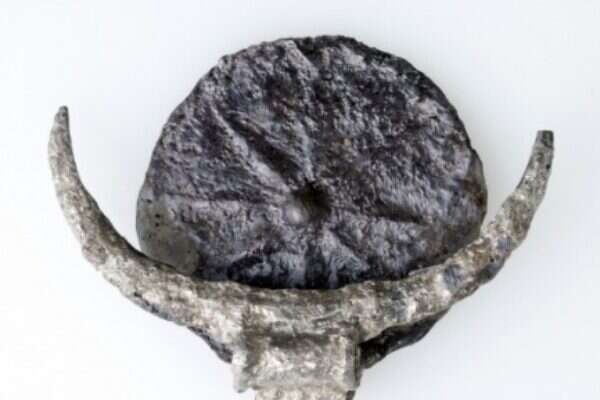
A treasure trove of ancient gold and silver artifacts dating back some 3,600 years was recently discovered in Tel Gezer, an archaeological site on the Judean foothills, the Israel Antiquities Authority and the Israel Nature and Parks Authority announced Monday. The Canaanite period artifacts were found by a joint excavation mission of the IAA, Parks Authority and New Orleans Baptist Theological Seminary. Lead archaeologists Dr. Eli Yanai of the Antiquities Authority, Dr. Zvika Zuk of the Parks Authority, and Drs. Jim Parker and Dan Warner -- both of the New Orleans Baptist Theological Seminary -- agreed that the trove was most likely part of a ceremonial offering that was laid in the center of the multilevel structure being excavated. The artifacts were found in a pot wrapped in fabric that was still somewhat intact. An analysis of the fibers and the method of weaving indicated the fabric was a type of linen The fabric find is highly important in and of itself, as there have only been two fabric finds in Israel dating back to the Canaanite period. The find includes five artifacts, three of which were made of silver that has become considerably corroded, preventing researchers from studying them properly. The other two items include a silver medallion and a gold-framed seal. The medallion consists of a silver disk on which an eight-pointed star is engraved. The disk is flanked by two thin "horns," from which it would have connected to a rope or a chain. Archaeologist Dr. Irit Tziper said that the symbols on the disk are known to represent Canaanite gods similar to the Mesopotamian gods Ishtar and Sin. The second artifact found was a gold-framed Egyptian seal from the Hyksos period. Analysis of the artifacts indicates that the trove was placed in its location as an offering in a structure likely seeking to synthesize Mesopotamian-Canaanite gods and Egyptian culture. The structure complex itself is part of a Middle Canaanite period city that includes an impressive gate, a wall and the large Canaanite water tower known to date. "Gezer was one of the most important cities in the land of Israel during the Canaanite period," Parks Authority Director Shaul Goldstein said. "Its importance continued through the period when King Saul rebuilt the city. Finding this trove is a significant accomplishment that shines a light on the Canaanite culture in Israel 3,600 years ago, and further cements Gezer's position as a significant archaeological site."
Trove of 3,600-year-old artifacts found near Judean foothills
Ancient gold, silver artifacts dating back to the Canaanite period are discovered in an archaeological site on the Judean foothills • Discovery includes fabric, which in itself is a rare find • Artifacts placed in what is believed to be a prayer complex.
Load more...