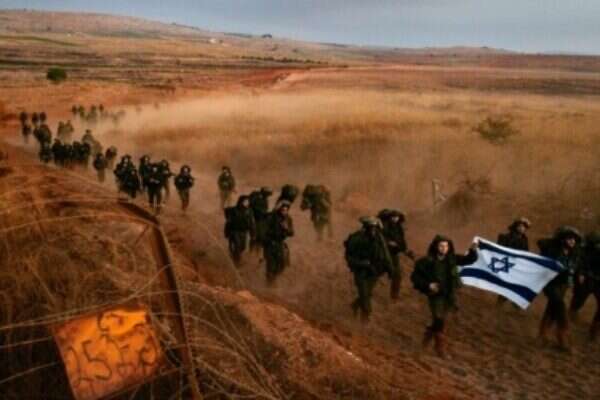
"In a war, an army must aspire to win," so stated the members of the Winograd Commission, which investigated the failures of the 2006 Second Lebanon War, 16 months after the war ended. The statement may appear to be obvious, but it seemed to have stopped being obvious during that war. Professors Yehezkel Dror and Ruth Gavison, together with retired generals Menachem Einan and Chaim Nadel, and retired justice Eliyahu Winograd clarified in their report that "if it is known in advance that there is no willingness or possibility of achieving victory, fighting, and even moves that could lead to war, should be avoided altogether." Ten years after the Second Lebanon War, and eight years after these statements were written, revisiting this damning 629-page report teaches us above all that this little-quoted insight may have been at the crux of the failure. The fact that it wasn't obvious to the Israeli leadership about a decade ago was probably at the root of the many failures of the Second Lebanon War. It is also the key to understanding the chain of events that led up to what many still refer to as the "great missed opportunity," while others refer to it as a "resounding failure." For the sake of historical accuracy, it is important to note that the first to identify this basic deficiency within the leadership in those days -- the absence of a clear desire for a decisive victory -- was Brig. Gen. (ret.) Aharon Levran, a high-ranking Military Intelligence officer in his past. Levran, who compiled countless research reports on military and security topics, was able to accurately identify immediately after the war the shortfalls in the IDF's operational capabilities as well as in the government's conduct. But what struck him most was this particular deficiency. Today, still, 10 years on, Levran points to then-Prime Minister Ehud Olmert's address in New York about a year prior to the war as a warning sign that foreshadowed the calamity ahead. "Olmert," Levran recalls, "declared then that 'we are tired of fighting, tired of winning and tired of defeating our enemies.' Olmert also confessed in those days to his friend Daniel Abrams, as they stood in front of the ancient walls of Old City Jerusalem, that he was not willing to sacrifice his children's lives to defend [those walls]." Levran had doubts from the get go regarding such a prime minister's ability to lead, not to mention aspire to victory. He notes that the "spirit of 'we are tired of fighting and defeating our enemies' permeated the ranks of the military as well, and manifested itself in the vagueness of the orders and guidelines." Initially, Levran was considered an extremist in his views. But the members of the Winograd Commission, who deliberated for a long time, also came away with the impression that the "IDF conducted itself in this war in a way that indicated that the fear of casualties was the key factor driving operational considerations." The committee noted that the "determination to complete the mission and fight to the death to achieve it" was the military objective that was most eroded. Just recently, former Deputy IDF Chief of Staff Maj. Gen. Moshe Kaplinsky, who served in that post during the Second Lebanon War, conceded that "the interesting questions are, 'Why did this happen to us-' and, 'Could this happen to us again tomorrow morning-'" He was referring to the IDF's less than stellar performance during the war. A third of the residents left A reminder: The Second Lebanon War lasted 34 days. It began with a cross-border abduction orchestrated by Hezbollah. Two IDF soldiers were snatched and three were killed. The incident sparked a massive Israeli air campaign, followed by a hesitant ground operation dogged by weeks of uncertainty and severe internal strife -- whether or not to strike, to what extent, how deep, etc. During the course of the war, 89,000 reserves soldiers were called up. But at no point were there more than 10,000 troops on Lebanese soil. The trauma of the First Lebanon War hovered in the background -- the protracted involvement and, finally, the hasty withdrawal in 2000, which Hezbollah interpreted as running away in defeat. Hezbollah started firing projectiles at the Israeli homefront at the very start of the war. The Galilee region was targeted, as was Haifa, with longer-range rockets. This fire killed 44 civilians and 12 soldiers, and an additional 2,000 civilians were wounded. About a third of the residents of northern Israel fled their homes and took refuge in the center and south. Property damage was extensive. In the ground actions within Lebanon, 107 soldiers were killed and another 628 were wounded. Despite quite a few displays of heroism, it quickly became clear that the IDF ground forces were ill-prepared for combat. The years of ongoing conflict with the Palestinians, chiefly the Second Intifada, had eroded the military's readiness to confront an enemy like Hezbollah. Despite the IDF's unsatisfactory performance, according to the post-war investigations, Israel killed more than 1,500 Hezbollah fighters, destroyed combat-supporting civilian infrastructure across Lebanon and dealt crippling blows to the Lebanese cities. Entire quarters were demolished. Roads and bridges sustained extensive damage. Refineries and airports were bombed. The economic damage was estimated by Lebanon to be $100 billion. The fighting resulted in the deaths of hundreds of Lebanese civilians and thousands sustained injuries. In hindsight, 10 years later, the public now judges the war mainly based on its two chief results: the relative calm, unprecedented in length (it must be said), that the war achieved along the Lebanese border, and Hezbollah's equally unprecedented rearming and strength building. Today, Hezbollah has some 130,000 launchers covering almost all of Israel. Today, the public discourse focuses mainly on the question of deterrence, the IDF's capabilities then and now, the government's conduct and the role played by external players like Syria, Lebanon and Iran in influencing Hezbollah's future plans. The big mistake Maj. Gen. Giora Eiland, who served as the head of the National Security Council in the years leading up to the war and resigned six months before it began, feels that the ongoing debate over the gains and losses of the war has run its course. "The main question is whether we've learned what we needed to learn in order to handle the third Lebanon war better than we did the second," he says. Eiland believes that "astoundingly, the biggest mistake of the Second Lebanon War isn't even mentioned in the Winograd report." In his view, the biggest mistake was the strategic assumption in Israel that Hezbollah was the chief enemy. "For too many weeks, the Lebanese government, the Lebanese army and the Lebanese infrastructure were off limits," he recalls. "The result was that the world didn't care too much about the fighting. The battle continued for 34 days and as far as the world was concerned, it could have gone on for 34 more. The fact that Israel and Hezbollah were killing one another didn't raise any special concerns. If Lebanon, as a state, were to take a hit sooner, or take a wider hit, the war would have been much shorter. "Today everyone agrees that a shorter war is in Israel's best interests, but what if the third Lebanon war breaks out tomorrow-" Eiland wonders. "Will it be short- "Ostensibly, we have gotten better. We learned from our mistakes, improved our attack and defense capabilities, but there is a thing called 'relative power,' and when I posit the IDF against Hezbollah, we may have improved, but in terms of overall military ability, Hezbollah has improved more. They have far more missiles than they had then, with far longer range. They can easily strike any point in the country. Their warheads are larger. Their camouflage in the field is constructed better, and the accuracy of their missiles has improved," he explains. "A precision missile can strike your most vulnerable assets -- be it an airport or a hospital or a port or a power station," he continues. "The State of Israel is a small country with a handful of national assets whose location is well known. The outcome of such a strike can be very bad." "If the third Lebanon war lasts 34 days like the Second Lebanon War did," Eiland concludes, "the result will be several times worse because no matter how many Hezbollah operatives we kill in comparison to Second Lebanon, the damage on our side will be greater, and we will not be able to call it a success." Eiland says that the solution lies with the Lebanese government: "Hezbollah enjoys full sponsorship from the state, and if Israel refrains from dealing a painful enough response to the state sponsor, the failure will repeat itself. The obvious conclusion, at least to me, is that if the third Lebanon war breaks out tomorrow, it has to bring about a war between the State of Israel and the state of Lebanon, not under wraps, but in a declared, formal manner." Q: Why- "Because the State of Israel will have trouble destroying more than 100,000 rockets, but it can, in a matter of days, inflict intolerable damage on the state of Lebanon, and that is our big advantage. No one in the world wants to see destruction in Lebanon. Not the Lebanese people themselves, who are a hedonistic people unlike the residents of Gaza; and not Hezbollah, not Syria, and certainly not Iran. Even the Saudis will be upset after having invested an enormous fortune into Lebanese infrastructure. The Americans and the French, who, among others, built the Lebanese army, will get riled up too. If all these countries believe that Lebanon is facing terrible destruction, and if the next war begins with a critical blow to the Lebanese national infrastructure and the Lebanese military, the world will cry out for a cease-fire after three days, not 34. "In this way, we can spare the tough losses from our homefront, which, today, with all of our advanced defense systems, is still vulnerable to Hezbollah's burgeoning threat." Q: But ultimately, the Lebanese infrastructure did sustain a debilitating blow in the Second Lebanon War. "Too little, too late. The blow should have come at the start, and it should have been much more painful." Eiland reveals that he said these very things to Olmert when he served as the head of the National Security Council, during the then-prime minister's visit to the U.S. "I asked Olmert to raise the topic of Hezbollah in this kind of direction and in this particular angle in his meeting with the American president, but there were other issues that Olmert thought were more pressing." Eiland also thinks that the Winograd Commission fell into a trap of details. "It went into tactical resolutions, but never raised its gaze to the strategic level and failed to ask the fundamental questions about the assumptions held by the government." 'No legitimacy for a pre-emptive strike' Maj. Gen. (res.) Amos Yadlin, the head of the Institute for National Security Studies and the man who served as the head of Military Intelligence during the Second Lebanon War, agrees with Eiland's perspective. Yadlin, too, thinks that "Lebanon was not made to pay the price it should have been made to pay." "The State of Israel succumbed to international pressure and refrained from hitting Lebanon hard enough. The chief of staff and I recommended it, but the political echelon, headed by Olmert, decided against it," he says. Yadlin stresses that one of the ways to ensure a shorter war next time is "to inflict more damage on the combat-supporting national Lebanese infrastructure, like electricity grids and transportation. Anyone who listened to my successor at Military Intelligence, Maj. Gen. Herzl Halevy, and heard him talk about how Lebanon will pay a heavy price if Hezbollah attacks us, realizes that this insight has been incorporated into our thinking." Yadlin defines the outcome of the war as a missed opportunity "because we could have achieved the same results in a shorter time and at a lower cost, and also because Hezbollah has given itself the freedom to continue growing stronger after the war -- we didn't generate the legitimacy to stop it. Yadlin thinks, however, that as long as Hezbollah maintains the calm, and as long as the citizens of Israel aren't in immediate danger, it would be wisest not to initiate a conflict. "Today, there is no legitimacy for a pre-emptive strike," he says. "A pre-emptive strike like in the [1967] Six-Day War should only be considered when a conflict is clearly inevitable. A pre-emptive strike like in the [1956] Suez Crisis would have no legitimacy in the world today. "Despite everything," Yadlin clarifies, "our achievement was the establishment of strong deterrence -- we distanced Hezbollah from the frontline and ensured peace in the [Israeli] north with UNIFIL and the Lebanese army in the south [of Lebanon]. Today the deterrence is so powerful that Hezbollah, which would have taken every opportunity to abduct and target soldiers before the war, or fire Katyusha rockets, has shown restraint and refrained from retaliating for serious attacks it attributes to Israel. For example, the strikes that no one claims responsibility for, like the assassination of [Hezbollah military commander] Imad Mughniyeh." Yadlin notes that "one of the reasons for the calm in the north is Iran. The Iranians didn't like what happened in 2006. Iran viewed Hezbollah, as it still does today, as a tool for deterrence and possible retaliation for a potential Israeli strike in Iran. That is why Hezbollah was essentially reprimanded [by Iran] at the beginning of the 2006 war. There is no doubt that the calm that has been maintained since has to do with the fact that Iran warned Hezbollah not to repeat that mistake. It is also safe to assume that Hezbollah, which has been mired in fighting deep in Syria for the last five years, would prefer not to fight on an additional front." Yadlin believes that the IDF and Israel are currently far better prepared for a third Lebanon war, if and when it erupts, than they were for the second, in terms of training, planning and doctrine. 'A juvenile mistake' Israel Prize laureate Yehezkel Dror, a former professor of political science at the Hebrew University of Jerusalem, was a member of the Winograd Commission, says that "one of the single best decisions made by former prime minister Olmert during the war was, in fact, not to extensively strike civilian infrastructure in Lebanon, the way the IDF chief of staff and others recommended. "It would have made sense to target civilian infrastructure if the owners of the infrastructure, the Lebanese government, had any authority over Hezbollah. That was not the case at the time. Olmert instructed everyone to stop talking about it, and rightfully so. Incidentally, that is how he safeguarded our international support," he adds. However, Dror describes Israel's reliance on U.N. Security Council Resolution 1701 -- the cease-fire agreement that listed the conditions each side vowed to uphold -- as a "juvenile mistake." "It really didn't justify more Israeli victims," he says, with 10 years of hindsight. "The notion that a resolution with no military force to back it up would compel Syria and Iran and others to stop supplying Hezbollah with weapons is laughable. Sorry, it should make us cry. And it is delusional. Relying on words and formulations was naive. It was a blindness to suddenly trust in Security Council resolutions. The fact is that Hezbollah made a laughing stock out of this resolution. They have weapons and missiles like sand on a beach, and then-prime minister Olmert and his foreign minister, Tzipi Livni, are to blame for this naive approach. "The only thing gained from the Second Lebanon War," Professor Dror claims, "is the full hotels [in northern Israel]. We achieved a tactical deterrence that could have equally been achieved in the first five days of the war, without victims, without exposing the homefront. It should have ended there. Our biggest defeat was showing the other side -- and ultimately Hamas -- that it is possible to target the Israeli homefront and get away with it without any real consequences. The Hezbollah command echelon, not to mention its leadership, escaped unscathed. Consequences are measured by the death and destruction of the command echelons. It is impossible to eradicate a movement like Hezbollah. What can be done is leave it with heavy losses. That is why the war should have ended after five days, and that would have been a good outcome, without the homefront being exposed. Or alternately, we should have gone in with a few divisions and reached critical mass. Neither of these things were done. It fell between the cracks somewhere in the middle. That is why I view the Second Lebanon War as being somewhere between a resounding failure and a terrible missed opportunity." Q: The leadership of that time often touts the now decade-long calm as an unprecedented achievement. "The calm is tactical. There is no calm in the declarations being made against Israel, and certainly not in the rearming. There is calm because Hezbollah is busy in Syria, and there is calm because Iran, which controls Hezbollah, isn't interested in a flare up. There is also calm because they know that next time Israel will respond with more force. The calm is local and tactical. It is not strategic." Q: Is Israel right not to launch a pre-emptive strike on the massive weapons stores that currently pose a direct threat to the Israeli homefront? "I subscribe to the notion that weapons arsenals are not a good reason to go to war." Dror defines the continued activity of then-Defense Minister Amir Peretz (a defense minister who didn't understand the first thing about defense) in politics as nothing less than an outrage. He laments the fact that Olmert was not punished for his faulty conduct during the war but was removed from office for entirely different reasons (for which he is now serving time in prison). Only then-IDF Chief of Staff Lt. Gen. (ret.) Dan Halutz "who didn't behave appropriately" paid the price that his offense warranted, he argues. Dror recalls how "people in positions of power, especially in local government, fled to central Israel. They got in their cars and ran away. Including mayors. I will not line them up in front of a firing squad, but they should have been punished, and they weren't. What they did was a betrayal of their duties during wartime." Q: How imminent is a third Lebanon war and, as far as you know, have the conclusions outlined in your report been internalized? "It is hard to assess the strategic picture as long as the Syrian situation and the Russian involvement there remains unclear. That is why we need to prepare for a host of possible eventualities. In the event of another war, we need to employ critical mass -- either do a little to teach a lesson or a lot to utterly destroy. In the next war, we need to prepare for cyberattacks as well. The homefront also needs to brace for Hezbollah's current arsenal." Q: Is the homefront ready for the next war- "I follow the State Comptroller's reports on the matter very closely, and I am not happy." Dror believes, however, that the "political and military leadership today are far better than the leadership that led Israel in 2006 into the Second Lebanon War." In saying this, he stresses, "I am not taking any kind of stand in favor or against any particular policy. The current prime minister is much better than the one who was in power in then, and both of the last two defense ministers, [Moshe] Ya'alon and [Avigdor] Lieberman, are better than Peretz. The post of IDF chief of staff is also manned by someone who is far better suited for the job." Define 300 points Former minister Dan Meridor, who has been involved in a range of Israeli defense questions throughout his public service, offers the Israeli public and its decision makers a different take on the Second Lebanon War, and the third Lebanon war as well for that matter, should it transpire. "Before the war, I said to many people, and they will all attest to this, that Israel cannot defeat an organization like Hezbollah. I said it based on my close familiarity with their capabilities and ours. Why do I bring it up now? Because it applies to our future as well. The threat of 100,000 Hezbollah rockets represents a shift in the war paradigm," Meridor says. "We confronted and emerged victorious over the old threat of the Arab armies. The Egyptians have maintained peace with us for 40 years. Jordan is at peace with us. The Syrian military is in shambles. The balance of power is one of mutual homefront damage. We, like the U.S., are a state facing an organization. A state facing a non-state actor. This is a new era, and the equation has changed. The U.S. has invested and continues to invest millions in fighting al-Qaida and the Islamic State group, and Israel is dealing not with a formal military or state actors but rather organizations like Hezbollah and Hamas. In this kind of fighting there is no 'wham, bam, thank you ma'am.' "The era of the 1967 Six-Day War is over. We learned that in Lebanon and in Gaza. The U.S. learned it in other places in the world. Defending borders is important, but it doesn't prevent the war from reaching the homefront." Q: So how do we deal with this changing equation? "Today, warfare is built on intelligence and pinpoint action, like the assassination of [Osama] bin Laden. We don't necessarily need to know where Hezbollah is keeping all of its 100,000 rockets. But we do have to define the 300 points that will completely devastate Hezbollah if we strike them." Meridor asserts that we didn't win but also didn't lose the Second Lebanon War. He believes that stopping short of deploying massive ground forces in Lebanon was not a mistake. "The infantry failed, and in my opinion, could not have possibly succeeded in stopping the rocket fire. A short, but powerful blow could have sufficed. The longer we continued, the more we understood the limitations of our power in the face of a non-state terrorist organization like Hezbollah. We set two objectives. The first was to achieve calm along the border -- that was achieved. The second was to prevent Hezbollah from rebuilding its arsenal, and in that we failed. A mutual threat emerged, and the mutual deterrence is still working." According to Meridor, "the existence of Hezbollah represents the erosion of nationalism and the rise of religion -- a huge historical shift that I call 'the return of God.' Hezbollah has grown strong not just because of what we did or didn't do, but also thanks to Iran. Because of our explicit or implied threat to strike Iran over the years, Iran has established a deterrent force along our northern border. On the other hand, our conduct during the Second Lebanon War, with all the failures pointed out by the Winograd Commission, jolted Hezbollah. [Hezbollah chief Hassan] Nasrallah once said that if he had known that Israel would respond the way it did, he would never have abducted and attacked those soldiers. They assumed that we would respond rationally. That was his mistake." Q: What about the future- "We need to prepare a defense response. That runs counter to the natural Israeli inclination, but there is nothing we can do. Defense alone will not cut it, but without defense we can't confront Hezbollah's rocket and missile threat, which has grown immensely. In recent years, Israel has built quite an impressive defense system, but it is not absolute, and it requires constant improvement and maintenance. "We need to continue making every effort to prevent the next war. We need to prevent the other side from obtaining superior weapons, and in particular we need to understand this is not another war between armies in the sense of conquering land. The homefront is not in many respects the frontline. Both ours and theirs. It's terrible, but it is the reality. If we find ourselves embroiled in another war there, I oppose long-term seizure of territory, as opposed to localized commando raids and strikes, where it will hurt the other side most." 'Another war is inevitable' Maj. Gen. Eyal Ben Reuven, who commanded over the northern front during the Second Lebanon War, surmises that the next war with Hezbollah is inevitable. Ben Reuven was responsible for orchestrating the final 60 hours of the Second Lebanon War. He says that Hezbollah may be embroiled in fighting in Syria at the moment, but it is constantly preparing for a confrontation with Israel. "The lesson I learned for the future is that it is imperative to use force as quickly as possible, not gradually, in order to minimize or eliminate the threat of fire on the Israeli homefront as much as possible." Ben Reuven confesses that "we failed in the Second Lebanon War, which lasted 34 days, and we failed again in Operation Protective Edge, which lasted 51 days, mainly because of the government. "Everything possible should be done to prevent another war, but after it erupts, we need to do everything possible to win it quickly," he argues. He recalls how "Meir Dagan told me after the war that two or three days after it broke out, he spoke to Olmert and begged him to use all the available force in order to win, but Olmert had an IDF chief who wanted more and more airstrikes, and Olmert was tempted to agree. When we finally launched a significant ground operation, toward the end of the war, it was after endless postponements, which had a dramatically adverse impact. I remember the GOC Northern Command Udi Adam going mad with every deferment, yelling at us, 'Get me the prime minister.' Then, on Friday, we launched the ground assault, when it was already obvious that we were headed for a cease-fire. That is how the war ended, but it is not how a war should end."
'What if the third Lebanon war breaks out tomorrow-'
Ten years after the Second Lebanon War, top Israeli security officials try to identify the shortfalls of that calamitous war and draw conclusions for the next confrontation, which some view as inevitable • Everyone agrees: The next war must be shorter.
Load more...