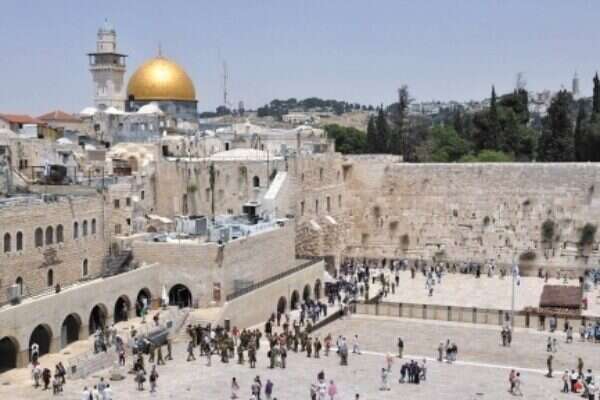
Jerusalem's population has grown 10-fold since the 1948 War of Independence, according to a report published by the Central Bureau of Statistics, ahead of Jerusalem Day this Sunday. Israel's capital is the biggest and most highly populated city in the country, the report shows. At the beginning of 2016, 870,000 people lived in Jerusalem, 10% of the entire Israeli population. Some 548,000, or 63%, of Jerusalem's residents are Jewish, while the remaining 27%, 322,000 people, are Arab. Jerusalem is also one of the eight poorest major cities in the country, with the average household income standing at 12,164 shekels ($3,150) per month. The average household expenditure per month is NIS 11,528 ($2,985) per month. At the same time, some 89% of Jerusalemites aged 20 and older -- 92% among Jews and 82% among Arabs -- say they are happy with their lives, in keeping with the happiness rate among the overall population, which stands at 88%. About 54% of Jerusalem residents (60% of Jews and 42% of Arabs) report being satisfied with their economic situations, as compared with 59% among the general population. Only 30% of those living in Jerusalem are satisfied with the amount of green spaces and parks nearby, compared with 57% among the general population. One of the major factors in the high poverty rate in the capital is the high unemployment rate, with 50% of adult Jerusalemites not participating in the workforce. Jerusalem has an average of 3.8 people per household, compared with 3.3 among the general population. While Jerusalem's population grows by some 19,800 people each year due to the high birth rate, the city also suffers from a negative net migration trend. About 17,1000 people leave Jerusalem each year, while only 13,600 people move there. About 58% of Jerusalemites live in homes they own, 31% live in rented homes, and the rest live in rent-free or heavily subsidized apartments or student dormitories. The average apartment in Jerusalem is worth about NIS 1.86 million (about $482,000) and the average rent NIS is 3,178 ($823) per month. Meanwhile, the government held a festive meeting Thursday, ahead of Jerusalem Day, and approved a new five-year development budget of NIS 850 million (about $220 million) for the city. The budget will be invested in five areas aimed at boosting the city's economic growth: tourism, advanced industry, academia, business development, and quality of life for residents. Tourism will receive a budget of NIS 137 million ($35.5 million) that will go toward, among other things, a branding plan designed to position the city as a global tourism capital. A budget of NIS 163 million ($42.2 million) will go toward improving the quality of life in the city, including building bike lanes, parks and support for youth and the artistic community. "We are developing Jerusalem, building it. 'The Torah will go forth from Zion,' and it goes forth from the yeshivas. Software will go forth from Zion, and it goes forth from the new companies that we are cultivating," Prime Minister Benjamin Netanyahu said at the beginning of Thursday's meeting. Culture Minister Miri Regev noted that the annual Independence Day torch-lighting ceremony next year will mark 50 years since the reunification of Jerusalem. At the same time, the Jerusalem District Police are preparing to boost deployment ahead of Jerusalem Day festivities on Sunday, and for the anniversary of the Prophet Samuel's death, to be marked from Saturday night until Monday. The roads leading to the prophet's tomb will be closed and access will be possible only through organized transports to the landmark. Still, the event is anticipated to be the center of any clashes is the annual flag parade, which passes through the Muslim Quarter of the Old City. On Thursday, the left-wing group Ir Amim ("City of Nations") filed a High Court petition seeking to reroute the flag parade, arguing that the conditions in the Muslim Quarter will create bottlenecks that will prevent Muslim worshippers from reaching the Al-Aqsa mosque for prayers, and that police will be unable to control the situation. The state argued that since the route was approved by police, the court has no grounds to intervene. Thousands of young people attended a rally on the issue at the Sultan's Pool in Jerusalem on Thursday. Meanwhile, U.S. President Barack Obama on Wednesday renewed a presidential waiver that would suspend the transfer of the American Embassy in Israel from Tel Aviv to Jerusalem for another six months.
Credit:GPO
Jerusalem has the second-youngest population of any city in Israel, after the ultra-Orthodox enclave of Bnei Brak. Children and young people make up 430,000 (50%) of the capital's population, due to the high fertility rates among both the ultra-Orthodox and Arab communities.
Jerusalem is young, poor and happy, statistics show
Statistics released ahead of Jerusalem Day show that 89% of Jerusalemites aged 20 and up are happy with their lives, despite the capital being among the poorest big cities in Israel • Government approves five-year development plan for Jerusalem.
Load more...