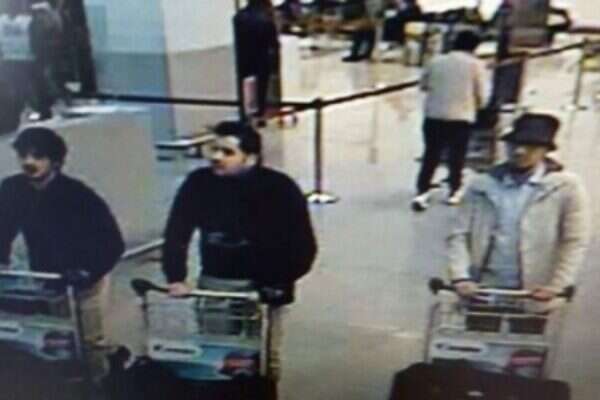
The terrorists who carried out the bombings at Brussels Airport in Zaventem last month targeted Israeli, American and Russian passengers, French television station BFM reported on Thursday. According to the report, Mohamed Abrini, who was supposed to be the third suicide bomber at the airport during the multipronged terrorist attack in the Belgian capital, has told his interrogators that the selected targets were the "departure halls for flights to the United States, Russia and Tel Aviv." Ultimately, the three terrorists were only able to detonate their bomb vests near the check-in counters for flights to those destinations, such that Abrini's reported testimony was possibly misunderstood. Additionally, it is doubtful they could have successfully concealed their bombs long enough to reach the departure halls, due to their size and explosive detection machines at security points. Abrini, 31, who had become known as the "man in the hat" after he was seen on closed-circuit television at the Zaventem airport, was arrested last week. In his interrogation, he reportedly confessed that like the other two bombers, Najim Laachraoui and Brahim El Bakraoui, he too was supposed to blow himself up. Belgian media group Sudpresse quoted an unidentified source as saying Abrini had told a magistrate he had been forced to go to the airport but had chosen not to detonate his device. "I waited for the others to blow themselves up and then I got away. I was never in Syria. I wouldn't hurt a fly," he reportedly told authorities. During his interrogation Abrini also revealed that his cell's original plan was to attack France during the Euro 2106 soccer tournament, but that the target was changed to Brussels due to concerns their plot would be discovered following a series of terror-related arrests in the city's suburbs. Expedited anti-terror legislation The terrorist attack in Brussels last month claimed the lives of more than 30 people. Nearly half the casualties were at Zaventem airport, with the others at the Maelbeek Metro station in the heart of the city. A manhunt for Abrini had been taking place for several months due to his alleged involvement in the November 13 terrorist attack in Paris, in which 130 people were killed. As part of the lessons learned following the two attacks, the European Union parliament on Thursday passed a law requiring all EU member states to share passenger information for commercial flights to and from Europe. This information, known as a passenger name record, is collected by airlines when tickets are ordered and includes passengers' personal details and credit card information. The bill for the new law was proposed some five years ago, but was delayed due to privacy infringement concerns. As a result of the attacks in Brussels and Paris, the legislation was expedited and is expected to come into force toward the end of April. The new passenger information database, the EU hopes, will make it possible to track EU citizens returning from areas controlled by the Islamic State group in the Middle East. It was recently learned that 5,000 EU citizens seeking to join ISIS have entered Syria, and Belgian authorities believe that several of the cell members behind the Brussels attack were trained there. Meanwhile, a Swedish man held in Belgium on suspicion of taking part in last month's terrorist attack in Brussels is also talking to investigators, his lawyer said on Thursday, after Osama Krayem's detention was extended by a month. Krayem, who was charged with terrorist murder after his arrest in Brussels last Friday, is accused of being the man seen with suicide bomber Khalid El Bakraoui minutes before he blew himself up on the metro train at Maelbeek station. Police are still searching for a rucksack Krayem was carrying that may have contained a bomb. "He walked away. He turned back," defense counsel Vincent Lurquin told reporters. "We must ask ourselves why-" "He's talking. That means the investigation is progressing," Lurquin added, saying his client's cooperation could help understand what motivated the attackers and who gave the orders. Separately on Thursday, a Brussels appeal court increased to 15 years from 12 the sentence handed down last July to Khalid Zerkani for recruiting young Belgians to fight in Syria. Dubbed the "Santa Claus" of jihad by Arab youths in the Brussels borough of Molenbeek, Zerkani was accused of recruiting among others Abdelhamid Abaaoud, who is believed to have been a key local organizer of the Paris attacks. Abaaoud died in a gun battle with French police five days after the bloodshed.
Brussels terrorists targeted Israelis, Americans, Russians
Mohamed Abrini, the "man in the hat," tells interrogators: Selected targets at Brussels Airport were "departure halls for flights to the United States, Russia and Tel Aviv" • "I waited for the others to blow themselves up and then I got away," he says.
Load more...