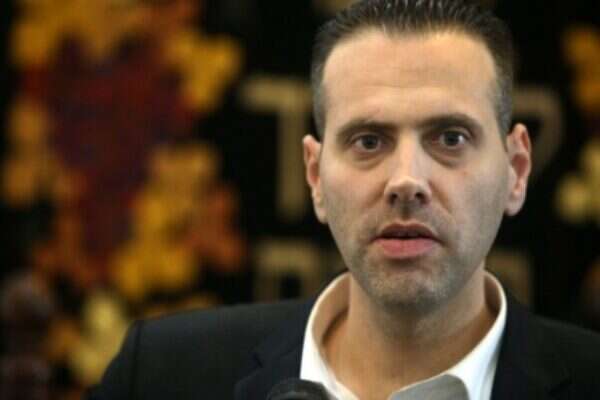
Although under Israeli law every citizen should have access to basic health services "within a reasonable distance," for some Israelis this is a privilege, not a right. As Israel Hayom has previously reported, some medical providers refuse to carry out house calls for residents who live beyond the Green Line. This week another such provider joined this list. Azriel Tzafar, a Bar-Ilan University student who lives in Judea and Samaria, experienced this first hand. Two weeks ago, after his thumb was badly burned at home, he tried to arrange a house call through his HMO. It turned out that Malram, which carries out house calls on behalf of Israel's state-regulated HMOs (locally known as "heath funds"), did not provide such service to communities in Judea and Samaria, the Arava (a sparsely populated area in southern Israel), the Jordan Valley and the Golan Heights. He immediately took to Facebook to protest. He also posted a screenshot from his HMO's website where it elaborates on this policy. "How can an organization that provides medical care nationwide single out 600,000 Israeli citizens-" Tzafar said. He later sent a complaint to his HMO and several MKs, including Likud's Miki Zohar. "Unfortunately, this is not the first time I encounter such discrimination against Judea and Samaria residents," Zohar said. "And in this case, it goes beyond that area and extends to the Golan Heights and the Arava," he continued. Zohar said that it is "particularly disconcerting because we are talking about essential medical services." According to Zohar, "Such discrimination, which is based on place of residence, is outrageous and should not be encouraged; taxpaying citizens who live in Judea, Samaria and the Jordan Valley are entitled to the same services as any other citizen; they are not second-class citizens." A Health Ministry official gave the following response after being asked on the matter: "During after hours, HMOs must operate urgent-care facilities that require no more than a 30-minute drive from any given community. While such facilities do in fact exist in Judea and Samaria, HMOs are often unable to deliver on that pledge despite acting in good faith. This is has apparently been the case with certain companies or doctors operating on their behalf, who have refused to go to communities in Judea and Samaria during the night because of security concerns. The ministry plans to review the current situation with the HMOs in order to have house calls in those areas, if this is feasible. In any event, in cases where an HMO cannot provide after hours care or send a physician on a house call, it must send the patient to the emergency room and fully cover the costs involved." Arik Ofir, who heads Malram's parent company, deflected criticism, saying that "Malram, as a privately run company, decides on the services it provides based on security and logistical considerations, as well as financial and marketing aspects." He said the company does not have a discriminatory policy toward Judea and Samaria residents. "Unfortunately, we are unable to have physicians on call around the clock for every community, particularly in Judea and Samaria, due to the lack of available doctors. The company provides medical care to private individuals who wish to join its services, it does not serve every Israeli citizen; it is the HMOs' responsibility to provide universal coverage in Israel." Clalit Health Services, one of the largest HMOs in Israel, told Israel Hayom that clients who live in remote areas can get reimbursed by up to 55% of the out-of-pocket medical expenses, on top of a free consultations on its site and call center. Meuhedet, another HMO, said it also reimburses clients who live outside its service area. Leumit Health Services said it works with doctors in remote communities to provide after-hour services.
MK: Judea and Samaria residents face health care discrimination
Israeli man shocked to discover he cannot get the same medical care other Israelis get simply because his community lies beyond the Green Line, due to security concerns • Likud MK Miki Zohar: This is not the first time this happens.
Load more...