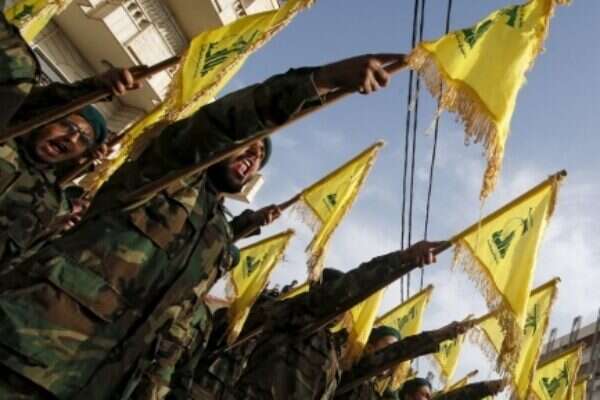
Israeli artillery thundered over the Golan Heights last week after a terrorist cell fired rockets into Israel from Syria. Days later, according to the IDF, the cell that perpetrated the attack was eliminated. Some argue that Israel must pursue a more forceful course of action, rather than responding to attacks in a measured and contained manner to target the specific terrorist cell responsible. Others argue that from a broader, regional perspective, Israel is so preoccupied with the Iranian threat, the gravity of which is undisputed, that it is ignoring a much closer threat: the Sunni jihadi terrorist organizations sprouting all over Syria in the form of radical insurgent groups such as Islamic State and offshoots of al-Qaida. Should the jihadi threat lurking across the Syrian border turn toward Israel, Israel will be caught unprepared, they warn. But who are the players on the northern stage? The southern part of the Syrian Golan Heights harbors various radical groups, all of which are currently focused on toppling Syrian President Bashar Assad's regime. Israel cannot count any of them among its fans; to the contrary. But these groups are united by their desire to bring the Assad era to its end, and until such time as this objective is achieved they are unlikely to train their sights on Israel. The central and northern parts of the Syrian Golan Heights, however, harbor groups that support Assad. These groups have direct ties to Iran through its regional proxy, Hezbollah, and they are funded and armed by Tehran, and trained either by the Shiite terrorist group or by operatives sent by its Iranian patron. While some in Washington have claimed that the U.S. has been assured by Iran that once the nuclear deal it signed with the West on July 14 is implemented, Tehran would curtail its involvement in global terrorism, news of this policy shift has yet to make its way to the senior Iranian officials in Lebanon and Syria, who have only expanded their operations on the ground. The Islamic Jihad cell implicated in last week's rocket fire on the Golan Heights and the Galilee received its orders directly from Iran. In some ways, the usually Gaza Strip-based terrorist group is bound to Iran even more than Hezbollah, which at least maintains the appearance of operating in Lebanon independently. The balancing act Israel faces two dilemmas on the Syrian front: the first regarding its overall policy on the civil war raging just beyond the northern border, and the second regarding its retaliation policies should hostilities come its way. The first question is very complex. The war in Syria is not just one fought between the rebels and the regime, it is also a sectarian conflict, pitting the Alawites and Shiites against the Sunnis; while on a tactical level, jihadi groups such as Islamic State and the Nusra Front clash with the Syrian army, whose forces are backed by Iran and Russia, as well as by Hezbollah and foreign militias. What position should Israel take? Is this a case of "better the devil you know," meaning Israel should side with Assad, who -- for all the challenges his regime poses -- is familiar? Or would it do better to side with the radical rebel groups that have so far refrained from targeting Israel, but will surely do so as soon as their agenda in Syria is achieved- The second question is equally complex: How should Israel react if rebel groups on the Syrian side of the border attack Israeli targets? Should it suffice with a minimal response that is limited to the compromised sector, or should it mount a broader, more forceful response, to deter both the perpetrators and future conspirators- In principle, it seems Israel should be wary of any involvement in the raging Syrian conflict, especially since that from an Israeli point of view neither side is the lesser evil. Islamic State's extreme cruelty is offset by Hezbollah's access to 100,000 missiles, courtesy of Iran, which the Shiite terrorist group can train on Israel at any given time. Moreover, the weaker Assad becomes the more dependent he becomes on Iran and Hezbollah, and the more he draws Hezbollah into the Syrian quagmire, at the expense of the Shiite group's operational abilities versus Israel. Why should Israel choose sides? Wouldn't it be better to let the parties in Syria fight to the bitter end amongst themselves? Why should Israel risk any of its troops in favor of someone who will surely turn against it when the first opportunity presents itself? This logic is not without its flaws. Overall, Israel would most likely find it harder to deal with a state-sponsored enemy than with an organization that may be more ruthless, but lacks state resources to fund its operations. Israel has no interest in making life easier for Hezbollah, Assad and their allies, even if the alternative is a potential threat by Islamic State. Israel stands to gain nothing by accelerating the regime's demise, or by aiding radical Sunni groups overrun Syria. This is why Israel's decision to refrain from interfering in the Syrian civil war seems prudent. On the other hand, there are two scenarios that require that Israel act regardless of whose interests in Syria its actions might serve: The first entails Hezbollah obtaining game-changing weapons, and the second involves a direct attack on Israeli soil. Israel must prevent Iran or Syria from providing Hezbollah with game-changing weapons or systems that could undermine Israel's strategic advantage in a future conflict. This should be done by mounting a surgical strike against any such delivery, regardless of how deep behind enemy lines it may take place, or how it may affect the interests of those supporting the regime, be they Syrian, Iranian, or Russian. Should Israel come under direct attack, from the Syrian Golan Heights or any other sphere north of the border, it must locate the perpetrators, and if possible those who issued their orders, and eliminate them. Barring this option, which is the case more often than not, Israel must retaliate by targeting interests that would make it clear to the conspirators they are not immune to a strike. Such strikes should send an unequivocal message on Israel's position, but in a manner that would not make the other side feel it must retaliate as well. In the current climate on the northern border, Israel has no interest in provoking a security escalation whose results could prove unpredictable. Finding the balance between the need to mount a forceful response and the desire to contain the situation and avoid rapid escalation is the real challenge in this case. Looking to the future, it would come as little surprise if the nuclear deal with Iran would have a negative effect on the Syrian sphere. On the one hand, Iran's newfound alliance with the U.S. could prompt more Sunnis to join Islamic State. On the other hand, the Iranians are likely to be emboldened by the deal, which may see Tehran become even more invested in Assad's survival, as well as increase its efforts to provide Hezbollah with advanced weapons, and promote terrorist attacks in the Golan Heights. Israel would be wise to brace itself for the negative effect the nuclear deal may have on an area as volatile as Syria, and prepare accordingly.
The double-edged Syrian sword
Israel faces two dilemmas on Syria, one over the best policy on the raging civil war, and the other on the preferred course of action should hostilities come Israel's way • This delicate balancing act poses a growing challenge.
Load more...