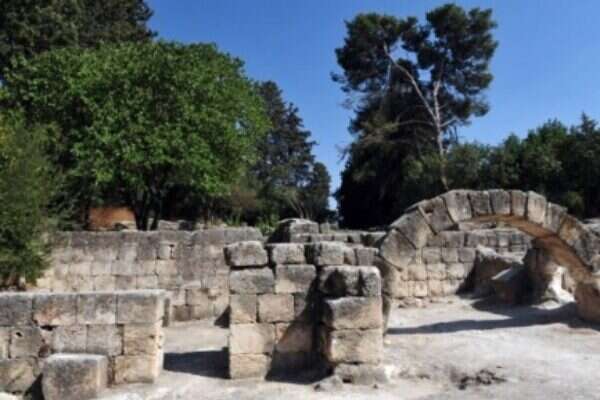
The Beit Shearim National Park in northern Israel has been officially named a UNESCO World Heritage Site. The approval marks a successful end to a campaign that began in 2002, when Israel first proposed the ancient necropolis for World Heritage status. The vote took place at the 39th UNESCO World Heritage Conference in Germany, with 17 of the organization's 21 member nations voting in favor. Supporters of World Heritage status for Beit Shearim included India, Turkey and Senegal. "The Beit Shearim necropolis is sending a greeting from 1,800 years ago," explained Dr. Tsvika Tsuk, chief archaeologist for the Israel Nature and Parks Authority. Carmel Shama-Cohen, Israel's envoy to UNESCO, the OECD and the European Council, said that "the amazing achievement of unprecedented support while heaping compliments on the State of Israel proves that Israel, which initiates positive steps with determination and wisdom, can harvest fruit even in rocky fields like U.N. organizations." Located some 20 kilometers (12 miles) east of Haifa in the Lower Galilee, Beit Shearim dates back to the first century BCE and was destroyed by fire in 352 C.E. Known as "the Mount of Olives for the ancient Jewish world," the necropolis contains a network of more than 30 burial caves, one of which holds the grave of Rabbi Yehuda Hanassi. The city had a second life during the Byzantine era. In addition to the ancient archaeological remains, the site is home to sculptor David Polus' bronze statue of Alexander Zaid, one of the founders of the Mandate-era Jewish defense organization Hashomer, and offers a number of hiking trails.
UNESCO declares Beit Shearim a World Heritage Site
Beit Shearim is sending us a greeting from 1,800 years ago, says Israel Nature and Parks Authority's chief archaeologist • Carmel Shama-Hacohen, Israeli envoy to UNESCO, notes "unprecedented support" for Israel in getting the ancient necropolis listed.
Load more...