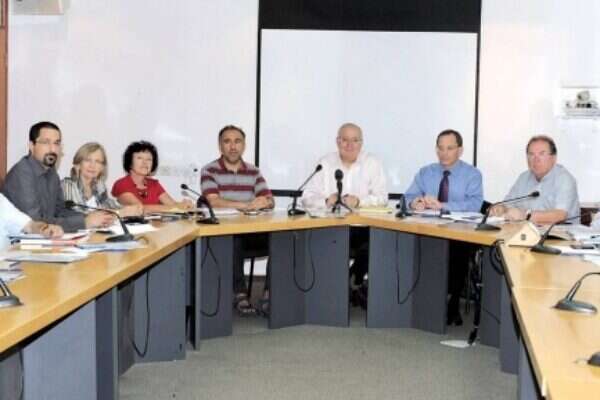
The 22-member committee formed by Prime Minister Benjamin Netanyahu to propose solutions to the socioeconomic problems that sparked sweeping, nationwide protests met for the first time in Jerusalem on Tuesday. Led by economist Professor Manuel Trajtenberg, the panel, known as the "Rothschild Team," consists of ministers and economic experts tasked with conducting a dialogue with tent protesters and outlining changes to address the growing outrage in Israel over the high cost of housing and living. "I am certain the team will articulate solutions and policies that lead to change," Trajtenberg told Israel Hayom on Monday. The initial meeting held Tuesday was meant to determine work procedures, divide committee members into teams, plan a schedule and outline a formula for dialogue with the public. The committee has yet to determine how and where it will conduct a dialogue with the organizers of the tent protest movement. "The purpose of the committee is to translate the public's desires into professional understanding and political action," Trajtenberg said, emphasizing the committee's tight deadline and the need for full and rigorous participation from its members. "I hope that the start of the team's work on this day [Tisha B'Av] symbolizes a new beginning for a better future," Trajtenberg said. "This wave of protests is an expression of longing for something real that is called social justice. Change depends on our ability to listen. It's not easy but we will do it," he added. At the meeting, committee members decided on how they would be divvied into professional teams. Professor Eugene Kandel, head of the National Economic Council, will chair the taxation team; Dr. Shlomi Parizat, chief economist at the Israel Antitrust Authority, will head the team on competition and cost of living; Gal Hershkovitz, head of the Finance Ministry's budget division, will lead the social services committee group. The group tasked with housing will be chaired by Eyal Gabbai, director-general of the Prime Minister's Office. The "Rothschild Team" also decided to create two additional sub-committees: One will operate on the macro level to analyze the costs and implications of the various teams' conclusions as well as determine sources of budgeting, while the other will deal with establishing the infrastructure for dialogue, including launching an online channel. The committee will reconvene next week to present and discuss the teams' work. Meanwhile, Defense Minister Ehud Barak on Tuesday expressed support for the social justice protest, but said that it would be wrong to cut the defense budget to foot the bill for possible reforms. "The social protest is good and exceedingly important and raises real grievances that we must listen to, as well as a new discourse," Barak said. However, Barak said, "In the long run we need to understand that we are not Switzerland or Finland, and we are responsible for the country's security." Barak said that the global economy is volatile at the moment. "It's enough to see the pictures from New York, London, Italy and Spain," he said, adding, "Our region is also on fire, so we have to act responsibly and intelligently, while creating real dialogue with protest groups and major economic organizations." Protest leaders prepare Leaders of the tent protest movement also met Tuesday in anticipation of their meeting with the "Rothschild Team." Organizers held discussions with economic, social and housing experts in an attempt to outline how they would work with the committee appointed by the prime minister. The meeting was attended by protest leaders Daphni Leef and Stav Shafir. Also in attendance were Professor Yossi Yonah, an education expert as well as Dr. Yossi Dahan, a law and philosophy professor who also founded the Adva Center, a non-partisan policy analysis institute whose mandate is to examine Israeli society from the perspective of equality and social justice. In addition, Yoav Kreim, a prominent social activist who advocates for the disabled, was in attendance. Meanwhile, on Tuesday the protesters also received support from Yesha Council Chairman Danny Dayan, who visited the Rothschild Boulevard tents in a show of solidarity. "The time has come to join hands and find solutions so that the protest will not have gone to waste," Dayan said. "For many years we have been saying that, due to the focus on political issues, we have neglected Israeli society. Now all of us must roll up our sleeves to work and find solutions. The comments saying we are the problem are not coming from Rothschild," Dayan said. Transportation Minister Yisrael Katz also visited the Rothschild tent city on Tuesday, where he encountered serious complaints from the protesters. "You [the government] are disconnected from the people," one of the protesters told him. Katz praised the protesters, saying, "The demonstrators are amazing, and there is a real dynamic underway for change." Meanwhile, for the first time since the tent protests began on July 14, inspectors from the Tel Aviv municipality removed some of the tents along Ben-Gurion and Nordau Boulevards, claiming that they were not actually being used.
Government's 'Rothschild Team' meets to discuss social reform
Professor Trajtenberg tells committee members: Change depends on our ability to listen • Protesters tell Minister Katz the government is disconnected from the people • Protest organizers meet with their own panel of experts.
Load more...