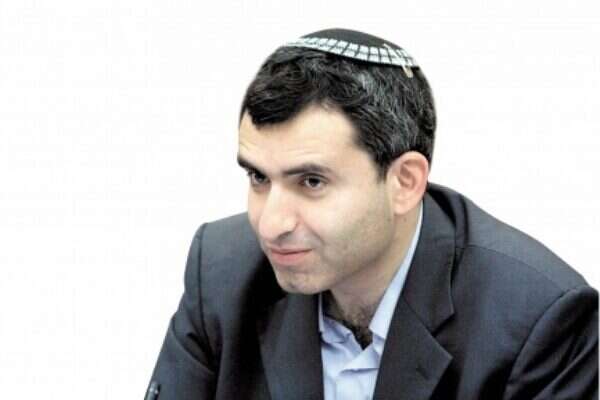
A controversial bill that would level penalties on anyone calling for a boycott of Israel, or of settlements, is expected to be put up for a vote in the Knesset on Monday. Following several contradictory statements Sunday, the Prime Minister's Office announced Sunday night that the government would support the bill and that Prime Minister Benjamin Netanyahu saw no reason not to bring the "boycott bill" up for its second and third readings in the Knesset on Monday as planned. Earlier, a source close to the PM said that Netanyahu would seek to delay the vote in light of a meeting of the Mideast Quartet, which is scheduled to take place Monday and is expected to focus on the Palestinians' expected push for statehood at the U.N. this September. Also Sunday, Knesset Speaker Reuven Rivlin decided that, due to the sensitivity of the bill, he would allow Knesset Legal Advisor Eyal Yinon to present his position on the legality of the bill to the Knesset Presidium, the forum which sets the Knesset's agenda. Rivlin said that he would consider postponing the vote in the Knesset plenum if Yinon finds serious problems regarding the constitutionality of the bill. Yinon was also expected to meet MK Ze'ev Elkin, who proposed the bill, on Monday morning, to explain to him the legal and constitutional problems with the bill as proposed. Yinon told According to the bill, anyone who publicly calls for a boycott of Israel could be sued for damages. This would include deliberate calls for economic, cultural or academic boycotts of any person or organization due to its ties to Israel. According to the text of the bill, "Anyone harmed by such an injustice is permitted to sue the publisher for the damage caused to him as a result of the boycott. In addition, a court that finds that such an injustice has been committed may demand that the offender pay compensation, independent of the damage." The bill also authorizes the Finance Minister, in consultation with the Knesset's Constitution, Law and Justice Committee, to formulate guidelines which would prevent anyone who calls for or participates in such a boycott from participating in any government-issued tender. Kadima was originally in favor The Kadima party, which has recently expressed vigorous opposition to the bill, was originally among its early supporters. Kadima faction chair MK Dalia Itzik, Deputy Knesset Speakers Ruhama Avraham Balila and Majalli Wahabi, Knesset State Control Committee chair MK Yoel Hasson and then Foreign Affairs and Defense Committee chairman, Tzahi Hanegbi were among the bill's early supporters when it was submitted a year ago. "Before I submitted the bill, I suggested to MK Itzik that she join the initiative and she was willing to do so," MK Ze'ev Elkin (Likud) said Sunday. "I added several other Kadima MKs to the bill's list of initiators, all heads of committees or members of the Knesset Presidium. Itzik even helped me recruit a majority in favor of the bill in the ministerial legislative committee. They also supported the bill in its preliminary reading." Itzik said Sunday night in response, "I originally supported the bill, but the current phrasing is much more far-reaching [than the original]. It proposes boycotting universities and harming academic freedom, and it seriously harms freedom of expression, and therefore I oppose it." Leftist organizations protest MK Zahava Gal-On (Meretz) submitted a competing bill Sunday which would require the labelling of products from the settlements. The bill would require that goods sold in Israeli stores carry labels stating where they were made. "I don't buy products made in the settlements; in my eyes 'blue and white' ends at the Green Line," Gal-On said. Uri Avnery, a former left-wing MK and one of the leaders of Gush Shalom, also criticized the law, saying it would be a "black stain of shame in Israel's law books." Approximately one hundred Peace Now activists demonstrated on Sunday in front of the Justice Ministry in east Jerusalem against the bill and Justice Minister Yaakov Neeman's support for it. "The Elkins and the Akunises are leading a move that is meant to silence people," said MK Ilan Gilhon (Meretz), who participated in the demonstration. He was referring to MK Ze'ev Elkin and MK Ofir Akunis (Likud), who submitted a similar bill. The birth of the boycott bill The "boycott bill" was born out of a series of boycotts started by leftist elements in Israel. Thus, for example, it came to light recently that while Israel approved construction of Rawabi, a new Palestinian city near Ramallah, the project's backers required Israeli companies participating in the project to commit to not using products made in Judea and Samaria. Last August, ahead of the inauguration of a new cultural center in Ariel, a number of Israeli actors and artists signed a letter stating their refusal to perform in the settlement. The same month, the organizers of a jazz festival in Eilat were forced to shorten the event, after several of the artists who were scheduled to appear cancelled at the last minute. Two months earlier, a group of extreme leftists caused the cancellation of a series of concerts scheduled by groups and artists from abroad. In a letter sent to the artists, the group asked, "Are you willing to appear in Tel Aviv when millions of people are choking under a cruel occupation by the Israeli military right under your noses-" In addition, for years Israeli left-wing academics have been calling for a boycott of the Ariel University Center, and in more extreme cases, of Israeli academia in general.
Knesset to vote on 'boycott bill'
The bill allows anyone who publicly calls for a boycott of Israel to be sued for damages. Offenses covered would include deliberate calls for economic, cultural or academic boycotts of any person or organization due to its ties to Israel.
Load more...