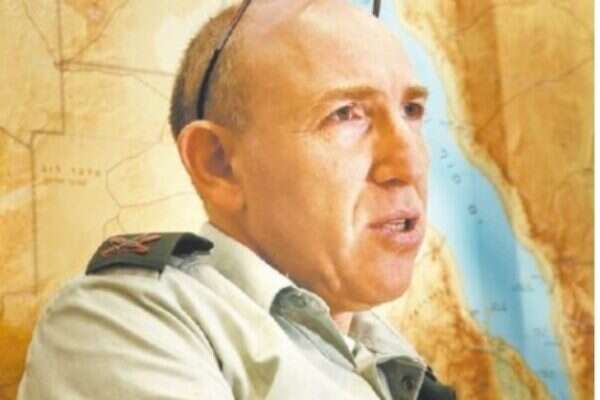
Even the most die-hard optimists will have trouble remaining optimistic after reading what the Israel Defense Forces' military intelligence forecasts for 2015. To sum it up in three words: an ongoing mess -- at least according to outgoing director of the Military Intelligence research division, Brig. Gen. Itai Brun. Brun, who is retiring from the IDF at the culmination of an impressive career in intelligence, has far more questions than answers after manning his current position. The Middle East is more complicated now than when he took the job four years ago: more conflicted, much more violent and far more difficult to predict. Under these circumstances, the expectation that the military intelligence units will be able to accurately forecast the future becomes nearly impossible to fulfill. The old intelligence perceptions no longer apply in this new reality, which forces the intelligence units to confront four new and complicated challenges (relevant in all the Middle Eastern fronts): • The challenge "coming into being": While traditional intelligence research always relied on the analysis of the other side's intentions and actions, the events of recent years are a clear result of a dynamic that lacks advance planning or decision-making in the form of pinning down defined objectives. • The challenge of "disappearance": In the past, it was enough to pick up a pair of binoculars or take some photographs in order to gather intelligence on the enemy. The new generation of enemies, which is seamlessly embedded in the civilian population and works deep underground, obligates intelligence gatherers to make exerted gathering and research efforts to expose them. • The challenge of "speed": In the past, processes required time and thought out decisions, but today everything happens at a dizzying speed. The technological developments in telecommunications (mainly the cyber field) and the use of weapons that don't require any special training or preparation (like missiles and rockets) dramatically cut the time of thinking-deciding-acting processes. • The challenge of "shifting": In three words, the information revolution. It provides unprecedented amounts of data, but also creates an overabundance, flooding the system, forcing intelligence gatherers to invest time in analyzing mass amounts of data and distinguishing the important information from the unimportant. These four challenges, according to Brun, are at the crux of the current intelligence effort and are critical to understanding today's reality. "The key issue that I have been grappling with over the last few years is how to practice intelligence gathering in an age of uncertainty and instability," he says in an exclusive interview with Israel Hayom. "In order to do that, we had to differentiate between secrets and mysteries. A secret is something that someone, somewhere, knows -- how many rockets Hezbollah has, or where Iran has secret facilities, for example. The task is to infiltrate the most clandestine places in order to know, too. "But in the last few years, we have shifted from dealing with large volumes of secrets to dealing with mysteries. Unlike secrets, mysteries are questions that don't have an answer: Who will replace [Syrian President Bashar] Assad? When will Iran have nuclear capability? What will happen in Tahrir Square if we strike in Gaza? The answers to these questions have not been decided yet. Bashar hasn't decided who will succeed him, and even his successor doesn't know it yet." These questions are mainly derived from the events of the Arab Spring, which rocked the Middle East in recent years. Military intelligence researchers, he reveals, are divided on whether the instability will continue. Some believe that the shock wave is over and that the major events are behind us. Brun is among those who believe that the old world order has been replaced with a long-term lack of order, and are convinced that the region will not regain stability in the foreseeable future. 'First we take Damascus, then we take Jerusalem' Brun completed the first, and most significant, part of his service in the Air Force intelligence unit. The most menacing enemy at the time was Syria. "My focus was on Syria for decades. I view myself as an expert on Syria. But most of the experience I've amassed over the years is almost irrelevant today," he confesses. "There is still 'little Syria,' which is where Bashar runs the show, and there is still a [Syrian] air force and surface to surface missiles and even a few ground forces, but these are not the main threats." Q: Will Assad hold on to power- "The debate surrounding Syria is actually about the entities located on the territory we once referred to as Syria. There is no Syria anymore. In my opinion, in the coming years, there will be no Syria in the atlases from which children study. There will be an entity that has yet to be named, which we affectionately call 'little Syria.' It extends from Daraa, Damascus, Homs and Aleppo all the way to the coast. That is where Bashar reigns. This is where most of the citizens who were once in Syria reside, and this is where most of the national infrastructure is there. I believe that within this territory, Assad will survive. In the rest of the territory, independent entities will be formed -- mostly Islamist, some radically so. That is the current situation in the Golan Heights." Q: Why are these groups in the Golan Heights refraining from action against us- "I assume they will take action. It seems rather inevitable, because of their ideology. They haven't taken action until now because they were occupied with overthrowing the regime in Syria. Their ideology, explicit and well documented, is 'first we take Damascus, then we take Jerusalem.' There was a discussion among them whether it would be better to do it simultaneously or one after the other, like in Sinai. At the moment they have decided on doing it in stages, but that could change at any minute. I am convinced that it is only a matter of time before they attack us in the Golan Heights." This intelligence insight regarding the deep change sweeping over Syrian and the Golan Heights has led the IDF to make dramatic changes on the Syria front: A new fence has been erected, a new division has been recruited and operational perceptions that have been implemented for years have now been replaced. These efforts are meant to ward off radical Islam, which Military Intelligence compares to the Hun tribes that invaded Europe 1,500 years ago. The most prominent of the Islamist groups -- ISIS -- isn't present on Israel's border yet, but the focus dedicated to this group has increased dramatically in the last few months. "It is an incredible brand," says Brun. "With four yards of orange fabric and a few knives they managed to enter all our minds. They took over a large territory, from Ar-Raqqah in Syria to the outskirts of Baghdad. They used Hunnish methods to scare everyone into fleeing. But it must be said that this is an unstable takeover, and its future depends on their meeting with the international coalition. On this, too, intelligence experts are divided. I think that the coalition will have trouble doing what [U.S. President Barack] Obama has promised on the podium -- to "degrade and ultimately destroy" ISIS. This thing cannot be destroyed. I'm not sure that they will continue to spread militarily, but it will continue to spread ideologically. More and more existing organizations will pledge allegiance to ISIS, similar to what is currently happening in Sinai, Gaza and Lebanon. This is a nearly decade-old idea, and like the idea behind the Muslim Brotherhood, it will never disappear." Brun talks about "thousands" of European citizens who have joined ISIS since last summer. The obvious concern is from when these citizens return home, brainwashed and militarily trained. The fear is that a wave of terrorism will wash over the continent. The recent terrorist attacks in Paris may not have come out of the ISIS greenhouse but they underscored the need for Western nations to keep their eyes open. Brun says that the process has already begun, at least at the level of locating and monitoring dangerous operatives. But he is not optimistic: "There will not be complete success in this battle. There are thousands of Western operatives who are coming home, trained, equipped, with experience, but above all, motivated. The terrorist attacks against the West, including against Israeli and Jewish targets, will undoubtedly continue. This is a permanent phenomenon that needs to be confronted." No hope from Damascus Almost two years ago, in March 2013, Brun found himself in the middle of an international incident after saying at a public lecture that Assad was using chemical weapons against his own people. The U.S., which had pledged to intervene militarily in Syria if such a "red line" was crossed, criticized Brun and accused him of disseminating unsubstantiated information. They had to backtrack several months later when thousands of people were killed in a chemical attack in Damascus. In time, it turned out that the information Brun was relaying had not only been solid, but it was also well known to the Americans. They simply wanted to avoid a new Middle East adventure. Ultimately, these events led to Syria's near absolute disarming in terms of chemical weapons. "The threat has shifted," Brun says. "It is no longer thousands of air missiles carrying hundreds of strategic and lethal chemical warheads that could have hit our homefront. Assad may still have a limited chemical capability but he lacks the means to transport it. He used his Scud missiles against his own citizens." But still, Brun points to a major change that the public is not aware of: The strategic threat of the chemical weapons has turned into a tactical threat. "In the end, Bashar [Assad] has in fact been using chemical weapons on his people throughout all of last year. It's not sarin or VX, but other agents. He uses them on his own population, and to us it seems very natural that terrorist organizations will get their hands on these kinds of weapons, or that they will be transferred to Hezbollah. It may not pose a strategic threat to the [Israeli] homefront, but it is certainly a threat to the [Israeli military]." Q: What do these chemical agents do- "They neutralize in low doses and kill in high doses. [Assad] used chlorine gas, for example. These are chemicals that may not kill thousands, but people in Syria have already been killed by them." Q: What you know, the West also knows. Why isn't anyone doing anything about it- "Because it doesn't cause mass casualties. This time I have to be careful, but I will say this, and it doesn't have to do with chemical weapons: 200,000 people have been killed in Syria and the world is doing nothing. That is unbelievable, and it is not just true in regard to chemical weapons. When I spoke back then it was part of a wider sense that there was genocide being committed in Syria and that it could be stopped, and that no one was doing it." Q: What scenario in Syria would be best for Israel- "The best outcome for us is not realistic -- the radical axis of Iran, Syria and Hezbollah loses its influence, and the Islamists are unable to secure a victory. That is something that could have been achieved in 2013, if the West had taken action and a moderate Sunni element had emerged from the wreckage. But that didn't happen. Today we have to choose between the radical axis and radical Islam. Both are equally bad, so in the Syria development there is no optimistic aspect." Q: Assad attributes to Israel several strikes on Syrian soil. Why has he not retaliated- "In my opinion, he is intimidated. And he has more pressing matters to tend to. There is the intelligence approach, which we have never identified with, that asserts that when an Arab leader feels pressured, he will attack Israel. That is not true. He is dealing with a bunch of punks. He doesn't need the neighborhood bully on his case as well." Q: If we enter into a war with Hezbollah, will he join in- "That is a perfect example of something that is not a secret, but a mystery. It depends on the concrete context. I think that he will continue to avoid having us attack him. To the point, he will turn on his television, he will see that Hezbollah is doing okay, then he'll do something small to fulfill his obligation. If he sees that Hezbollah is not okay, he will have a very difficult decision to make. But the very question derives from the old Syria. The question is not what Bashar will do, but whether Hezbollah and Iran, which are so significantly present in Syria, will use that presence to wage war with Israel on the Syrian front, with or without Bashar's authorization." Nasrallah's dilemma Over the last few months, Hezbollah has resumed action against Israel in the north. At first they did it by way of emissaries in the Golan Heights. Lately they have been doing it directly, and out in the open, in Har Dov. Military Intelligence picked up signs indicating that this would happen as early as two years ago, after the first airstrike attributed to Israel on Syrian soil. In that strike, the target was the SA-17 systems intended for Hezbollah. A month later, in a recorded interview, Hezbollah Secretary-General Hassan Nasrallah vowed that if Israel acts in Lebanon, Hezbollah would respond. Nasrallah not only made threats, but he also made a clear distinction: Hezbollah would not retaliate for attacks on Syria, but attacks on Lebanon would not go unanswered. "In January 2014 he identified what he viewed for the first time as an [Israeli] attack on Lebanese soil," says Brun. "Even before then, there were all kinds of events that he could not explain or definitively prove that they were 'Israeli' -- like a high-ranking commander who was killed, and other incidents. But this was obvious, and what happened was that he made good on his threat. Granted, it was a marginal incident that he could have easily glossed over, because the attack he attributed to us was in an isolated area, very close to the border with Syria. But I think that he felt that we were testing him, starting out small in efforts to open up Lebanon to our attacks as well." Q: So he sent us a signal. "Yes. That was in March. He identified a device he attributed to Israel. True, he has discovered many like it over the years, but this time one of his operatives was killed and he took responsibility, so, in his eyes, he had to respond. In my opinion, he didn't do it with a happy heart. Only to signal to us that he had enough." Hezbollah's response to that incident was to detonate bombs on an Israeli unit in Har Dov. Two Israeli soldiers were hurt, but the incident could have easily ended up with Israeli casualties in the double digits. Some people, including Brun, believe that the IDF's weak response to this incident taught Hezbollah that Israel would accept reopening the Har Dov front for battle. "They think that as far as we are concerned, we can contain that area. They made that mistake in 2006, and they may make it again." Q: What will the third Lebanon war look like- "It's complicated, because I can only describe what Hezbollah will do. What we will do is a different question." Q: So let's focus on Hezbollah. "They will try to fire a large amount of rockets and missiles into our territory, more than a thousand a day: a thousand short range projectiles and a few dozen more mid- and long-range missiles. Unlike the Second Lebanon War, I believe that next time we will see Hezbollah forces on Israeli soil," Brun warned. "They will come in two forms: One will be terror attacks -- pinpoint strikes in Nahariya or Shlomi or Maalot -- and the other will be more substantial operations to grab territory inside Israel." Q: Does that mean, for example, that a Hezbollah force crosses the fence and takes over an Israeli community- "Yes. There is a deep seated idea here -- to undermine Israel's sense of security. I mean even as I say it, and you write it, it is not really sinking in. When it happens, we will be deeply shocked. In Nasrallah's view, that deep shock is something that can help him in the long term to bring down the State of Israel." Q: That means that instead of attacking, we will have to deal chiefly with defense. "From an operations perspective, what you are describing is true, but that is not the main issue. It's like the Egyptian Third Army in the Yom Kippur War. In the end it was a small, surrounded area, but it opened up the Egyptian's sense of victory." Q: What is Nasrallah hoping to achieve in the next war- "I don't think he wants the next war. But when it happens, he will want to inflict as much damage as possible. It is not about deterrence: We have to believe what they are saying. They want to destroy the State of Israel. They don't have an operational plan with a target date, but that is the main idea." Q: What is the lesson of the latest Gaza campaign -- Operation Protective Edge- "The lesson is that we are generally headed in the right direction. But they are building up weapons stores and focusing on short-range weapons in efforts to target the population and hurt our forces." Q: What about tunnels- "We haven't found any, but we are always looking. The basic assumption is that they exist and we have to find them." Hezbollah invests most its efforts into amassing rockets, in bulk. They already have about 100,000. More precisely, the aim is to target sensitive and strategic Israeli locations and thereby immobilize the Israeli population. The targets include the Kirya Defense Ministry compound in Tel Aviv as well as Air Force and Intelligence bases, but also the oil refinery in Haifa, electric company infrastructure, Ben-Gurion Airport, the ports, and more. "Tel Aviv will be hit," Brun stresses. "How much? That depends on the success of our offensive strikes." Q: Will Hezbollah be able to accurately strike any target it wishes- "They are making every effort to obtain the precise capability to do that. They are not there yet. It will happen at some point." Q: Do we have quality intelligence on Hezbollah- "Yes. So good that no one between Hadera and Gedera will be hit by Hezbollah rockets? No. Our intelligence capabilities are not good enough to prevent rockets from striking our territory, but it is good enough to minimize this threat as much as possible." Another war could erupt Five months after Operation Protective Edge, it looks like the so-called "drizzle" of rockets from Gaza has returned to Israel's southern communities. Military Intelligence experts say not only is Hamas not responsible for the rocket fire, the rockets are being launched in clear defiance of Hamas' stated interest to maintain the calm. "It is not debatable, because it is based on the strongest pool of information," Brun concludes, but rushes to explain that "the story, as usual, is far more complicated. Hamas is trying to signal to us that there is a direct correlation between the economic hardship in Gaza and security in Israel. Ultimately, Hamas may become committed to its signals. But one thing is certain, as certain as one can be in this region: Hamas does not want to initiate a confrontation. The truth is that Hamas would have a hard time launching an attack again." Despite all that, however, it could still happen. Just like it did last summer. Then, too, Brun was convinced that Hamas was not interested in confrontation. This stance led him into a profound, high-profile and damaging disagreement with the Shin Bet security agency. Brun admits that damage was done, because "in that disagreement there was a certain degree of concern over the confidentiality of the information." Q: Is Hamas rehabilitating the tunnels already? "Yes. They are clearing out the wreckage and trying to rebuild. Are they digging new tunnels into our territory? I would guess that not right now." Q: What about rockets? "They are being a lot more experimental, but we are also seeing that they are facing a lot of difficulty smuggling materials in from Egypt. They will ultimately resume manufacturing rockets; that is unavoidable." Q: So when will we fight the next war in Gaza? "If you subscribe to my view, there is no answer to that question. After all, Hamas was deterred in July 2014, but still a war erupted. That could happen again, depending on a variety of circumstances. Intelligence can't really predict when it will happen, so we have to prepare for it to happen." Q: What you are saying directly contradicts what we were promised last summer: that Operation Protective Edge will bring long-term calm to the south. "Hamas is very intimidated. They don't want a confrontation. They are meticulously enforcing restraint and when a rocket is fired at us, someone gets arrested. Despite all that, a war could erupt." A substantial part of this restraint stems from the Egyptian enforcement along the Gaza-Sinai border. The Egyptians, Brun says, blame Hamas for much of the chaos they are experiencing in their own territory, so they are taking action to weaken Hamas. "They want Fatah to return to the Gaza Strip, but they don't understand that it is not realistic right now," Brun says. Q: Is Egyptian President Abdel-Fattah el-Sissi's leadership stable? "It is, but at some point he will have to confront the gap between the public's expectations and reality, because he can't really solve Egypt's financial problems." Q: Going by your thesis, we may see millions of people demonstrating in Tahrir Square again. "True. But the Egyptian public is far more realistic now, especially after the disappointment of the [deposed Egyptian President Mohammed] Morsi era. That is the reason we didn't see anyone demonstrating in the streets after the acquittal of [Morsi's predecessor, former Egyptian President Hosni] Mubarak." Q: So is the Arab world gaining a more realistic view of the Islamic revolution- "I think that a large portion of the public prefers order to democracy right now, but that won't last long. The idea of political Islam, just like the idea of global jihad, is not new. It survived persecutions and outlawing. It won't collapse now." Contagious atmosphere attacks The main focus of the intelligence community in recent months, once the fighting in Gaza was over, has been the second Palestinian front -- Judea and Samaria and east Jerusalem. The main concern is a third intifada alongside the Palestinians' diplomatic moves in the international arena. In response to the direct question -- what does Palestinian Authority President Mahmoud Abbas want? -- Brun replies decisively: "We have no doubt that Abbas does not want terrorism. He does not use doublespeak and he does not incite, he simply doesn't want terrorism. His way is not the way of terror. There are people who think differently, but this is our understanding of things." Q: So what does he want- "His position is that Palestinian national goals -- statehood -- should be achieved through negotiations with Israel. As he approaches his 80th birthday, watching the Israeli political apparatus, he feels that the likelihood of that happening is very low. Therefore, he is going for a double-sided approach: One, he wants to force us to return to the negotiating table by way of international pressure, with the talks starting with his usual demands, of course. Or two, he wants a Palestinian state to be established without negotiations with Israel but due to international pressure, like in South Africa." Q: Which option does he prefer? "Right now he has found the comfortable space that allows him to go in either direction. But in my opinion he will prefer -- depending on political developments on our end -- the negotiations route. But there is always the other option." Q: Is his leadership in Ramallah stable? "Yes." Q: Is a third intifada possible? Is it a current concern- "The current situation is less calm than in recent years, but it is not an intifada. Right now we are not seeing Hamas terror cells undermining the stability there, nor are we seeing mass demonstrations, but it could happen. What we are seeing is what is often called, for lack of a better term, atmosphere attacks, which are contagious. What we can say is that we are on the verge of increasing instability. That is true for Gaza, too. Q: Can you outline a possible scenario? "For years, there was some kind of future involving negotiations and the establishment of a state from the ground up, and it gave a sense of direction to a population that doesn't want to live under occupation. Now we have atmosphere attacks. We retaliate, Abbas goes with his contrarian approach, and then we punish him. All this could lead to instability. What Israel is trying to do, in Gaza and in Judea and Samaria, is to respond to each development in a way that won't spark a deterioration. It is very delicate." Q: Is Abbas trying to intervene in Israeli elections? Influence Arab MKs- "No." Q: No question? "They have three ways of dealing with the situation. Saying that now is not the time to act and letting us make our choices and seeing what happens; Saying that now is precisely the time to act because we are busy with our own elections and therefore the most fragile; or what you asked, trying to influence the elections from within. We are seeing none of these right now." More information, more vulnerability The challenges facing the intelligence community in recent years, a direct result of the regional upheaval, have led to far reaching changes in the way intelligence work is done. These changes also stem from the biggest intelligence revolution of recent years, the development of the cyber field. Brun says that the most perceptible aspect of this change is the "accessibility to things that we didn't know how to touch in the past." Q: Like what? "You know I won't answer that. But it is something that provides much more information than we ever knew before. On the other hand, it also gives our enemies access to our vulnerabilities. There have been several situations where I thought we knew everything, but it was all confused, chaotic, the information and the noise appear together and you have to know how to separate them -- that is what we are trying to do here." Brun is mainly concerned with the defensive aspect of cyber intelligence. He thinks that we don't fully understand how exposed we are. He is not talking about defense systems, but civilian systems. "In my eyes, it is similar to rockets," he says. "I was there when the rockets just began -- in the beginning of the 1980s. They were small, imprecise weapons. It didn't seem like a serious threat. But now, some thirty odd years later, soon rockets will have the capability of hitting a plate on the roof of the General Staff building. The same is true for the cyber field. While we try to defend our core secrets, our defense systems, our national infrastructure, we can sustain a lot of damage to our civilian sector." On the offensive side, Israel's cyber capability has provided endless information and opportunities that did not exist in the past. Brun refuses to address the most obvious example -- the joint U.S.-Israeli operation that, according to foreign reports, debilitated Iranian centrifuges in Natanz for quite some time. Only since then, the cooperation between Israel and the U.S. has diminished significantly on anything having to do with staving off the Iranian nuclear efforts. So much so, that some in Israel have accused the U.S. of capitulating to Iran by striking a nuclear deal with them. Q: Give us an up-to-date assessment on the Iranian nuclear effort. "The Iranian public, and the regime, are currently in a holding pattern that could lead to a comprehensive, permanent agreement, or another temporary deal and another extension, or extensions. Another possibility is a breakdown of talks, but that seems less likely. The sides are interested in a deal, but there are still gaps, especially on the issue of enrichment, the number of centrifuges allowed to remain active and the amount of uranium that will remain in Iran." Q: So Iran is no longer the main threat facing Israel? "The idea of achieving nuclear capability is still relevant, but the advancement toward that vision has slowed. In fact, the only aspect that is still somehow moving forward is the enrichment, and even that in a limited way and in compliance with the interim deal. And still, let us not forget that in other arenas, Iran is the engine behind a string of actions against Israel, including efforts to transfer weapons mainly to Hezbollah." Q: In a headline: How will 2015 look? "In the past, we used to do annual intelligence assessments. In 2014 we started doing it twice a year, because we realized at the end of 2013 that we couldn't give a headline that would remain relevant for an entire year. That is the challenge of coming into being. Things change. And still, the headline for 2015: An ongoing mess.
'Attacks in the Golan Heights are a matter of time'
Outgoing Military Intelligence research division head Brig. Gen. Itai Brun warns of an "ongoing mess" in the Middle East in 2015 • In an exclusive interview, Brun outlines the challenges posed by a dangerous and complicated region, with little optimism.
Load more...