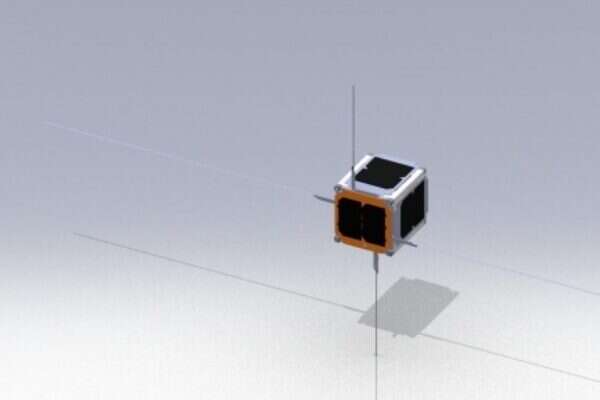
Israel successfully launched its first nanosatellite into space Thursday night, from the Yasny Airbase in Russia, along with 36 other civilian satellites sponsored by various countries. The Duchifat-1 nanosatellite was designed and built by Herzliya Science Center high school students, in a project partially sponsored by the Israel Space Agency and the Herzliya Municipality. The 860-gram (1.9 pound) cube-shaped satellite, which is 10 centimeters (3.9 inches) long in each dimension, was named for Israel's national bird, the hoopoe ("duchifat" in Hebrew). The satellite was designed to assist travelers and hikers who lose their way in area where there is no regular cellular reception, enabling them to send a distress call to the satellite from any communication device. The satellite will broadcast a signal back to a control center set up in Herzliya, identifying the stranded individuals' location. Duchifat-1 is only the second student-built nanosatellite in the world to successfully enter orbit. It was preceded by a NASA-sponsored student satellite launched from the United States in January. "This launch signifies the beginning of the nanosatellite age in Israel," Science and Technology Minister Yaakov Peri said Thursday. "This project is part of the great advancements in space-age technology that were once achieved only by governments and huge corporations, but are now promoted by research centers and universities as well. Israel has taken this one step further, involving teenagers in space research," he said.
Israeli students' nanosatellite launched into space
Duchifat-1, named for Israel's national bird, successfully enters orbit Thursday night • Nanosatellite meant to assist stranded travelers • "Launch signifies beginning of nanosatellite age in Israel," says Science and Technology Minister Yaakov Peri.
Load more...