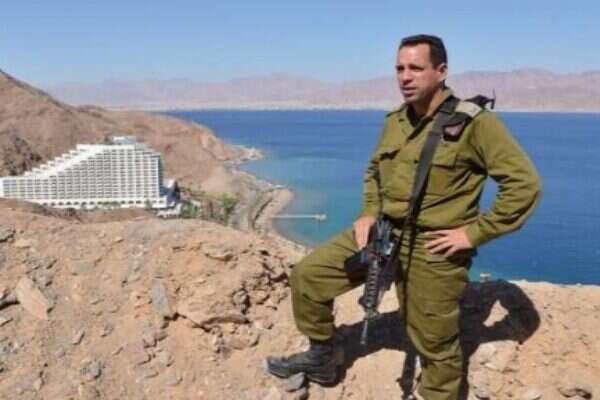
In a week that saw the election of Abdel-Fattah el-Sissi as president of Egypt, the southern border was surprisingly quiet. With the exception of one instance of drug smuggling, there were no extraordinary occurrences. Even the jihadist organizations passed on the opportunity to exploit the election as a pretext to attempt terrorist attacks against Israeli targets. Officers in command of Israel Defense Forces troops stationed in Eilat believe that the major factor contributing to the calm is the fence that runs along the border between Israel and Egypt, which was finally completed recently. The army has also been quite efficient in the area from an operational standpoint. The fence, initially conceived as an emergency measure whose aim was to curb the entry of labor migrants from Africa, has paid unexpected, yet significant dividends in terms of defense and security. "Migrant infiltration and drug smuggling have always been a fertile platform for terrorism," said IDF Brig. Gen. Roei Elkabetz, who commands the Eilat Division. The logic is simple to understand. The precise route used by a migrant seeking to illegally cross into Israel can also be used by a terrorist. Every bag of smuggled marijuana could just as easily hold weapons and explosives. Fortunately for Israel, when the wave of illegal infiltrators washed over the south, the jihadist organizations in the south were still not prepared to take advantage of that yawning, seemingly endless 230-kilometer (140-mile) gap along the border to carry out major terrorist attacks against targets inside Israel. With the exception of the terror attack that took place in August 2011, in which eight Israelis were killed when a gunman opened fire on vehicles driving along Route 12, all of the attacks perpetrated against Israel were either aimed toward the fence or over the fence. Overall, 14 attacks were committed in the last three years, of them 10 were instances of rocket fire toward Eilat. The significance of this is that the fence has served as a real buffer along the border with Egypt. Not only has it stopped terrorism -- or, at the very least, prevented terrorists from physically setting foot in Israeli territory -- it has almost completely halted the entry of infiltrators. According to the IDF, 10,455 migrants have entered the country illegally from Sinai. Since the start of 2014, just seven have managed to enter the country -- and all of them were apprehended. From the IDF's vantage point, the infiltrators are a national headache, but an ever-more menacing headache has taken root in recent years in Sinai -- the Islamist jihadist groups, the most violent of which is the Ansar Beit al-Maqdis ("Champions of Jerusalem"). This organization is responsible for most of the attacks perpetrated in recent years against Israel. It has also been behind attacks on the Egyptian police and military personnel, exacting deaths which number in the hundreds in recent months. Death to all Ansar Beit al-Maqdis began to make significant inroads during the chaos and anarchy that ensued immediately after the fall of ousted Egyptian President Hosni Mubarak. According to Military Intelligence assessments, it numbers hundreds of operatives, including local Bedouin. The group's ideology is extremist in nature, and it champions death to all nonbelievers -- Jews, Christians, and even moderate Muslims. The threat posed by this organization -- and its much bigger, more dangerous affiliates in Syria -- is serious enough to prompt the intelligence authorities to place global jihadist groups on the list of the top five most significant security challenges faced by the State of Israel in 2014. While these groups are currently preoccupied with bringing down the respective regimes in Egypt and Syria, Israel has a good grasp of what these individuals are thinking -- after Cairo and Damascus, it is on to Jerusalem. This realization led the IDF to alter its method of operations on both fronts. A new fence designed to completely seal off the frontier from infiltrators and terrorists was built. In addition, the composition of IDF troops stationed along the front was changed. Instead of reservists manning the scene, the army has instead deployed conscripts and, in some cases, soldiers from elite commando units together with specialized field units familiar with the terrain. As part of the upgrade in forces, the IDF formed two new brigades which were placed under the command of the Eilat Division. Police have also seen the changes pay off in terms of its war on crime. According to IDF statistics, 63 drug smugglers have been arrested so far this year. Authorities have disrupted drug smuggling operations that have netted a total of 974 kilograms (2,150 pounds) of illicit substances. A guided trip that we took earlier this week with the commander of the Eilat Division gave us an idea of the challenges facing authorities. Not only do IDF troops need to withstand the oppressive heat (the recent heat wave pushed temperatures to 48 degrees Celsius, or 118 degrees Fahrenheit) and the tasks of routine border patrols, but the difficult terrain also allows for endless ways to reach the fence area. While it is no easy task to overcome this newly built barrier, just reaching the border allows terrorists to harm the forces operating along its route. There are also many sections of the fence that come right up against hiking trails and drivers used by civilians. In an effort to detect and thwart any attempts to target civilians in these areas, the army has outfitted parts of the fence with the most advanced, sophisticated surveillance equipment. The effectiveness of the system is critical, particularly in the Eilat theatre. The routes used by infiltrators come very close to populated areas, and their closure is crucial to preventing terrorist attacks against a city that draws nearly 3 million tourists every year. "A tourist who steps out onto the balcony of his hotel room doesn't realize the amount of effort and energy invested here, or what it would mean if we fail, God forbid," said Elkabetz. "One major event here could have grave consequences on the entire city." As part of the effort to shield Eilat from terrorism, the IDF has permanently stationed an Iron Dome anti-rocket battery near the town. The military has also instructed the Navy to be on higher alert. Nonetheless, the most serious threat comes from land. Authorities are also fretting over the 900,000 tourists -- most of them Israeli -- who travel through Eilat on their way to Sinai every year in defiance of the travel warnings issued by the Counterterrorism Bureau. In praise of Egypt When considering Israel's situation along its southern border, officials say that the good news has come from the Egyptian side of the frontier. The Egyptian army has been engaged in an all-out war against terrorist organizations in the Sinai. Egypt's efforts to root out Islamist terrorism reached their peak under the leadership of Sissi, who has declared these radical elements as Egypt's number one enemy. "Their efforts are quite impressive, and they've made significant gains," said Elkabetz of the Egyptian authorities. The Egyptian army announced that it had eliminated nine of the top 25 most wanted members of Ansar al-Maqdis, including the organization's leader. In order to boost the Egyptian military efforts in the hopes that it would become more effective, Israel allowed Cairo to beef up its military presence in the peninsula beyond what is stipulated in the Israeli-Egyptian peace accord. Now, Egyptian commando units backed by tanks and helicopters are constantly operating in the heart of Sinai. The division commander said that this arrangement poses no threat to the border. On the contrary, Israel can only stand to benefit. Egypt's intense fight against terrorist organizations deep in the heart of the peninsula pins these groups far from Israel's boundaries, giving us relative quiet. Nonetheless, Israel's forces on the ground are ready. From their point of view, the next terror attack is just around the corner, and it will come as a surprise, with no prior intelligence, in the most challenging manner imaginable. "If you ask me what the main threat is, it is a combined terrorist attack that will come without any prior warning, with terrorists that act on a number of fronts at the same time," said Elkabetz. The military's strategy to counter this scenario is to bolster cooperation within the ranks, particularly when it comes to keeping alert in this sleepy part of the country. Another aspect of this strategy is to increase communication with the Egyptian forces. While there are no joint operations, the two armies do maintain constant contact with one another, as was demonstrated during the most recent attack in Taba. A battle of wits With the Egyptian presidential elections behind us, Israeli officials are hoping that the newfound stability in Cairo will lead to even better collaboration between the two militaries and an even more effective campaign against terrorism. In any event, though, the headache will remain. This area is too attractive, and whoever has thus far exploited it for their own purposes -- be they ideological or economic -- will have a difficult time giving it up. Despite the fence, drug smugglers from the Bedouin tribes in the Negev continue to pose a challenge to the IDF. The most recent attempt to smuggle drugs was made last week. While the drugs did not pass through the border, the smugglers managed to evade arrest. Sometimes, dealers throw bags of drugs over the fence wall. "Sometimes the packages break open as they are thrown onto the highway," said Mohammed al-Haib, an officer in the IDF trackers unit operating in the division. "You drive along the route and you smell something, as if someone near you is smoking drugs." Al-Haib is a hero. During his service in south Lebanon, he rescued Maj. Gen. Yair Golan and Maj. Gen. Eyal Eizenberg from certain death. After the withdrawal from Lebanon, he was deployed to the south. His major challenge is to wage a battle of wits against the smugglers. His task is to sniff out smuggling routes, and, just as importantly, prepare the next generation of trackers to do the same. Al-Haib is pessimistic with regards to the future of tracking. In five years, there won't be any trackers in the IDF, he predicted. Meanwhile, the Eilat Division (which is responsible for territory stretching from Israel's southern tip to the center of the Dead Sea) is preparing for its next headache -- the border with Jordan. While the Hashemite kingdom is quite friendly with Israel, and the security cooperation with it is better than it is with Egypt, the border that the two countries share -- which stretches hundreds of kilometers from the Hamat Gader hot springs all the way to Eilat -- is completely wide open. The nearly 2 million refugees currently in Jordan after escaping the civil wars that have ravaged Iraq and Syria are obviously a source of concern to the defense establishment. The Defense Ministry has already started to plan the eastern fence in the hopes of preempting terrorism. "I know it sounds clich , but it's true," said Elkabetz. "The quiet here is deceptive, and it could all go south in the blink of an eye. In this region, there are quite a few elements with the intent and the capacity to really cause trouble, and it doesn't look like it's going to change anytime soon."
'It could all go south in the blink of an eye'
The Eilat Division is responsible for keeping Israel's longest shared border safe • A fence, new technological devices and elite troops all ensure that Israelis and tourists don't have to think about the very real threat • But the calm can be deceptive.
Load more...