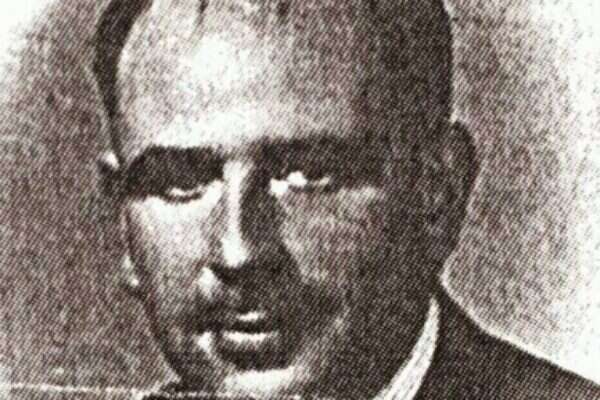
Mustafa Taleb, a member of Unit 131 of Israels military intelligence service, died in early 1962. Massoud Bouton, who shed his identity as Taleb, lived for another 49 years. He died in Strasbourg, France, on May 26, 2011, alone, brokenhearted and destitute, waiting in vain for some acknowledgment or a word of thanks from the country he had served with such self-sacrifice. From 1956 to 1962, Bouton lived under an assumed identity. He pretended to be a wealthy Algerian businessman named Mustafa Taleb, a devout Muslim. He prayed in mosques in Algeria, Libya, Damascus and Beirut, fasted during Ramadan and, in his role as an Arab, cheered the enemies of Israel with the Syrian masses. For seven years, Bouton-Taleb worked as an agent among the enemy, providing Israel with intelligence reports and political assessments and putting himself in life-threatening danger. A small Morse code transmitter served as his voice. At that time, when the Israeli intelligence service and the Mossad were just starting out, Bouton-Taleb, a former combat soldier in the pre-state paramilitary group the Irgun, was legally married to two different women. His wife Esther, whom he had married as a young man, waited for him in Jerusalem. Keeping his secret locked in her heart, she coped every day with his absence and her longing for him as she raised their two children, Ehud and Naomi. He married his other wife, Surmeri, before a qadi in Beirut, according to Islamic religious law. Surmeri, who was part of Bouton's cover, was also his wife for all intents and purposes at the time. A new book, "From Jerusalem to Damascus and Back An Intelligence Agents Story" is now, finally being published. It was written by Bouton together with journalist Roni Shaked. It is a difficult story, and some of it is hard to comprehend. The security establishment delayed the books publication for years, as it portrays the men who headed Israels intelligence service during those years as insensitive, vindictive and having an incredibly large chip on their shoulder. For seven years, Bouton walked a thin line between life and death. With unexplained suddenness, the breathtaking story of this Israeli agents double life was cut short when his supervisors refused to provide funds, as they had done in previous years, for him to go on his annual vacation in Europe with his real family. Deeply insulted, Bouton announced his resignation, which his immediate supervisors and their commanders (Meir Amit and Aharon Yariv) saw as breach of contract. Thus Boutons employment in the intelligence service ended, opening the door to years of conflict. Bouton gradually severed his relationships in Beirut and Damascus, left Surmeri behind and returned to Israel to wage a battle, that later turned out to be hopeless, to restore his reputation. On a mission with no backup The story of Bouton, the spy who returned from Damascus, opens yet another wound, and leaves another episode of Israeli history unresolved. When he returned to Israel, offended by the way he had been treated, Bouton warned his supervisors time and again against using another false identity, of a man named Kamel Amin Thaabet, which he had constructed at his handlers request. This new identity was connected to his own, Mustafa Taleb. Bouton feared that Kamel Amin Thaabet would not be able to prove that he knew Mustafa Taleb (i.e., Bouton) unless Taleb himself was present; if he could not manage such an easy feat, he would be discovered. But Talebs supervisors in the intelligence service didn't heed his warnings. And so it came to pass that Eli Cohen, Talebs successor as Israel's 'Man in Damascus', assumed the identity of Kamel Amin Thaabet and went to Syria on a mission from which he never returned. Bouton does not hold back when he describes his feelings on hearing of Cohens execution: "Early in the morning, Eli Cohen was taken to the gallows in Marjeh Square in Damascus. When I heard about it on the news broadcasts that morning, I got chills. I was horrified, a cold sweat broke out all over my body and I got choked up holding back tears. I felt a need to break, smash, crush and destroy everything around me. To choke someone! Yes, to choke someone. But whom? Even as I saw the horrible sight of Eli Cohens corpse on the gallows in downtown Damascus, the image of his handler, a latter-day Achan [Joshua 7], rose in my minds eye. He was the commander of Unit 131 in the Israeli intelligence service. I also could not forget the images of Maj. Gen. Meir Amit, the head of the Military Intelligence Directorate, and his deputy, Col. Aharon Yariv, who had given full support to his handler on his accursed mission. Alone in the oblivion to which I had been consigned, I looked at them with fury and ground my teeth. Why didnt you listen to me? Why did you dismiss my warnings and send Eli Cohen to Damascus under that false identity that I had prepared for him in Beirut? Why did you order him to introduce himself as Kamel Amin Thaabet? ... From that morning, I knew that my soul would find no relief unless it were to pull the veil of secrecy off of the fiasco that led to the capture of Eli Cohen." The three men at whom Bouton and Shaked point the finger of blame have since died. Roni Shaked says that they either denied everything or refused to comment. Nadia Cohen, Eli Cohen's wife, who attended the book launch last week and warmly embraced Boutons son and daughter, Ehud and Naomi, maintains silence today, but in a press interview six years ago she stated openly that she believed Bouton. Mossad veterans who had promised to attend the book launch last week backed out at the last minute. But in a report by Roee Nahmias that appeared on Ynet in May 2006, three years before Meir Amits death, Amit claimed that Bouton had lied. When Eli Cohen was sent to Syria, I was not in the Mossad. I came into the picture only after his death, when Bouton appealed his dismissal from the unit. The man is a liar. It never happened. Eli Cohens cover story was prepared in Argentina, and Bouton had absolutely nothing to do with it neither the documentation nor the identity nor anything else. Hes confusing matters, and he invented this story to publicize himself. Another official who served in the unit at the time confirmed to Nahmias that Bouton had no connection to Eli Cohen. All Bouton was trying to do was get monetary compensation, he said. But this week, an agitated Shaked stood by his statements, describing the assertion that Bouton was after money as despicable. The only thing he wanted was a word of appreciation from the country, a word of gratitude for seven years of heroic service. Money did not interest him. What interested him were his lost honor, and justice. They treated Bouton, who had contributed so much to the country, as a mere servant whose usefulness had ended. I cannot understand how the country was not ashamed to let a man like him live for decades in exile and become destitute. This book, which has my complete support, is a badge of honor and heroism for the agent who returned from Damascus, and a badge of shame for the country that sent him into the lion's den and abandoned him when he came out. Bouton recalls his training as an agent: how he was careful to pray as a Muslim five times a day and imagine himself inside a mosque, among a throng of worshippers. As someone of Moroccan heritage, he spoke fluent Arabic, though he had to learn the dialects of Beirut, Damascus and Algeria. He learned entire chapters of the Quran by heart. He learned to say Allahu akbar, learned how to debate religious matters like the worshippers who frequented the mosque early in the morning, and even learned the religious laws and traditions of Muslim holy days. He practiced the physical gestures of devout Muslims kneeling, rising and extending the palms of the hands, rolling up a prayer rug and learned photography and Morse code as well. Although it was not easy for Bouton, who had grown up in a traditional Jewish home, to become a Muslim, he did so perfectly. Within a short time, he had made business connections and friends throughout Lebanon. I lived a double life, he writes. To put it another way, I deceived honest, decent people. I lied to people who were my friends in heart and soul, not for my own sake. Governed as I was by the desire to offer myself to my country which I freely chose to do, out of love I could not do otherwise. Overnight, I became tough, and my heart knew no mercy. I turned my back on human feeling and took cruel and cunning advantage of men and women who had treated me with honor and opened their hearts and their homes to me, and accepted me as one of them. As he soberly points out in one of the books chapters, morals and an agents life do not go hand in hand. In Damascus, Bouton lived in the Abu Rummana neighborhood, near the homes of government leaders. He used his Lebanese identity papers to move freely and entered the cement business. As he did so, he collected the complete plans of the international airport building in Beirut and sent them to Tel Aviv. The Israel Defense Forces used them when it raided the airport in Beirut in 1968. In Lebanon, Bouton operated a fishing boat with a refrigerator large enough to hold eight tons of fish, wide fishing nets and sophisticated communications equipment. While his partners in the company that he established saw the boat as a source of income, Bouton saw it as an effective tool of combat when necessary. He focused on gathering intelligence about military targets or civilian targets that were indirectly connected to the army and the security services. He went to Aleppo, far from the Israeli front, and fell in love with the dam that Bulgarian experts had built for the Syrians near Hama. He also befriended leading businessmen in the oil industry from Saudi Arabia and Iraq, and became a welcome guest in the free-trade areas in the port of Beirut, as well as in the other port cities: Tripoli, Jounieh, Tyre and Sidon. He even visited the port of Latakia in northern Syria from time to time. Youre treading new ground. The results of that will determine your future and the future of your unit, his commanding officers told him in order to encourage him. Bouton that is, Mustafa Taleb was creative. He attended a meeting of the Arab League in Beirut, made small talk with foreign ministers who had attended and shook their hands. Yet he was consumed by longing for his real family in Israel. He wrote cards to his children ahead of their birthdays, and the members of the unit in Israel sent them out at the proper times. As year followed year, I felt that I was missing out on my children, missing out on my family. ... Living far away from ones wife for years, far away from ones children, parents, siblings and friends, is not easy, he wrote. His assignment ended suddenly, and not by choice. The book describes a "bitter and harsh" conversation with his direct handler, Yoske, about Bouton's insistence that the Mossad send him and his family on vacation in Europe. Bouton quotes Yoske as having made condescending remarks about people of Middle Eastern and North African extraction. I dont know many Sephardim among us who have reached your position, Yoske told him. Despite the way he felt he was treated, Bouton was prepared to continue a little longer in the service, but his supervisors ordered him to return to Israel immediately. Gradually Bouton as Mustafa Taleb began to claim he missed his elderly parents and relatives in Algeria. When Algeria won independence, Taleb told his many friends in Beirut and Damascus of his decision to return to my second homeland. He did not run away from Lebanon. Instead, he held farewell parties for his wide circle of friends. No one suspected anything. Nobody knew that Mustafa Taleb was actually Maj. Massoud Bouton of the IDF. He bought a small apartment in Rome for Surmeri, his Muslim wife, and on Jan. 14, 1962, he landed at Lod Airport without rights, without means of support and ostracized by his friends, commanders and members of the unit. For years he wrote to different prime ministers, directors of the Mossad and his former commanders. The only thing he wanted was to vindicate his name and gain recognition for his work on the countrys behalf, but again and again, he was turned down. In August 1964, Massoud Bouton, his wife Esther and his two children moved to Strasbourg, France. He rolled up his sleeves and found work as a dishwasher in one of the communitys Jewish restaurants, and later as the driver of an armored truck that transported money for a security firm. Roni Shaked says that while Bouton never expected the red carpet to be rolled out for him or a medal of honor when he returned to Israel, he certainly hoped that his commanding officers in the intelligence service would have appreciated his work behind enemy lines. He was sure that they would give him an honorable retirement. He even hoped to become part of the intelligence establishment. He was certain that he would receive help in building his new life, but nobody was waiting for him at the airport when he came back. He was thrown out of the intelligence service without severance pay, without a pension, with no rights and without a word of thanks. He had been willing to renounce everything, but not the respect, recognition or gratitude that he deserved. And so Bouton lived in Strasbourg for 47 years, longing for Israel and seeking solace for the pain, anger and frustration he believed was caused him by the country that had sent him to protect it. He died a year ago. * * * Shaked and the books publisher, Pierre Lavi, tried to locate Surmeri, Boutons Muslim wife, without success. He had bid her farewell in November 1963, months after he vanished suddenly from her life. I stood before a woman in pain, he writes. I decided that I had no alternative but to tell her the truth. You are a wise woman and you have life experience, and you are strong enough to hear things that you might find unexpected, things that would never have occurred to you. Surmeri was incredulous. What? Did they torture you? Did they confiscate your money? Dont worry. Well work together. Well be all right.... I was silent for a moment. Im not an Algerian, and I never went to Algeria. They didnt arrest me or torture me. Im an Israeli. Im married with two children the same age as yours. Surmeri rose to her feet. How can that be? Why didnt you tell me? And how could I not have sensed it as a woman- Surmeri withdrew into herself as tears streamed from her eyes. Of course, youre lying to me, she said between her sobs. Believe me, its the truth. I even sold the wedding ring. Her pain and sorrow suddenly turned into anger and fury. Surmeri said sharply, Go ahead, then. Take my wedding ring and sell it, too. She took the wedding ring from her finger and threw it at me. To convince Surmeri that he was not lying, Bouton introduced her to his two children, Ehud and Naomi. Naomi, who lives in Strasbourg today, remembers a brief, cold meeting. Surmeri was convinced. Bouton never saw her again. He focused on the fight for his reputation. Roni Shaked helped him. For days on end, Shaked sat in Boutons apartment in Strasbourg, recording and writing. In 2000, after a legal hearing, the Tel Aviv Magistrate's Court expressed its appreciation for Boutons work and his contribution to the State of Israel. In 2006, the committee in charge of granting prisoner-of-war status notified him that he was eligible for that categorization. Today, Shaked believes that a year after Boutons passing, the book rectifies a terrible injustice done to our unknown man in Beirut and Damascus.
Our 'other man in Damascus,' the spy who was sent out into the cold
A new book, "From Jerusalem to Damascus and Back An Intelligence Agents Story," tells the incredible story of Massoud Bouton, an Israeli agent operating in Beirut and Damascus for the Mossad, before Israel sent Eli Cohen to replace him.
Load more...