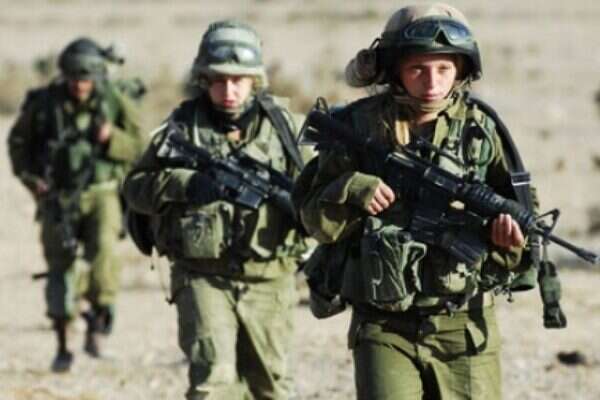
The fact that youre a religious woman should not prevent you from doing something where you can make a contribution. Serving in the army as a religious woman looks too difficult, even impossible, but when you get to that bridge, you find a way to cross it, and you get a lot of good things along the way. There are always good friends and also help from above. Believe in yourself and your abilities. Dont be afraid to go for the big challenges. E., a religious woman and a member of the pilots course that began in 2009, wrote the above words to her religious friends on a new website, Mattat.org.il. The new websites purpose is to help young women who have just graduated high school to decide which is right for them national service or the army. Although the website has been live for only a few weeks since Rosh Hashana, the Jewish New Year it has already accumulated 700 posts by young women who have been in the trenches, dealing with the tough issues, the challenges and the tensions including sexual tensions faced by young religious women who choose to join the army. The terror attack on the Egyptian border that took place about two weeks ago, in which Cpl. Netanel Yahalomi was killed, and during which a female combat soldier of the Caracal Battalion killed one of the terrorists while another female soldier took cover, once again raised the issue of womens service in the Israel Defense Forces. Over the past several years, this issue has become one of the most urgent questions among young religious women facing the choice of doing national service or joining the IDF. According to statistics on religious women provided by the Meitav military unit, where new army recruits are sorted to their respective corps or basic training bases, about 1,500 religious women join the army every year. In other words, over two years of army service, there are about 3,000 female soldiers and, it is estimated, about 1,000 female officers a total of 4,000 religious women serving in the IDF. According to Aluma, a non-profit organization that assists religious women who are having trouble deciding or who choose to join the army, religious women in the IDF comprise more than 20 percent of graduates of the religious school system. About 9% of them go on to become officers every year. The religious female soldiers work in education and training, intelligence, the ground forces, computers, the Medical Corps, as military welfare counselors, and more. Yifat Sela, the director of Aluma, adds, Right after the High Holidays starts the critical time when the young women not only think about the future, but begin the actual process of choosing where they will go. It is deliberately scheduled to take place now so that over the second half of the year, they will have the peace of mind they need to study for the matriculation examinations. It is hard to represent religious people The Mattat website, which is run by the Rosenfeld and Bloch families, is dedicated to the memory of two young cousins, Mattat Rosenfeld-Adler and Kinneret Mandel, who were murdered in a shooting attack at Gush Etzion Junction in the fall of 2005. The terrorist who murdered them was released in the deal for the release of Gilad Shalit. Rosenfeld-Adler served in the IDF as an officer at lookout points, while Mandel did national service as a tour guide. Michal, who served as a combat reconnaissance instructor (a training job for women that includes classroom instruction, practical training and field instruction) between 2005 and 2007, writes on the website that the job is not for every religious woman, particularly if its hard for you to stand up in front of a classroom full of male reservists who havent seen a woman in a long time or if you need to be in a religious environment. Michal describes her choice of a combat assignment in terms of her desire to get out of the bubble. I wanted a place where there wouldnt be a lot of religious women like me. The training is interesting and pretty varied the enemys way of thinking and navigation, for example. Most of the soldiers I trained were from the Golani Brigade. The conditions of service were good. But as might have been expected, her training for the job did not go smoothly. There was an atmosphere of constant sexual tension. I was the religious woman on the base, and it was hard for me to represent religious people all the time. There were lots of comments of a sexual nature, many times. But despite the difficulties, she also recalls a feeling of great fulfillment. I trained reservists and soldiers before they went into Lebanon, and I felt that my knowledge helped them. It was also very interesting, of course. E., who is in the third year of the pilots course, describes her demanding job as suitable for a person who sees herself as being in the countrys service for a long time (at the end of the course, all the graduates commit to nine years service in the career army). She adds that it is suitable If youre looking for service with challenge that never ends and youre willing to fight for it with your teeth. Besides fulfilling her dream, E. talks about the heavy price she paid. The service isnt right for anyone who wants to go back to civilian life, or if you dont do well with doing physical training with male soldiers or if you get homesick easily, because then you come out of it badly. E. has mostly good things to say about the dramatic decision that changed her life. I joined the pilots course in the summer of 2009, and today Im four months away from graduation. During the course I did my bachelors degree, found good friends for life and Im learning a lot from everybody all the time. Living with people who are different from me has made me understand that were much more alike than I thought. My service is very challenging and intensive. Ill be taking special experiences with me that Ill never forget. About her daily schedule on the base, she says, Today, my work is mostly training flights in different subjects, and every flight demands the appropriate preparation and the required knowledge. The day begins with a briefing for everyone. Then we go on to flights together with personal flight trainers for each student, and the day ends with a debriefing. On the website, people can learn about the daily routine of religious women on army bases where religious and non-religious people serve together and the interesting dynamic that is created there. Theres a very strong Shabbat atmosphere because the base is big. It also has a housing project with families who attend the synagogue on the base. Every Friday night, there are festive meals for all the soldiers who are staying on the base for Shabbat, and the religious people stay afterward to sing Shabbat songs. In the morning there is a respectable service, of course, and a Shabbat meal afterwards for the worshippers. There are also afternoon services, the third meal, evening services and Havdalah [the ceremony marking the end of Shabbat]. And how well does serving in a skirt mix with serving in a secular environment? According to Michal, it is not easy. Wearing a skirt is possible only when youre in dress uniform. Because we crawl, run and do navigation, we have to wear work uniforms. Despite all the difficulties, Michal insists that her contribution is no less significant than that of secular soldiers. Since being a training instructor requires certain character traits and cognitive abilities, the difference in that aspect between women and men is negligible. I didnt want a job as a ground combat soldier because of modesty issues. Although Michal is aware of the banality of her statement, still she says, My success and good job performance mean that Im protecting the country. One of the experiences she remembers is guarding residential communities during the Passover holiday. I was sent to a secular community. It was a very tough holiday because there were no religious families in the community to host me and have the feeling of the holiday, not even on Yom Kippur. We spent Seder night on our own at the communitys guard post. There were no other religious soldiers with me, and that actually gave me a stronger feeling of responsibility for my religious lifestyle. After all, I was responsible for observing all the laws and customs. No one else was going to do it; it was up to me. Going out of the comfort zone Besides suggestions for young women about to join the army, the women also deal with tough questions of Jewish law regarding the prohibition of men and women touching, issues having to do with the close proximity of men and women and the observance of kashrut, the Jewish dietary laws. For example, one commanding officer asks whether she is permitted to pin the new rank insignia on the uniform of a male graduate of the course she taught. The answer given by the rabbis of the military rabbinates academy for the study of religious law might be surprising to other rabbis. They maintain that since the contact is not done out of affection, but rather as part of an official, dignified ceremony that takes place in public, it is definitely permissible. Another female soldier wants to know what to do when she is on the base for Shabbat and her friends parents have brought kosher food in closed containers. Can she eat any of it? In this case, the answer is good deal more complicated, and the military rabbis delve deeply into the issue. On the one hand, there is the issue of the desecration of Shabbat, while on the other, there is room to be lenient for various reasons. In the end, they give their answer with reservations, saying, If it is possible, it is appropriate for you to refrain from using it. On the websites forum, which was created in cooperation with Aluma, one can also find questions about womens dress conforming to army regulations. For example, one soldier, Chen, asks, Whats finally happening about wearing long tights in the winter? Its coming closer! Just think about last winter, when our legs froze. But unfortunately, the answer is that army regulations forbid wearing tights under an army skirt. Another recruit is afraid of modesty issues when it comes to the showers. I heard that in the army, theres a common shower area. ... I think thats really shocking. If I ask to take a shower at different times, will I be allowed- The answer: Its not like you imagine. There is privacy and modesty, and theres no problem. If it really bothers you, bring a bathing suit! But you wont be able to shower at private hours. In the army, everything is done at set times. Rivka Rosenfeld, one of the founders of the website and the mother of Mattat, says, The purpose of the website is to help twelfth-graders and their parents with the choices that come after high school. Dealing with those choices can sometimes be complicated and frustrating. It also helps young women decide whether to join the army. In the nature of things, theres a lot less preparation for army service in the religious schools. Even schools that dont object to army service dont necessary see it as part of their curriculum. The website presents all the possibilities about each of the choices, the advantages and the disadvantages. Rosenfeld talks about the idea for the project in memory of Mattat and Kinneret. While theres a lot to say about those young women, we wanted to do something that would have an effect beyond a memorial website, and this is what came out of it. Many young women say that its too bad the website didnt exist when they were deciding whether to do army service. It allows us, the families, to keep our daughters the way they were. Their memory, as young women, stays with us all the time.
Women at the front
Every year, young women graduating high school face a tough dilemma: Should they join the army or do national service? • A new website, Mattat.org.il, tries to help these young women resolve their doubts all the way to the induction center.
Load more...