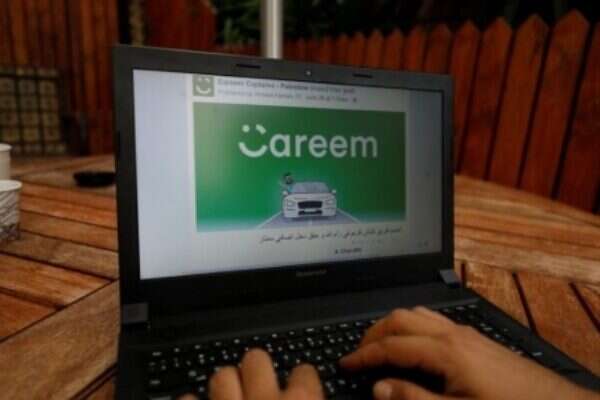
Careem, a Middle Eastern rival to Uber, has become the first ride-hailing company to operate in the West Bank. There is a market for easier ride-hailing among the nearly 3 million Palestinians living in the West Bank, but the fact that the mobile application is still a 2G network-based service, that electronic payments are not the norm, and that Israeli security checkpoints are common make using the service somewhat cumbersome. Yet Careem is optimistic about the potential. "We are planning to invest hundreds of thousands of dollars within the coming year in the [Palestinian] sector," said Kareem Zinaty, operations manager for the Levant region. Careem, which launched in 2012 and now operates in 12 countries and more than 80 cities across the Middle East, Africa and South Asia, has said it aims to provide work for a million people across the region by 2018. While a version of Uber and Israeli app Gett already operate in Israel, they do not venture into Palestinian cities. Drivers are excited to work with Careem, which they hope will help boost their incomes, especially with unemployment in the West Bank running at nearly 20%. "It's a wonderful opportunity," said one of the more than 100 new drivers, known as "captains" by Careem. "Most of the people who use the service are young and happy with the price." Under interim peace accords, Israel controls 60% of the West Bank. Careem's drivers have Palestinian license plates, meaning they usually cannot enter Israeli areas. In 2015, Israel and the Palestinian Authority agreed to expand 3G mobile access to the West Bank by 2016, but they have yet to implement the agreement. The Ramallah Municipality has set up public Wi-Fi in parts of the city center, allowing apps such as Careem to be used more easily.
The Dubai-based Careem, the name of which plays on the Arabic word for generous or noble, launched in Ramallah in June, aiming to bring digital simplicity to the Palestinian territory.
"After the investment, it is also an opportunity to create jobs."
Despite 2G's slower service, Zinaty said the model was an opportunity for telecommunication companies to look into expanding services and technologies to better serve Palestinian startups and businesses.
Uber-style app 'Careem' goes off beaten track in West Bank
Dubai-based Careem is the first ride-hailing company to operate in areas controlled by the Palestinian Authority • 2G network service aims to bring digital simplicity to the area • Backers hope application will boost employment, economic growth.
Load more...