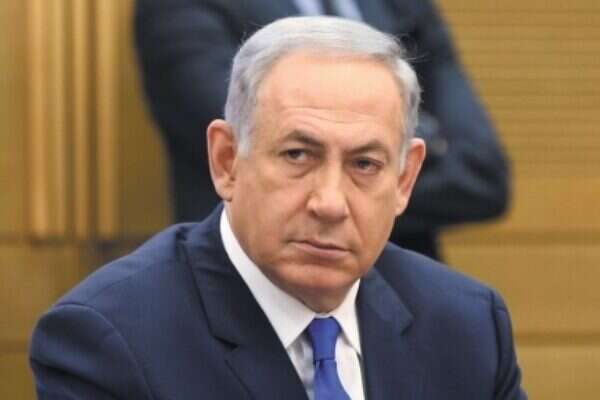
Like all drama, political drama has its peaks. Smooth sailing could turn into rough waters without warning, and at times one can barely catch one's breath between surges. The drama always seems to focus on one man -- Prime Minister Benjamin Netanyahu. The 2015 elections, which saw unprecedented hatred and venom pointed at the prime minister -- especially when it appeared, for a moment, that the "ultimate goal" of toppling his rule was within the Left's grasp -- ended up dealing the prime minister's rivals a crippling blow. But the political uncertainty of the past month, compounded by some media reports, decisions by law enforcement agencies and peculiar leaks, has brought Netanyahu's adversaries back to life. The past month was a tumultuous one for the government, but the failed coalition talks with the Labor party, the difficult-but-successful negotiations with Yisrael Beytenu, and MK Moshe Ya'alon's resignation -- all taking place against the backdrop of unfavorable court rulings in civil cases involving Netanyahu's wife Sara -- have seen the prime minister emerge stronger. As the Knesset's summer session began, the unruly 61-MK coalition he had tired of was gone, making way for a more manageable, 65-MK coalition. The scandals of the past week will end in a similar way: The drama surrounding a past donation from French businessman Arnaud Mimran is already dying down, and the outcry over Channel 10 boss Rami Sadan's alleged remarks against the Sephardi ultra-Orthodox Shas party is fading by the moment. Media headlines reporting on the Mimran affair were overblown and misleading. The actual facts leave little to fret over, and what began with allegations of corruption amounting to millions of euros, so-called solid evidence presented to French authorities and inconsistent versions of the events by Netanyahu and his lawyers, boiled downs to insignificant gossip. Back in 2001, Netanyahu was a former prime minister turned concerned citizen. At the time, his attorney, David Shimron, had founded and managed a special fund to finance Netanyahu's overseas lectures. These were not the paid lectures he was invited by various institutions to give, but rather public diplomacy missions, funded by donors who recognized the importance of such efforts. Mimran was one of those donors, he contributed $40,000 to the travel fund and was issued a tax invoice, as required by law. French authorities recently began looking at Mimran in connection with a massive corruption case. The legal proceedings against him were of little interest to Israeli media until Haaretz correspondent Dov Alfon, who is fluent in French, translated a few sentences from Mimran's testimony, in which he mentioned his donation to Netanyahu. The comments were ambiguous, as if they were nothing more than an afterthought, leaving details such as how much money was donated and when, vague. This ambiguity did little to stop the story from being blown out of proportion, much like past "scandals" involving the Netanyahu family. Within hours the donation ballooned into the corruption scandal of the decade, dwarfing even former Prime Minister Ehud Olmert's myriad corruption offenses. Olmert was convicted and jailed over bribed amounting to hundreds of thousands of shekels. The allegations attributed to Netanyahu, however, accused him of corruption amounting to millions. Truth be told, even the pundits and legal experts who were out for Netanyahu's blood, were having trouble believing their own commentary. Two days later, the massive, 1 million euro payment had shrunk to $40,000 -- a private donation made to a legal enterprise, in 2001 not 2009, as a simple payment for travel expenses -- not campaign financing violations. This case remains open only as far as how Attorney General Avichai Mendelblit plans to handle it. While the State Attorney's Office went to great lengths this week to underscore the fact this was a very sensitive case that requires the utmost discretion, one has to wonder why a preliminary probe was ordered in the first place. All Mendelblit had to go on was the translated transcription of Mimran's testimony, as it appeared in Haaretz. One would think such flimsy evidence -- if it can even be called as much -- would not be enough to order a potentially criminal investigation against the prime minister. Moreover, given the fact that the statute of limitations applies to this case, what would be the point of an investigation that could never culminate in an indictment? Justice and hypocrisy The dust was settling once again but luckily for some, the chairman of Channel 10's board of directors may have said something he shouldn't have, and the media frenzy began all over again. At this point, is seems that whether or not Sadan said he "like the rest of the elite, hates Shas" is irrelevant. Sadan, a former Knesset lobbyist and public relations executive, is known for having close ties with the Netanyahu family. His confirmation as chairman of Channel 10's board of directors was widely criticized as a political appointment, and it appears some goal-oriented individuals have decided to spare no effort to torpedo the appointment. These individuals rushed to accept Channel 10 News CEO Golan Yochpaz's version of the events, suggesting Sadan had made the derogatory remark, despite the fact multiple board members support Sadan's assertion that he said no such thing. Venturing a guess, this was most likely a combination of several parties' interests: Channel 10 employees are wary of Sadan's affiliation with Netanyahu, and since Sadan is religious, there is a good chance his personal politics veer to the Right -- in stark contrast to the position expressed by the news outlet since its inception. The interests of Shas and the Left also come into play here. Shas made too much of an otherwise esoteric remark for it not to have a hidden agenda, and the Left was eager to ram Netanyahu for supposedly increasing his control over the Israeli media -- the same media that relentlessly lambastes him. The Left never grows tired of accusing Netanyahu of trying to control the media, so much so, that this accusation is now widely seen as fact. Sadan's detractors' however, were barking up the wrong tree, as multiple Channel 10 officials insisted he never made any disparaging remarks toward Shas. Those seeking to impeach Sadan are now facing a dilemma: If he said nothing derogatory, demanding he be fired may be seen as political persecution. After all, if Sadan is as bad as they had made him out to be, why link the efforts to remove him from office to one specific remark- Moreover, regardless of whether or not Sadan made the controversial remarks it is no secret the elite hates Shas. If Sadan said as much, then it was a reprehensible remark, worthy of all condemnation and mandating an apology. But he was not the first to make derogatory remarks towards Shas or the haredim, and stronger language, at times bordering incitement, has been used in the past. Similar remarks by other people did not fuel news cycles for three days, making the demand that Sadan be dismissed a tad excessive. Action trumps rhetoric Lone wolf terrorist attacks that occasionally rear their heads and claim Israeli lives are a far too familiar scene. The fact the extensive reports about a regional summit and a potential far-reaching diplomatic move would make Israel's enemies eager to draw Jewish blood could have been predicted. Such rhetoric, which first and foremost seeks to appease Washington and torpedo any unilateral moves the hostile U.S. president might impose on Israel on the last leg of his term in office, is also heard by the Arabs living among us, and it is translated almost immediately into terrorist attacks. Almost every regional summit was clouded by smoke, fire and blood, courtesy of murderous terrorist organizations, eager to use any diplomatic horizon proposed to spread death far and wide. The ramifications of Wednesday's terrorist attack in the Sarona Market complex in Tel Aviv have now become part of Defense Minister Avigdor Lieberman's agenda. The role of defense minister presents many opportunities for success, but many have left it with a sense they had failed to achieve their goals. This is Lieberman's time to make good on at least some of his bombastic promises and statements, made in days when he could only dream of becoming defense minister. Lieberman likes to lash out, and be it as the Left or at the Palestinians, he never pulls his punches. Reality, however, measures the defense minister by his actions, not his rhetoric, and Lieberman will quite simply have to put his money where his mouth is.
Of mountains and molehills
The recent "scandals" concerning Prime Minister Benjamin Netanyahu were little more than a convergence of tumultuous political circumstances blown out of proportion • Some in the media seem more interested in blowing hot air than reporting actual facts.
Load more...