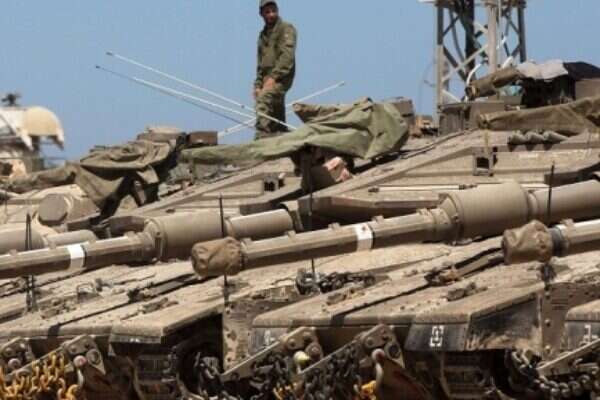
It has been a few days since the beginning of Operation Protective Edge in the Gaza Strip, and neither side can tell how much longer it will go on, or how it will end. Army officials are increasingly talking about how Israel will have no alternative but a ground incursion into the Gaza Strip, even a small and limited one. There are many reasons for this. The first is that unlike 2008's Operation Cast Lead and 2012's Operation Pillar of Defense, Operation Protective Edge did not begin with a warning strike, such as the killing of a high-ranking figure or the destruction of Hamas' long-term capabilities. This time, there was a gradual deterioration. It went from the kidnapping and murder of the three boys in Judea and Samaria to the army's operation to find their bodies, with the terrible internal state of affairs in Gaza as a backdrop. All these things led Hamas to escalate its rocket fire at Israel. What made Hamas finally take off the gloves this week was the killing of several of its operatives in a tunnel rigged with explosives that they had prepared in the Kerem Shalom area. On Monday evening, after several days of sporadic rocket fire and disregard of rebel groups, Hamas fired a barrage of rockets at Israel. The decision to begin the operation was delayed for several days because the top security echelon wanted to avoid being dragged into a operation in Gaza of a larger scale than it had planned. Even after the decision was made to begin the operation, Israel, in an effort to keep a way open to end the operation quickly, announced a policy of "stages of using force" according to which Israel's response would escalate according to Hamas's action. Hamas tried to surprise Israel in almost every way possible in an attempt to create a "picture of victory." Among other things, it sent a special force of divers to infiltrate into Israel near Kibbutz Zikim to perpetrate a terror attack. Members of Hamas' special forces also tried to use a tunnel rigged with explosives in Kerem Shalom. In addition, they launched shoulder-fired Strela and Igla missiles at Air Force aircraft. Their purpose in doing all this was to create a "picture of victory." All their attempts failed. In addition, Hamas fired rockets at Tel Aviv, later expanding its range of fire almost to Haifa in the north and Dimona in the east, hoping to strike the strategic "textile factory." The rocket fire at these ranges confirmed Israel's fears that Hamas had managed to smuggle working M-302 rocket into the Gaza Strip. Just four months ago, Israel sent a vessel 1,500 kilometers (930 miles) away from Israel's shores to prevent 40 of those rockets from reaching the Gaza Strip. It is very doubtful that Israel's intelligence services could say with certainty that Hamas in Gaza had similar rockets in its possession. Another problem is that Israeli intelligence has only partial information about the location of the long-range rockets, which makes it difficult to destroy them. The second limitation preventing the Air Force from attacking them is that some of these rockets are being kept near innocent civilians, and harming them would compromise Israel's legitimacy for the operation in Gaza. It cannot be done in one fell swoop At the same time, Israel can take pride in its successes. Three years after the Iron Dome system intercepted its first rocket, the army already fully admits that it has strategic significance. Thanks to Iron Dome, of the hundreds of rockets fired at populated areas in Israel at a range of more than 10 kilometers from the Gaza Strip, only a few fell in urban areas. In Operation Protective Edge, the Air Force's aerial defense array reconstructed what it did during Operation Pillar of Defense. Seven Iron Dome batteries are deployed in the south of Israel, the center and the Judean Hills region. Yet, as successful as it is, Iron Dome is a defense system that cannot be Israel's winning ace in the Gaza Strip. Israel can continue attacking the Gaza Strip from the air, but it is important to remember that the number of targets that can be attacked without causing massive casualties among innocent civilians is limited, even if targets are "manufactured" during the fighting. Without a trick up its sleeve or a fell swoop, Israel will have to bring ground forces into Gaza. Although a ground operation tends to become complicated and lead to casualties among the troops, the brilliant deterrent move from Operation Pillar of Defense cannot be done again without an incursion. It is impossible to threaten again without following through on the threat, since the threat then loses credibility. Army officials say that to maintain deterrence, Israel will be required to prove that it does not fear a ground operation in the Gaza Strip and bring troops inside, even if in a limited manner. It seems at this stage that the ground incursion will be relatively limited and smaller than the one we saw in Operation Cast Lead. The security cabinet has allowed the army to call up 40,000 reserve troops. As of this writing, only part of that number was mobilized, and those who were called up were sent to replace regular troops in the north, south and center to free up the better-trained regular-army troops for the operation in the Gaza Strip. It is also important to recall that a ground incursion into the Gaza Strip will not bring Hamas down. Although the incursion's purpose is to claim a price from Hamas and apply pressure to it, Israel will try to make sure that the operation stays limited, and a limited operation will not topple Hamas from power. Army officials say that we must also consider that a ground incursion could also lead to trouble erupting in other areas, such as Judea and Samaria, where only recently we were painfully reminded of how explosive it was. Defense establishment officials realize that the operation will not be able to end in military action alone. According to a senior officer, "There will not be a final bombardment after which they will wave a white flag. The military process must be combined with a political one. In claiming the price, the army needs to create conditions for the political echelon so that the political process will work." The problem is that in the meantime, both sides are behaving as though they were under no pressure to end the operation by a specific time.
'In the end, we will have to go in'
At this time no one can hedge when or how Operation Protective Edge will end, but a ground incursion seems unavoidable • Eradicating the robust terror infrastructure in the Gaza Strip cannot be done in one fell swoop, military officials say.
Load more...